REVIEW · VERONA
Cesarine: Small group Pasta and Tiramisu class in Verona
Book on Viator →Operated by Cesarine: Cooking Class · Bookable on Viator
Fresh pasta starts at home. In this Cesarine class in Verona, you start with a welcome aperitivo, make two fresh pasta styles with traditional sauces, and learn tiramisù the way an Italian nonna would. The one thing to plan for: it happens in a real home, so you’ll follow the sanitary and 1-meter distance rules the host sets.
You’ll be in a group capped at 12 people, and the class is offered in English. The whole experience runs about 3 hours and ends back where you began.
In This Review
- Key Points You’ll Care About Before You Go
- Why A Cesarine Pasta Class Feels More Like Verona Than A Lesson
- Starting With Aperitivo: The Best Way to Begin a Cooking Class
- Fresh Pasta in a Verona Home: Two Styles, Real Sauce Work
- Tiramisu the Nonna Way: It’s More Than Layering
- The Taste at the End: Pasta and Tiramisu Together
- Price and Value in Verona: Paying for Home Access
- Timing, Meeting Point, and Getting There Easy
- Sanitary Rules in the Real World (And What They Mean for You)
- What Makes the Hosts’ Style Matter (Cristiana and Aurora)
- Who Should Book This Class in Verona?
- Should You Book This Cesarine Pasta and Tiramisu Class?
- FAQ
- How long is the Cesarine Pasta and Tiramisu class?
- What language is the class offered in?
- What’s the group size limit?
- What dishes will I make and eat?
- Does the class include a welcome aperitivo?
- Where does the tour start and end?
- Is it near public transportation?
- What’s the cancellation policy?
Key Points You’ll Care About Before You Go
- Small group, max 12: More hands-on time, less waiting around.
- Welcome aperitivo plus end tasting: You start eating and finish eating, not just cooking.
- Two kinds of fresh pasta + traditional sauces: You leave with practical techniques, not a single recipe.
- Tiramisu assembly taught like nonna: You’ll focus on how to build it correctly, not only what goes in it.
- English-led in a local home: You get an authentic setting without the language barrier.
- Sanitary supplies and distance expectations: Paper towels and hand sanitizer are provided, and masks/gloves may be needed if distancing can’t be kept.
Why A Cesarine Pasta Class Feels More Like Verona Than A Lesson
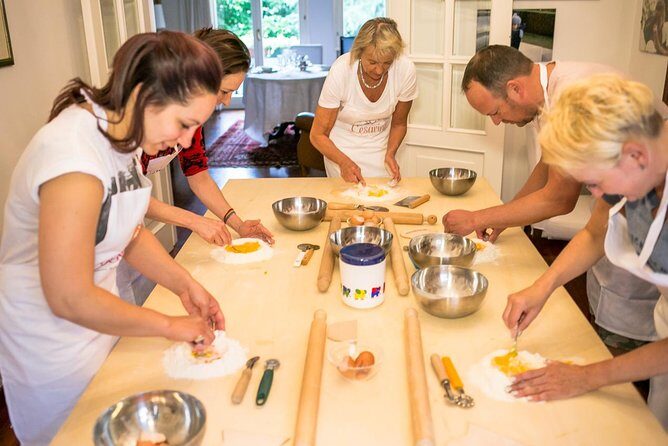
I like cooking classes that teach skills you can actually repeat at home. This one is built around a local Cesarine host welcoming you into a carefully selected home in Verona, where the goal is hands-on learning rather than a lecture.
You’re paying for access to someone’s real kitchen life—plus the structure to learn two pasta types, sauce work, and tiramisù assembly in about 3 hours. And because the group is small (up to 12), you’re less likely to feel like a spectator. You can ask questions, get feedback, and move at a pace that makes sense.
The possible drawback is also part of the charm: it’s not a large classroom. You’ll want to be comfortable with home rules, close workspace, and the sanitary guidelines in place for everyone’s safety.
You can also read our reviews of more cooking classes in Verona


Starting With Aperitivo: The Best Way to Begin a Cooking Class
This class opens with a welcome aperitivo. That matters more than people think. It signals that you’re not just there to learn recipes—you’re there to join the meal culture, where food and conversation start before the cooking begins.
Practically, it also helps you settle in. You’ll get your bearings, meet your host, and see the setup before hands go into dough or into dessert assembly. It’s a smoother start than walking into the kitchen already mid-chaos.
Fresh Pasta in a Verona Home: Two Styles, Real Sauce Work
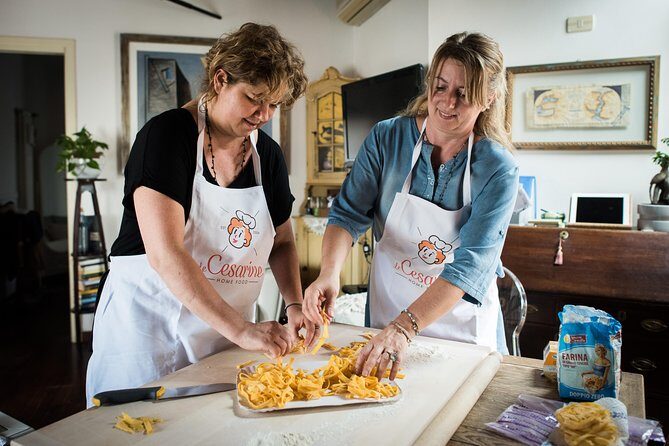
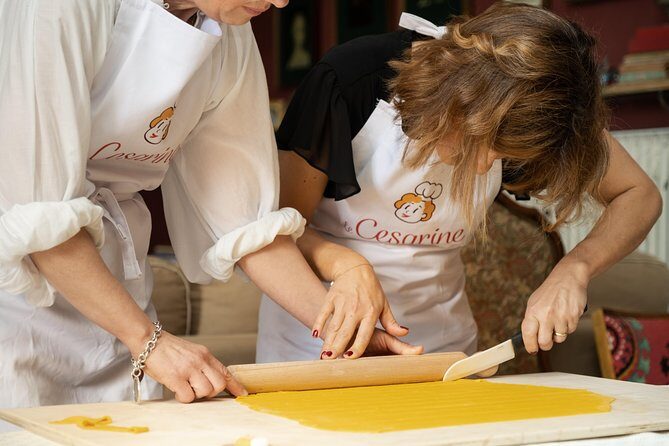
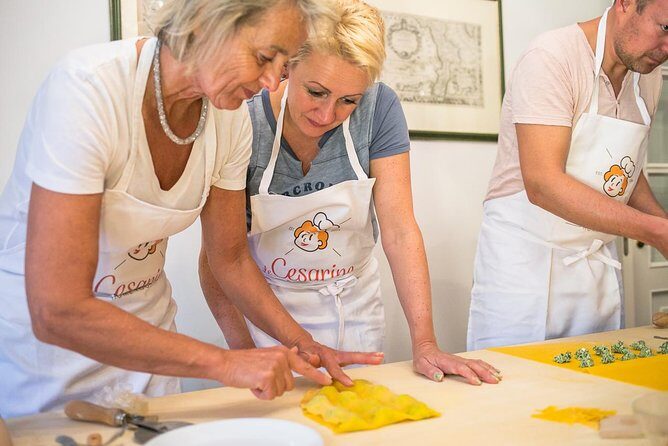
The core of the experience is making fresh pasta and traditional sauces. You’ll prepare two different types of pasta, then pair them with classic sauces your host teaches in the home kitchen.
Why this is valuable: learning one pasta shape is nice. Learning two—and seeing how sauce choices connect to texture and technique—helps you understand the logic of Italian home cooking. You’re not only following steps; you’re building intuition about how dough behaves and how sauces should taste and feel.
You also get the kind of small corrections that rarely happen when you cook alone. In a home class, the host can notice what you’re doing—how you handle the dough, how you assemble, and where the process tends to go off track. That’s how you end up leaving with usable confidence instead of just a few photos.
If you care about doing better cooking at home, concentrate on two things while you work:
- Watch how your host handles the dough (pressure, timing, and consistency).
- Taste as you go, especially when making or finishing sauce.
That’s where the technique becomes muscle memory.
Tiramisu the Nonna Way: It’s More Than Layering
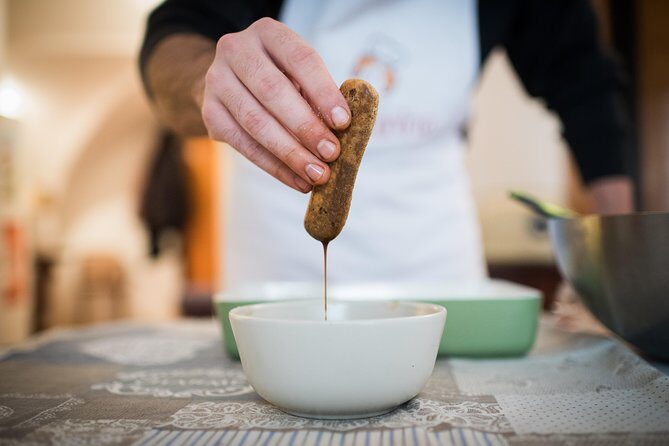
The dessert portion is built around tiramisù, with a focus on assembling it like an Italian nonna. That detail is the difference between a tasty dessert and one that holds together properly when served.
Tiramisu is one of those dishes where small choices matter. The class approach makes sense: instead of just listing ingredients, you learn how to build the layers correctly and how the dessert should come together as a finished whole.
You’ll then get to enjoy a tasting at the end—so you can immediately connect what you did at the assembly stage with the final result in your hands. That feedback loop is exactly what turns a cooking class into a skill you can reuse later.
Also, don’t underestimate the emotional side of dessert cooking. Eating tiramisù in the setting where you just assembled it—surrounded by the smells and the kitchen pace—makes it feel like part of the day, not a separate event.
The Taste at the End: Pasta and Tiramisu Together
A big plus here is that the experience doesn’t end with cleanup and regret. You start with a welcome aperitivo, and you finish with a tasting of the pasta and tiramisù you made.
That full-circle structure is great value. You’re not just consuming ingredients; you’re learning how everything should taste as a set. Pasta and tiramisù also give you a nice contrast in textures and flavors, so you walk away with a stronger sense of Italian meal balance.
If you’re someone who likes to eat well during travel, this is especially satisfying. You’ll have a built-in, host-led meal at the end rather than trying to solve dinner logistics afterward.
You can also read our reviews of more tours and experiences in Verona



Price and Value in Verona: Paying for Home Access
At $162.21 per person, this is clearly not a budget snack. But it does include several things that add up fast when you price them separately: instruction in a private home kitchen, ingredient support for what you cook, and a structured ending tasting of the meal.
You’re also buying something harder to replicate: the host’s family approach. That’s where the nonna-style tiramisù assembly comes in, and where learning two pasta types becomes more than a single workshop moment.
Another value factor is the group size. With a max of 12, you typically get more interaction time than you would in larger classes. And the class is offered in English, which makes it feel welcoming without having to translate everything in your head while working with dough.
One more practical point: this class is often booked about 36 days in advance on average. If you’re traveling in a popular season or on a tight schedule, it’s smart to reserve early so you don’t end up chasing last-minute availability.
Timing, Meeting Point, and Getting There Easy
The experience runs about 3 hours. That’s a good length for cooking without turning your day into a full-day commitment.
You’ll meet in Verona, VR, Italy, and the activity ends back at that same meeting point. That return-to-start setup is convenient if you’re planning your afternoon or evening without a long commute back across town.
The meeting location is near public transportation. That’s worth noting because home classes can be tricky to reach if you rely only on taxis or rideshares. With public transit nearby, you can make it work even if your hotel is a bit out from the action.
Finally, you’ll have a mobile ticket, and you receive confirmation at booking. That reduces uncertainty and makes it easier to stay organized during your trip.
Sanitary Rules in the Real World (And What They Mean for You)
This class includes sanitary precautions in the home. The homes provide essential equipment such as paper towels for handwashing and hand sanitizing gel. The guidance also asks you to maintain 1 meter distance.
If you can’t keep distance, the rule is to wear masks and gloves. The message here is practical: follow the host’s instructions on the day so everyone can cook comfortably.
This is the kind of experience where your attitude matters. If you go in ready to follow the rules, it won’t feel disruptive. It’ll feel like the class still works, just with updated safety habits.
What Makes the Hosts’ Style Matter (Cristiana and Aurora)
Two host names show up in strong ways in this class: Cristiana and Aurora. Cristiana is described as welcoming people into her house with an authentic family class feel, and even a younger crowd can enjoy the experience when the host keeps things clear and caring. Aurora is praised for being fun, passionate, and very accommodating, with clear explanations for both the tiramisù and the two pasta types.
Why this matters for you: in a cooking class, the food is only half the equation. The host’s teaching style determines whether you leave confident or confused. These descriptions point to hosts who explain the steps and support you while you work.
Who Should Book This Class in Verona?
I think this fits best if you want something hands-on and local, not just a timed stop with a photo and a souvenir. If you care about learning how Italian home cooking actually feels, this is a strong match.
It’s also a good option if you travel with kids, at least for families who want an active, structured meal-making experience rather than a long sitting tour. One family experience specifically notes enjoyment for children aged 11 and 9, which suggests the class can work well when the host keeps instructions friendly and the pace stays engaging.
English-led classes are ideal when you’d rather focus on the cooking than on translating instructions mid-action.
Should You Book This Cesarine Pasta and Tiramisu Class?
If you’re choosing between another tasting tour and a hands-on class, I’d lean toward this one. You get a full cooking-to-eating arc: aperitivo to start, fresh pasta and sauce work in the middle, and tiramisù assembly plus tasting at the end. That’s a lot of meaningful food time for about 3 hours.
Book it if:
- You want a small-group experience (max 12) where you can ask questions.
- You care about learning two pasta styles and nonna-style tiramisù assembly.
- You’d like a meal built into the activity instead of figuring dinner afterward.
Skip it (or at least think twice) if:
- You don’t like home-kitchen settings or you strongly prefer a large, formal venue.
- You’re uncomfortable following 1-meter distance rules and possible mask/glove requirements.
And one last practical note: since cancellations are free up to 24 hours before the start time, you can plan confidently while still keeping flexibility.
FAQ
How long is the Cesarine Pasta and Tiramisu class?
It runs about 3 hours.
What language is the class offered in?
The class is offered in English.
What’s the group size limit?
The group is limited to a maximum of 12 travelers.
What dishes will I make and eat?
You’ll prepare fresh pasta (two types) and traditional sauces, and you’ll learn tiramisù assembly. The experience ends with a pasta and tiramisù tasting.
Does the class include a welcome aperitivo?
Yes, the experience begins with a welcome aperitivo and ends with a tasting.
Where does the tour start and end?
It starts in Verona, VR, Italy, and ends back at the meeting point.
Is it near public transportation?
Yes, it’s noted as near public transportation.
What’s the cancellation policy?
You can cancel for a full refund up to 24 hours in advance of the experience’s start time.