REVIEW · VERONA
Verona Classic Walking tour
Book on Viator →Operated by Citywalkers · Bookable on Viator
Verona can feel like a puzzle—this tour gives you the pieces fast. You’ll work your way through the Arena di Verona, Piazza dei Signori, the Arche Scaligere, Casa di Giulietta, and finish in Piazza delle Erbe in about two hours, so you get a tight overview without wandering lost. I like the compact pacing and the clear focus on Verona’s must-see sites, plus you get a mobile ticket and an English experience that keeps the day simple. One thing to weigh: the schedule is short at each stop (about 10 minutes), and you’ll want to plan for admission tickets not included.
I also like how the stops connect the city’s layers—Roman engineering, medieval power, and Shakespearean romance—without turning it into a long lecture. Piazza dei Signori alone hints at how the city still runs day-to-day, not just for postcards. Still, there’s a real-world risk with any group tour: if the guide is delayed or doesn’t show up, the whole timeline gets knocked off.
In This Review
- Key things to know before you go
- Verona Classic Walking tour at a glance: route, timing, and effort
- Arena di Verona: Roman scale, still used today
- Piazza dei Signori: Renaissance palazzi and daily life
- Arche Scaligere: Gothic tombs with a stair motif
- Casa di Giulietta: Shakespeare’s Verona, tied to real conflict
- Piazza delle Erbe: former Roman forum to market square
- Price and value: what $58.88 buys you
- Meeting point and flow: keeping the day smooth
- Who this walking tour fits best (and who should skip)
- Should you book this Verona Classic Walking tour?
- FAQ
- What’s the price of the Verona Classic Walking tour?
- How long is the tour?
- Where does the tour start and when?
- Where does the tour end?
- Is the tour offered in English?
- Do I need tickets for the sights?
- How big is the group?
- When will I get confirmation after booking?
- What’s the cancellation policy?
Key things to know before you go
- A 5-stop, 2-hour walk: each highlight is allotted about 10 minutes, so this is efficient, not leisurely.
- Admissions are on you: Arena di Verona, Arche Scaligere, and Casa di Giulietta are listed as ticketed sights (not included).
- Designed for small groups: capped at 16 travelers, which helps the pace and visibility.
- Start in Via Teatro Ristori, end in Piazza delle Erbe: you won’t backtrack much.
- English language tour: practical if you prefer explanations in English rather than self-guiding.
Verona Classic Walking tour at a glance: route, timing, and effort
This is a classic “greatest hits” walk with a clear structure. The tour starts at Via Teatro Ristori, 7 (10:00 am) and ends at Piazza delle Erbe, with five landmark stops in between. The duration is about 2 hours, and each stop is roughly 10 minutes.
That timing is the whole deal. If you like to take photos, read a key detail, and keep moving, you’ll love this style. If you want time to linger in museums, browse shops slowly, or settle into cafés for long breaks, you’ll feel rushed. I’d think of it as a fast orientation to Verona’s top sights—then you go back later on your own for the parts that pull you in.
The group size matters, too. With a maximum of 16 people, the walk stays manageable, and it’s easier to hear directions. It’s also offered in English, so you’re not guessing what you’re looking at.
You can also read our reviews of more walking tours in Verona
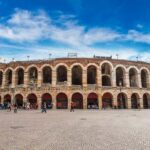

Arena di Verona: Roman scale, still used today
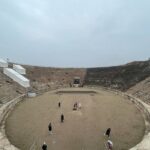
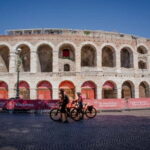
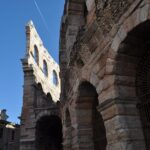
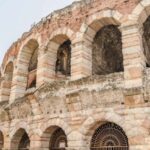
Your first stop is the Arena di Verona, a Roman amphitheater built in the first century. This isn’t a ruin you simply stare at from a distance—the Arena is still used, and the seating capacity is listed as about 30,000 people. That scale changes how you see it. Even if you’ve read about Roman architecture before, standing in the orbit of a venue designed for that many people hits different.
What I like most for practical travelers: it’s the kind of place that gives immediate payoff. You can look at the shape, sense the acoustics, and get why Verona attracts music events. Even with only about 10 minutes, it’s a strong first “wow” because the building does a lot of the talking.
A key drawback: admission is not included. If you want to go beyond the exterior views and get inside, budget for that ticket separately. Also, since it’s your first stop, arrive a few minutes early so you’re ready to start on time.
Piazza dei Signori: Renaissance palazzi and daily life
Next up is Piazza dei Signori, ringed by elegant Renaissance palazzi. This is the kind of square where you can spot how Verona works as a living city. During the day, it still has political and administrative functions, so you’re not only looking at scenery—you’re in the background of real civic life.
I also like the social angle built into the details. The piazza is described as a meeting point for university crowds during happy hour. That matters because it means your experience can shift depending on the time of day. Even if you’re not buying a drink, watching the rhythm of locals gives the place context that you won’t get from a guidebook photo.
The main consideration: since the stop is about 10 minutes, you’ll be skimming the surface. You’ll get the idea, but you won’t have long to sit down and absorb the square’s energy. If you’re a “stop and people-watch” type, plan to return later—especially in the early evening.
Arche Scaligere: Gothic tombs with a stair motif
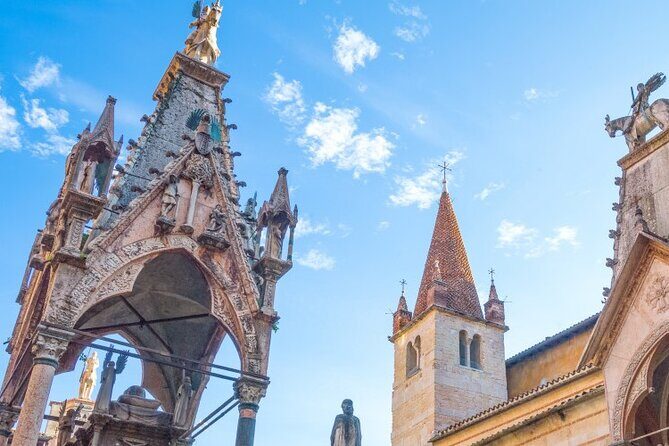
The tour then heads to the Arche Scaligere, the funerary tombs commemorating the Scaliger family, who ruled Verona in the 13th and 14th centuries. These tombs are called a standout example of Gothic art in the provided description, and they’re set inside an enclosure with wrought iron grilles.
Here’s one detail that makes this stop more interesting than it sounds at first: the grilles are decorated with a stair motif, tied to the meaning behind the name della Scala—“of the stairs.” If you walk away noticing that detail, you’ll have learned something you can actually spot in front of you.
You’re given about 10 minutes, so aim to focus on a few elements: the overall enclosure, the Gothic design, and the stair motif. Admission isn’t included, so if you’re the type who wants to see the tomb interiors and not just the perimeter, you’ll need to add tickets on your own.
Casa di Giulietta: Shakespeare’s Verona, tied to real conflict
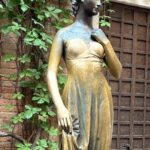
The big “why most people come” stop is Casa di Giulietta. This is where the tour leans into romance and tragedy—Shakespeare’s story of forbidden love and feuding, inspired by events in Verona during the 1300s.
Even if you’re not a die-hard Shakespeare fan, this stop is useful because it’s the bridge between myth and place. The description emphasizes that the play took inspiration from a true story involving family rivalry, forbidden love, and feuding. That framing helps you look at the site as more than a theme-park stop. You get a sense of why Verona could serve as the backdrop for a story like this.
Since admission isn’t included, decide ahead of time what you want. Do you want the exterior / courtyard feel as a quick stop, or do you plan to go inside and spend a bit more time? With only about 10 minutes, you may need to choose. If you want more time here, treat the tour like the introduction, then return later on your own.
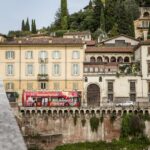

Piazza delle Erbe: former Roman forum to market square
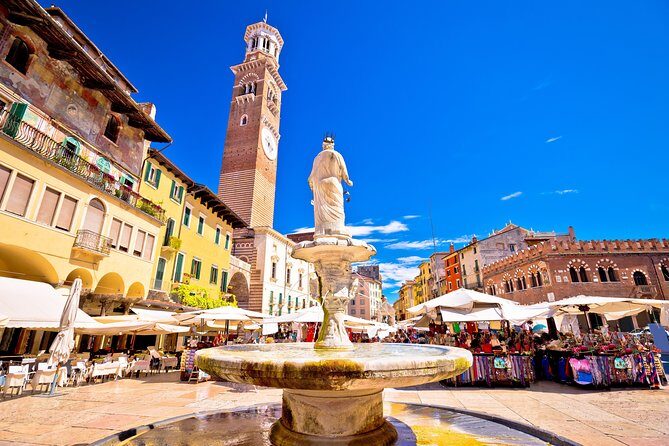
You end at Piazza delle Erbe, described as originally a Roman forum and surrounded by cafés and some of Verona’s most sumptuous buildings. Ending the tour here is a smart move because it’s not just a historical square—it’s also a place you can keep using after the tour finishes.
One very practical detail is the market. If you’re there on a weekday (Monday to Friday), you’ll have a chance to see a fruit and vegetables market in the morning. Even if you go later in the day, the square’s market identity helps you understand it as a hub of everyday life, not only a photo backdrop.
As a final stop, the 10-minute window is enough to get your bearings. But if you want to snack, browse, or slow down after the walk, this is the best place to do it. You’ll likely find more to do here than you have time for during the tour itself.
Price and value: what $58.88 buys you
At $58.88 per person for about 2 hours, the value is mostly about convenience and structure. You’re paying for an organized route that hits five headline sights without you planning the order. You also get the guide-led pacing and explanations in English, plus the tour is kept to a small group size (up to 16).
But it’s not a “tickets included” deal. The tour information explicitly notes admission ticket not included at each listed stop. So the real cost depends on what you choose to enter. If you plan to go inside multiple ticketed sites, you’ll want to budget extra beyond the tour price. If you’re happy with exterior viewpoints at some stops and only enter one or two, this becomes much more budget-friendly.
Also note the time trade-off. Ten minutes per stop can feel perfect if you want an overview. If you’re the type who likes to read every plaque and linger, you may feel like you paid for a guided highlight reel.
Meeting point and flow: keeping the day smooth
The tour starts at Via Teatro Ristori, 7 and begins at 10:00 am. It ends in Piazza delle Erbe. Since you’re walking between central sights, this kind of route is best when you’re ready to go on time.
A couple practical tips I’d follow:
- Arrive a few minutes early at the start address so you’re not scrambling.
- Screenshot or save the meeting point in Google Maps before you arrive. Verona streets are charming, and they also look similar when you’re in a hurry.
- Wear comfortable shoes. You’re walking a small circuit, and you’ll want your feet to cooperate.
One more real-world consideration: there is at least one reported experience where the guide did not show up and the tour had to be canceled with a refund. That kind of situation is rare, but it’s the biggest risk with any walking tour. If something feels off at the start time, act fast—contact the operator promptly so you’re not waiting around hoping it fixes itself.
Who this walking tour fits best (and who should skip)
This is a good fit if you:
- Want a short, structured intro to Verona.
- Prefer seeing multiple major sights in one morning.
- Like compact itineraries with minimal planning.
- Are comfortable with a pace where you spend about 10 minutes at each stop.
You might want to skip it or modify your expectations if you:
- Plan to go inside multiple ticketed attractions during the walk (time may be tight).
- Need lots of free time for cafés, shopping, or extended photo breaks.
- Don’t like group pacing at all.
For language comfort, it’s offered in English, which is great if you want explanations without translation apps. The experience also notes that most travelers can participate and that service animals are allowed, and it’s near public transportation, which makes it easier to build into your day.
Should you book this Verona Classic Walking tour?
I’d book it if you want a guided, efficient path through Verona’s top landmarks and you’re comfortable treating it as an orientation. The route hits the Arena, the key civic square, the Scaliger tombs, the Shakespeare-linked stop, and ends in the market square—so you get a strong Verona mix in about two hours.
I’d be cautious if you hate risk around guide attendance. There’s at least one clear report of a guide not showing up, and that’s stressful. If you do book, plan to arrive early, double-check the start point, and keep your phone ready so you can verify what’s happening at the meeting location.
If you’re the kind of traveler who likes learning just enough to return later and go deeper, this tour gives you a fast, usable map of where to spend your time in Verona next.
FAQ
What’s the price of the Verona Classic Walking tour?
It costs $58.88 per person.
How long is the tour?
The tour lasts about 2 hours.
Where does the tour start and when?
It starts at Via Teatro Ristori, 7, 37122 Verona VR, Italy, at 10:00 am.
Where does the tour end?
It ends in Piazza delle Erbe, 37121 Verona VR, Italy.
Is the tour offered in English?
Yes, it’s offered in English.
Do I need tickets for the sights?
Admission tickets are not included for the listed stops.
How big is the group?
The tour has a maximum of 16 travelers.
When will I get confirmation after booking?
Confirmation is received within 48 hours of booking, subject to availability.
What’s the cancellation policy?
Free cancellation is available. You can cancel up to 24 hours in advance for a full refund.