REVIEW · VERONA
Verona: Blindfolded Wine Tasting
Book on GetYourGuide →Operated by La Botteghetta La Bottega di Verona · Bookable on GetYourGuide
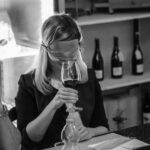
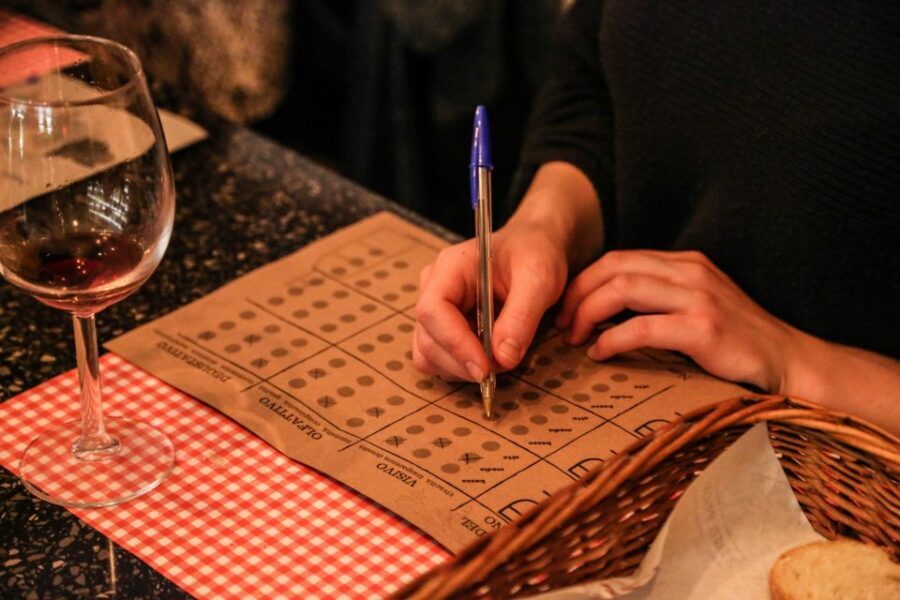
Your sense of taste gets put on trial. In Verona, you do a blindfolded wine tasting where a wine expert guides you to identify aromas and provenance using a sensory card for each pour.
I especially like that you taste four wines in the same general type/style from different wineries, so your comparisons feel fair. I also like the built-in sense-game—sounds and scents—that pushes you to rely on your senses instead of your assumptions.
One consideration: the whole thing is tightly packed into 1 hour, so you’ll want to pay attention and keep notes moving while you taste.
In This Review
- Key highlights at a glance
- Why a blindfolded tasting works for real wine learning
- Your 60-minute flow: four wines and a sensorial card for each pour
- Four wines from different wineries: how you should compare
- Sounds and scents: the extra prompts that make guessing easier
- Final taste test: checking your instincts without the safety net
- Bread, cheese, and charcuterie: the included payoff between pours
- Price and value: is $53 fair for four tastings?
- Language comfort in Verona: English, Italian, Russian
- Who this Verona blindfolded tasting is best for
- Should you book this blindfolded wine tasting in Verona?
- FAQ
- How long is the Verona blindfolded wine tasting?
- How many wines will I taste?
- Is the wine tasting blindfolded?
- What’s included with the $53 price?
- What languages are available for the live guide?
- What should I bring to join the tour?
- Can I reserve and pay later?
- Is there free cancellation?
Key highlights at a glance
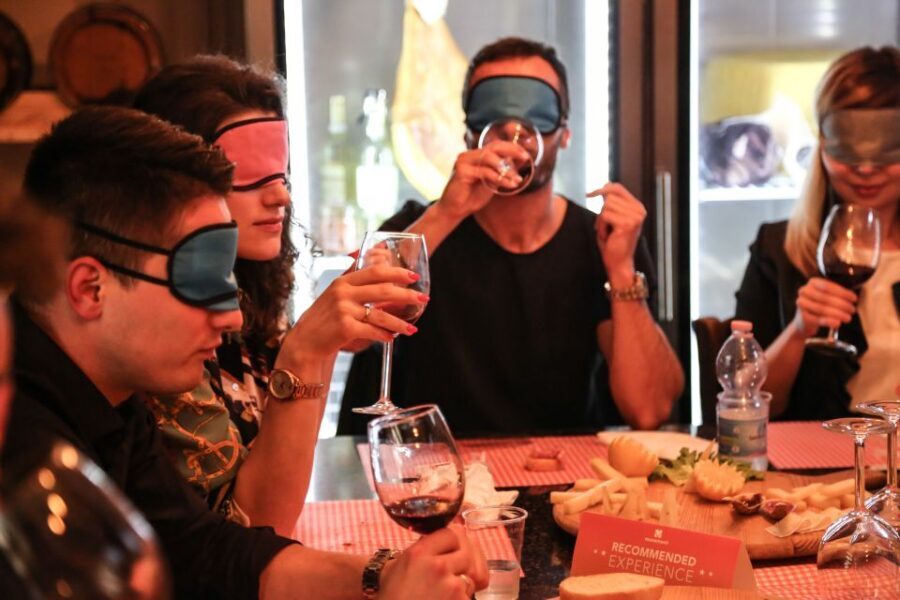
- Blindfolded challenge: taste four wines while removing the usual visual clues
- Same type, different wineries: comparisons feel structured, not random
- Sensorial cards for every tasting: you record aromas, flavors, and guesses as you go
- Sounds and scents: extra prompts help train recognition skills
- Final taste test: you get a last chance to measure what you picked up
- Local meat and cheese included: bread, breadsticks, plus a mini charcuterie board
Why a blindfolded tasting works for real wine learning
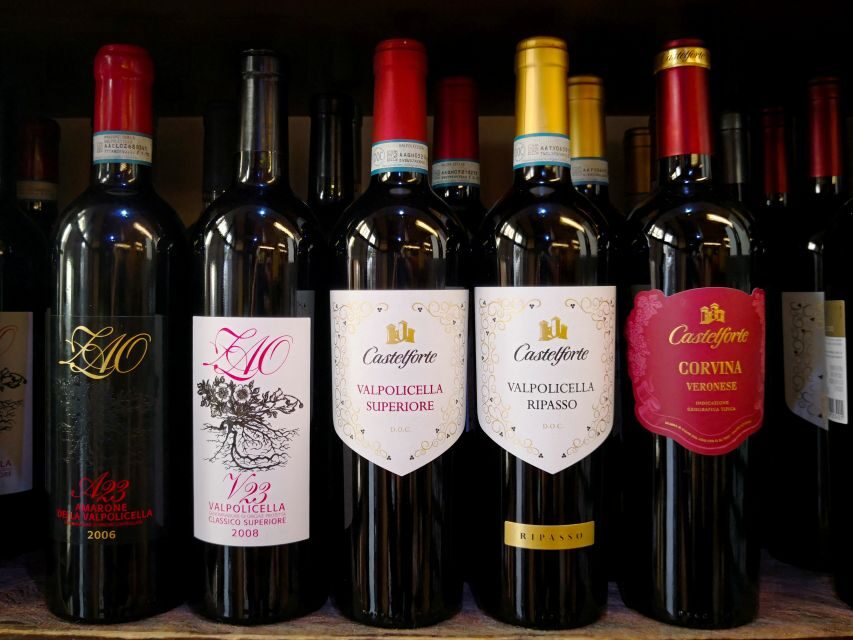
Blind tasting is fun, but it’s also practical training. When wine is visible, your brain leans on color and branding cues. In this format, you’re pushed to slow down and actually read the wine through smell and taste.
I like that the experience is built around the idea that your mind can do more when it can’t rely on what it expects. You’re not just drinking. You’re listening with your nose, then translating what you sense into words on a sensorial card.
The fact that it’s in Veneto, Italy matters too—not because you’ll memorize a textbook, but because you’re working with wines that you can later connect back to the region. This style of guided tasting gives you a vocabulary you can use again when you’re choosing a bottle on your own.
You can also read our reviews of more food & drink experiences in Verona
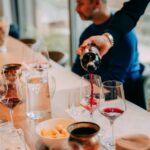
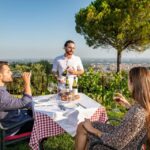
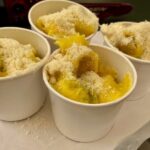
Your 60-minute flow: four wines and a sensorial card for each pour
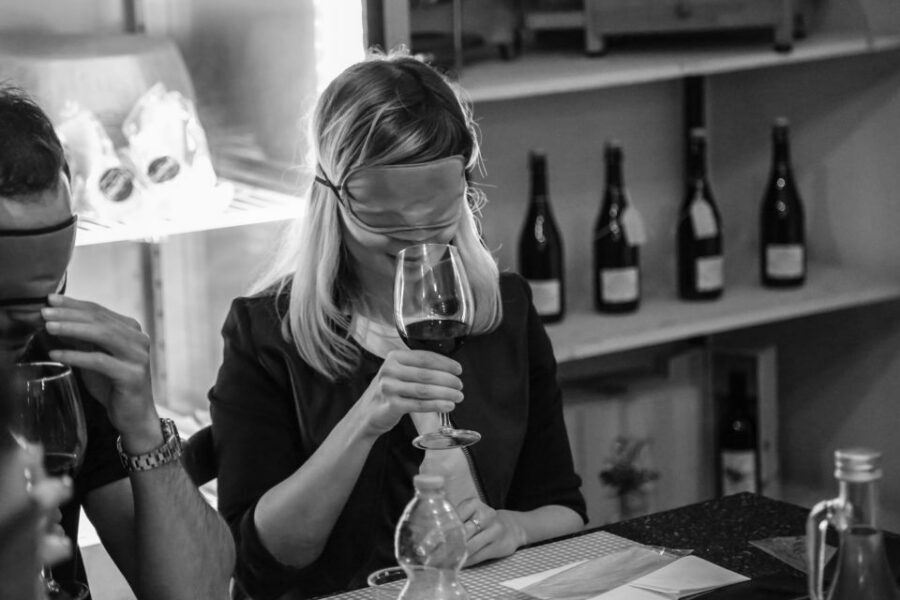
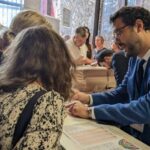
This is a 1-hour experience designed to move fast without feeling rushed. You taste four tastings total, and each one is part of a structured set of guesses and corrections. You’ll use a blindfolded wine tasting kit (and the expert’s prompts) to focus on aromas and flavors instead of looks.
Here’s the rhythm you can expect:
- You start with the blindfold setup and a short orientation to how the tasting will work.
- Then you taste four wines that share the same type/style, each from a different winery.
- With every pour, you record impressions on your sensory card—the point is to practice recognition, not just name-drop.
- The pacing builds so you get better at identifying what you’re smelling and tasting before the end.
A good sign here is that you’re not left guessing alone. The expert helps you interpret what you detect, then you compare that against your own notes. That back-and-forth is what turns a gimmick into a skill.
Four wines from different wineries: how you should compare
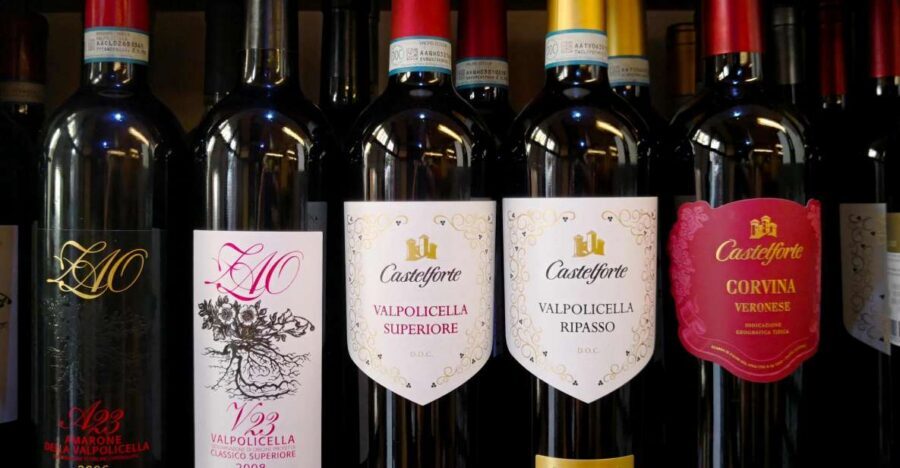
The smartest part of this experience is the comparison logic: you’re tasting the same general type/style from different wineries. That means your brain has fewer excuses. You can’t say, I guess I just liked a different category.
When you’re blindfolded, focus on three things each time:
- Aroma strength: is it subtle, medium, or bold?
- Aroma direction: fruit, floral notes, spice-like hints, or something more savory (only what you actually notice)
- Flavor shape: does it feel light and crisp, or deeper and more structured?
The sensorial cards are the tool that makes this workable. If you wait until the end to write everything down, you’ll lose details. During each tasting, jot quick phrases. Short notes beat perfect notes.
Also, don’t obsess over getting it right. The goal is learning how to get closer with each round. You’ll build instincts for what certain aromas and flavors feel like in your mouth.
Sounds and scents: the extra prompts that make guessing easier
This experience doesn’t just throw you blindfolded and hope for the best. It uses sounds and scents to stimulate your senses and sharpen your attention.
Why this helps: when you remove sight, your brain looks for other anchors. These sensory cues give you timing and context, so your guesses become less random. You’re more likely to notice patterns—like the way a particular aroma repeats across multiple tastings, even if the winery changes.
Practically, this means you should treat the expert prompts like cues in a tasting rhythm. When something changes—an aroma emphasis, a sensory cue, or the way the wine hits your palate—pause and update your sensory card. That’s where the learning happens.
The result is surprisingly entertaining. It feels like a game, but with real wine education layered in.
Final taste test: checking your instincts without the safety net
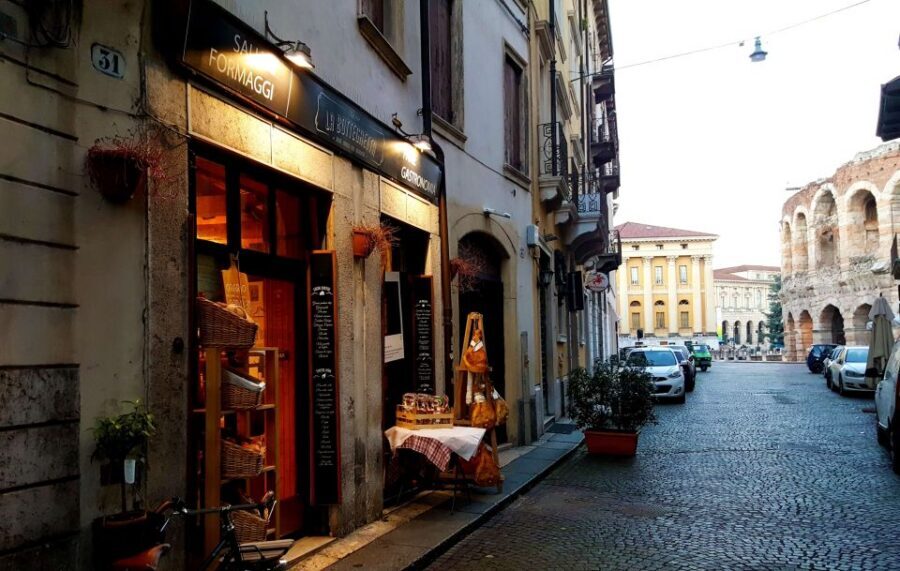
After the four guided tastings, you get a final taste test. Think of it as your “did I actually learn anything?” moment.
You’ll likely rely on what you wrote in your sensory cards. That’s why keeping your notes short but specific matters. If you just wrote vague words, your final test won’t feel as useful.
When you do the final check, don’t aim for perfection. Aim for consistency:
- Were your aroma descriptions believable across rounds?
- Did the flavor shape you noticed match what the expert explained?
- Can you explain to yourself what changed between wineries, within the same type/style?
This is where the blindfold format pays off. By the end, you’ve trained a response that’s not dependent on what the bottle looks like.
You can also read our reviews of more wine tours in Verona
Bread, cheese, and charcuterie: the included payoff between pours
Wine tasting can get intense if you’re only tasting and never eating. Here, you’re not left hanging. The experience includes bread, breadsticks, and a mini charcuterie board with freshly sliced meat and cheese, plus mineral or sparkling water.
This matters for two reasons:
- It gives your palate a reset so you don’t overwhelm your taste buds after multiple wines.
- It turns the experience from pure instruction into a more normal, social meal rhythm—so it feels like part of a Verona day rather than a lab session.
A practical tip: take a small bite between tastings (when timing allows) rather than loading up all at once. That keeps flavors separated enough that you can still notice what the next wine is doing.
Price and value: is $53 fair for four tastings?
At $53 per person for about 1 hour, you’re paying for a lot more than a sip-and-smile. You’re getting:
- 4 wine tastings
- a blindfolded wine tasting kit
- expert guidance through aromas and provenance
- sensory cards for each round
- a final taste test
- bread, breadsticks, meat and cheese, and water
When you add that up, the value is mainly in the guided attention. The expert isn’t just serving wine; they’re helping you connect what you sense to what it means. That kind of instruction is hard to replicate if you’re tasting on your own in a shop.
So for me, the value equation looks like this: if you enjoy learning through doing—smell, taste, compare, note—the price feels fair. If you only want casual drinking with zero focus, you might find the structured format more intense than you expected.
Language comfort in Verona: English, Italian, Russian
You’ll have a live tour guide in English, Italian, or Russian. That’s a big deal for a tasting like this, because the whole experience depends on communication—what you notice, what the expert explains, and what you write down on the sensorial card.
If your language skills are mixed, you’ll still benefit from the sensory process. But better understanding will make the feedback land faster. Choose the language you’re most comfortable with, especially if you want to leave with wine terms you can actually reuse.
Who this Verona blindfolded tasting is best for
This experience fits best if you enjoy hands-on learning and you like challenges. It’s also a great choice if you’re the type who always says, I want to get better at wine but never knows where to start.
It’s especially good for:
- People who want an interactive activity instead of a passive tour
- Wine-curious visitors who want practical skills (aroma recognition and structured comparison)
- Groups that enjoy a playful format with guided education
You might skip it if you strongly prefer wine tasting without guidance or you’d rather spend your hour in a longer sit-down meal. This one is focused and fast.
Should you book this blindfolded wine tasting in Verona?
If you want something memorable that teaches you how to taste—really taste—this is a strong yes. The combination of four winery comparisons, expert coaching, and sensory cards makes the learning feel tangible, not vague.
Book it if you’re curious, game for a short intense hour, and happy to rely on smell and taste instead of visuals. Skip it only if you’re looking for a purely relaxed drinking session with no structured feedback.
FAQ
How long is the Verona blindfolded wine tasting?
The experience lasts 1 hour.
How many wines will I taste?
You’ll do 4 wine tastings.
Is the wine tasting blindfolded?
Yes. It’s a blindfolded wine tasting experience.
What’s included with the $53 price?
The package includes 4 wine tastings, a blindfolded wine tasting kit, a final taste test, bread, breadsticks, and a mini charcuterie board with freshly sliced meat and cheese, and mineral or sparkling water.
What languages are available for the live guide?
The live tour guide is available in English, Italian, and Russian.
What should I bring to join the tour?
You should bring a passport or ID card.
Can I reserve and pay later?
Yes. The experience offers Reserve now & pay later, so you can book a spot and pay nothing today.
Is there free cancellation?
Yes. You can cancel up to 24 hours in advance for a full refund.