REVIEW · VERONA
3 Hour Walking tour of Verona and Arena
Book on Viator →Operated by VENEZIA TOUR ITALY · Bookable on Viator
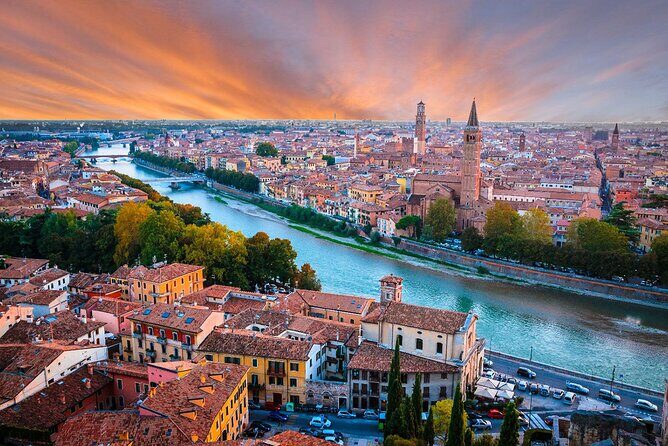
Verona in three hours? Yes, and it works. This guided loop hits medieval defenses and Roman landmarks in one tight walk, so you get the big story fast instead of wandering in circles.
I really like how the pace is brisk but not stressful—most of it stays pretty level—and you get clear context at each stop. I also like the value angle: the Arena museum ticket is included, while the other photo stops along the way are free, so you know you’re paying mainly for a licensed guide and a smart route.
One heads-up: this price is not cheap for a 3-hour shared walk, so the experience only feels like great value if you enjoy guided interpretation more than you want a long list of ticketed attractions.
In This Review
- Key Highlights Worth Marking in Your Day
- Where the Tour Starts: Via Teatro Ristori at 10:00
- Castelvecchio Fortress: Scaliger Power in One Strong Stop
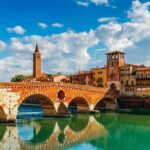
- Ponte Scaligero: A Daring Medieval Bridge Walk
- Arco dei Gavi: A Roman Arch With a Specific Family Story
- Porta Borsari: Roman City Walls and the Jupiter Connection
- Piazza delle Erbe: Verona’s Oldest Square and Roman Footprints
- Torre dei Lamberti: A Medieval Marker Near the Market Square
- Piazza dei Signori: The Scaliger Palaces and Piazza Dante
- Arena di Verona: Roman Amphitheater Plus Museum Entry
- Price and Value: What $171.52 Buys You
- Guide Style: The Difference Between Hearing and Listening
- Practical Tips for Enjoying Every Stop
- Who Should Book This Tour?
- Should You Book It?
- FAQ
- FAQ
- What’s the duration of the 3 Hour Walking tour of Verona and Arena?
- What time does the tour start and where does it finish?
- Is the tour available in English?
- Is the Arena museum ticket included?
- Do I need admission tickets for the other stops?
- What’s the group size?
- Is the tour still available in bad weather?
- What should I bring for the walk?
- How should I plan if I’m booking other tours the same day?
- Is there a free cancellation option?
Key Highlights Worth Marking in Your Day
- Castelvecchio and Ponte Scaligero: medieval military engineering, right in the historic center
- Roman Via Postumia links: Arco dei Gavi plus a look at Roman gate history at Porta Borsari
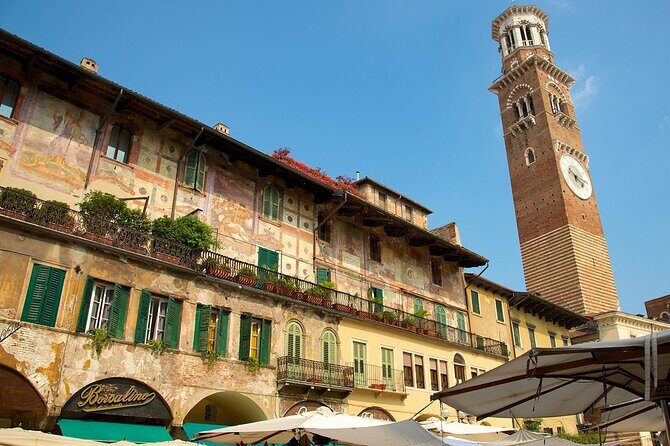
- Market-square energy: Piazza delle Erbe sits over the older Roman Forum footprint
- Two major plazas: Piazza delle Erbe and Piazza dei Signori connect politics, commerce, and power
- Arena di Verona with museum access: the tour’s finish includes the Arena museum entry
- Small groups (up to 16): easier listening and quicker course-corrections from your guide
Where the Tour Starts: Via Teatro Ristori at 10:00
The tour kicks off at Via Teatro Ristori, 7 and runs for about 3 hours, with a return back to the same meeting point. Plan to arrive a few minutes early so you’re not rushing when the group gathers.
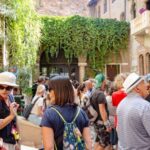
This is a shared tour, capped at 16 people, which matters more than you might think. Smaller groups mean you can actually hear the guide, and the route stays manageable even when a few people stop to take photos.
It’s offered in English with a mobile ticket, so you won’t be hunting for paper vouchers. And the tour keeps going in all weather. Bring water and sun protection, and if you’re going in warm or changeable seasons, consider a small umbrella too.
You can also read our reviews of more walking tours in Verona

Castelvecchio Fortress: Scaliger Power in One Strong Stop
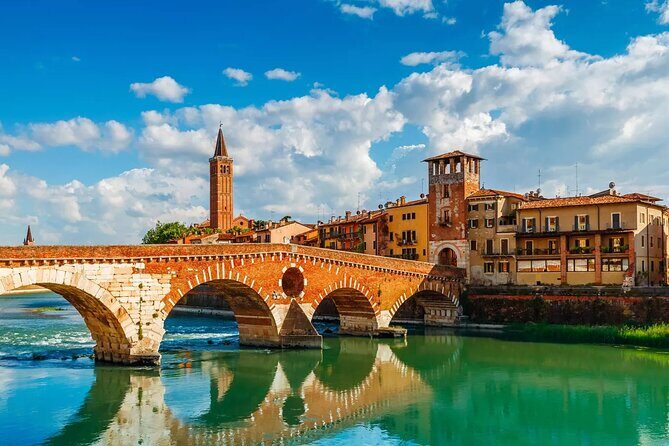
The first stop is Museo di Castelvecchio, inside the medieval fortress known for its military role in Verona. You’re looking at a structure that was originally called the Castle of San Martino in Aquaro, and it still anchors the story of the Scaliger era.
I like this start because it sets the tone. Before you get to bridges, arches, and Roman stonework, you understand the medieval mindset: control, defense, and status—basically the Scaliger Signoria flexing in stone.
You don’t need to pay an admission fee for this stop as part of the tour, which makes it a smart opener. You’ll likely spend about 25 minutes here, enough time to take in the fortress scale and understand why it mattered.
Ponte Scaligero: A Daring Medieval Bridge Walk
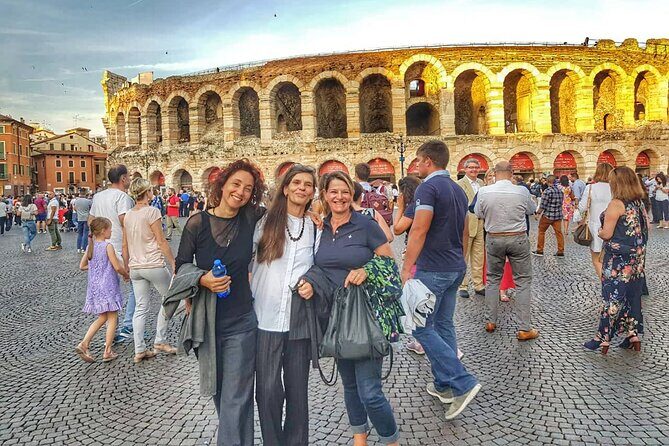
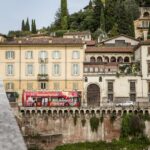
Next up is Ponte Scaligero, also called the Castelvecchio Bridge. It’s part of the larger Castelvecchio fortress complex and stretches across the Adige River area as an infrastructural and military work.
This is one of those stops where the guide’s pointing matters. Without context, it’s easy to treat a bridge like a bridge. With context, it becomes clear that this is defensive architecture—designed to move people and control passages, not just look pretty.
You’ll get about 25 minutes here. It’s a good spot for photos too, since you can see how the bridge connects to the fortress logic—Verona’s medieval engineering thinking in full view.
Arco dei Gavi: A Roman Arch With a Specific Family Story
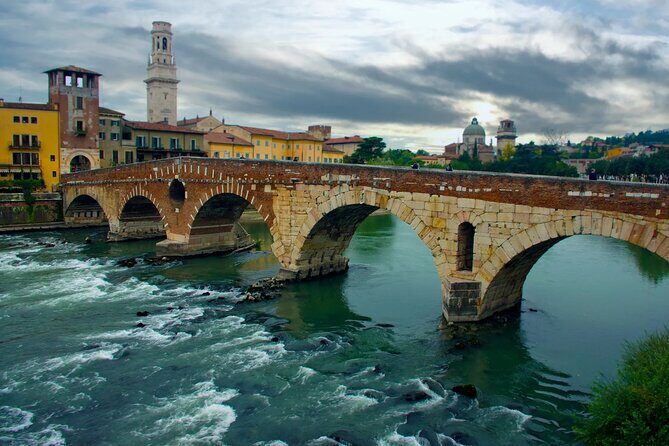
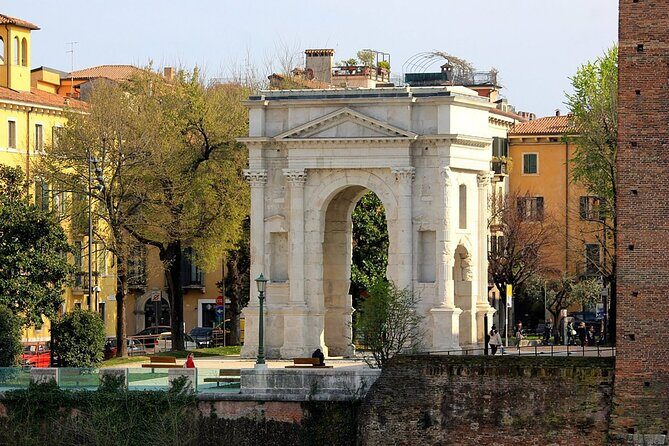
Then you’ll shift into Roman Verona with Arco dei Gavi. This one is small compared to famous Roman monuments, but it’s special because it’s a rare example of an honorary monumental arch for private use.
The key detail is the timing and purpose: it was built around the middle of the 1st century to celebrate the Gavia family, along the old Via Postumia route outside the Roman city walls. That makes the arch feel less like random ruins and more like a message in stone.
Admission is free for this stop as part of the tour, and you’ll have about 25 minutes. If you like learning how ancient monuments were tied to real people and real roads, this is a satisfying moment.
Porta Borsari: Roman City Walls and the Jupiter Connection
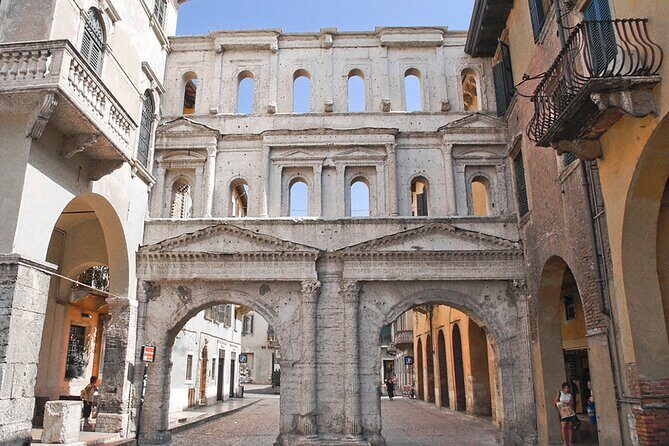
From there you’ll reach Porta Borsari, a Roman gate in Verona’s old walls. You’ll hear it tied to the ancient name Porta Iovia, linked to a nearby temple dedicated to Jupiter Lustralis.
This is where the tour helps you see layers. The gate is a physical boundary—Roman planning made stone—and the guide typically explains what it meant for movement and identity inside the city.
You’ll have around 25 minutes at this stop. Even if you’re not a hardcore Roman-walls person, the story here is easy to follow: gates were power points, and Verona used them to manage who entered and how.
You can also read our reviews of more tours and experiences in Verona
Piazza delle Erbe: Verona’s Oldest Square and Roman Footprints
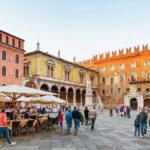
After the Roman stone, the tour moves into everyday Verona at Piazza delle Erbe (Piazza Erbe). It’s the oldest square in the city and sits above the area of the Roman Forum.
In Roman times, it was political and economic life rolled into one. Over time, Roman buildings gave way to medieval ones, so you can almost read the city’s evolution just by looking at the change in architecture around the square.
This stop is about 20 minutes, and it’s a strong place to pause and reset. You’ll likely find the guide giving practical cues on what to notice and how to connect it to the earlier stops. It also helps that you’re standing where locals still treat the square like a centerpiece.
Torre dei Lamberti: A Medieval Marker Near the Market Square
Next comes Torre dei Lamberti, a medieval structure near Piazza delle Erbe. You’re not just seeing a tower—you’re seeing a reminder that Verona’s skyline was shaped by civic power and watchful medieval planning.
This stop is quick at about 20 minutes. It’s a good chance to look around the square and orient yourself visually: which streets feed into the plazas, how the tower sits near the city’s older heart, and how everything connects.
If you like viewpoints, towers usually help your brain map the city faster. Even without a long climb mentioned here, the tower gives a clear reference point.
Piazza dei Signori: The Scaliger Palaces and Piazza Dante
The tour then heads to Piazza dei Signori, also known as Piazza Dante. The setting is dramatic: a square formed in the Middle Ages as Scaliger palaces developed nearby, and one that held political, administrative, and representational functions.
This is one of the most “Verona-feeling” stops because the architecture frames the space in a way that’s built for ceremony. You’re surrounded by monumental buildings, and the guide’s context usually helps you understand why this spot mattered beyond sightseeing.
You’ll have about 20 minutes here. If you’re the type who likes seeing how power played out in public space, this square will feel like more than a pretty stop.
Arena di Verona: Roman Amphitheater Plus Museum Entry
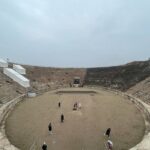
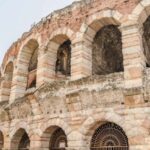
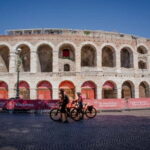
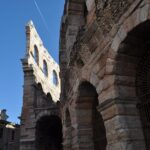
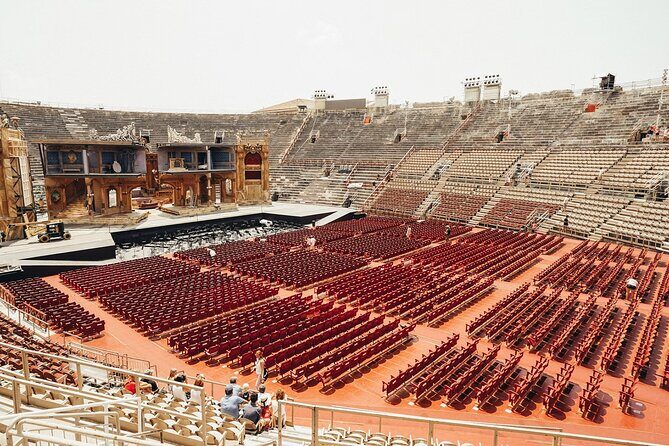
The finale is Arena di Verona, the Roman amphitheater that’s an icon of the city. Even if you’ve seen photos, the scale hits differently when you’re standing near it, and the guide’s explanation usually brings the “why this matters” into focus.
This stop includes entrance to the Arena museum, which is a real plus. With the museum included, you’re not ending on a quick photo moment—you get a chance to understand the site more deeply with the right ticket in hand.
Plan for about 20 minutes at the Arena as part of the overall timing. The rest of your value here comes from being guided: you’ll know what you’re looking at, instead of guessing.
Price and Value: What $171.52 Buys You
At $171.52 per person for a roughly 3-hour shared walk, the price can feel steep at first glance. Here’s the honest way to think about it:
You are paying for a licensed guide and an experience that stitches together medieval and Roman Verona with a route that avoids aimless wandering. You’re also paying for convenience and certainty at the end, because Arena museum entry is included—while multiple other stops on the route have free admission as part of the itinerary.
If you already know Verona well and only want free outdoor sights, you might feel like you could recreate this on your own. That’s the main drawback to consider: the trip’s worth depends on whether you enjoy being guided through the meanings behind the stones.
On the positive side, the tour is built to be listenable. Past experiences with this style of tour have highlighted a good balance—packed with facts, but not so heavy it turns into history homework.
Guide Style: The Difference Between Hearing and Listening
The guide can make or break this kind of short tour. In past runs, guides including Frank and Maddy were praised for being engaging, interactive, and kind, with information delivered in a way that keeps it moving.
That balance matters. A 3-hour walk can turn into a blur if the guide dumps dates nonstop. When it’s done right, you leave with a clear mental map: where medieval power shows up, where Roman planning shows up, and why the Arena is the grand finishing note.
Also, one earlier participant highlighted that a good guide will add practical ideas, like where to eat after the tour. Even if food tips aren’t your focus, that kind of street-smart advice is usually a quiet win.
Practical Tips for Enjoying Every Stop
A few things will help you get the most out of the route.
Wear comfortable shoes, since you’ll be walking a full loop over three hours. Bring water and sun protection, and if the weather looks unpredictable, pack a small umbrella. The tour runs in all weather conditions, so don’t count on perfect conditions to save you.
Because the tour is mostly outdoors, you’ll still want to be ready for sun or shade shifts across squares and fortress areas. In colder seasons, dress warmly.
Also, think about your day planning. It’s wise not to stack multiple tours close together. Verona rewards a slower rhythm, and you’ll enjoy the walking part more if you aren’t rushing to your next reservation.
Who Should Book This Tour?
This works well if you want:
- A quick orientation to Verona’s big eras: Scaliger medieval power and Roman foundations
- A guided route that connects the dots between sites
- An ending that’s more than a photo stop thanks to the Arena museum ticket
- A pace that stays manageable for most people with comfortable walking shoes
You might skip it if you only want independent sightseeing and you’re already comfortable piecing together Verona’s history on your own. It’s still a solid route, but the price makes guide interpretation part of the deal.
Should You Book It?
I’d book this if you want Verona explained in a way that fits into one morning. You get a tight sequence of landmarks, a licensed guide, and the Arena museum included, which helps the tour feel like more than just a walk around town.
If you’re price-sensitive, compare this with what you’d pay to cover only the Arena museum plus a self-guided route. If you’d still enjoy learning the stories behind the stones—and not just staring at them—this one earns its cost.
FAQ
FAQ
What’s the duration of the 3 Hour Walking tour of Verona and Arena?
It lasts about 3 hours.
What time does the tour start and where does it finish?
The tour starts at 10:00 am at Via Teatro Ristori, 7, 37122 Verona VR, Italy and ends back at the same meeting point.
Is the tour available in English?
Yes, it’s offered in English.
Is the Arena museum ticket included?
Yes. The tour includes a ticket to the Arena museum and Arena museum entrance.
Do I need admission tickets for the other stops?
The stops listed along the route show admission ticket free for those locations. You’ll just need to have the included Arena entry covered by the tour.
What’s the group size?
This shared tour has a maximum of 16 travelers.
Is the tour still available in bad weather?
Yes. Tours continue in all weather conditions.
What should I bring for the walk?
It’s recommended to bring mineral water, sunscreen, a hat, and an umbrella.
How should I plan if I’m booking other tours the same day?
It’s advised not to book more than one tour on the same day with schedules close together.
Is there a free cancellation option?
Yes, you can cancel for a full refund if you cancel up to 24 hours in advance of the experience start time.