REVIEW · VERONA
3-Hour Walking Tour with Guide Discovering Verona
Book on Viator →Operated by Guide in Verona · Bookable on Viator
Verona turns into a timeline on foot. In about three hours, this guided walk strings together the Arena di Verona, medieval architecture, and the city’s church stops so you get context, not just postcard views. It’s also offered in English, with a small group size that keeps the pace human.
I especially like the guide style. Multiple guides tied to this tour, including Evgeniy and Eugenio, are praised for fun facts, clear explanations, and checking that you’re comfortable with both timing and information. The second big win is the mix: yes, you hit Romeo and Juliet landmarks, but you also get the political square, major churches, and the Scaligero tomb area that many quick Verona plans skip.
One consideration: the walk seems well-run most of the time, but there have been last-minute cancellations or guide issues reported in the past. If your Verona day is tight, I’d keep a Plan B in mind and watch for same-day updates.
In This Review
- Key highlights worth your attention
- The route starts at Piazza Bra and ends by Porta Leoni
- Arena di Verona: more than a big Roman stage
- Scaligero Bridge and Piazza dei Signori: architecture with power behind it
- Churches on this walk: San Lorenzo, Sant’Anastasia, and an ancient worship site
- Piazza delle Erbe and Casa di Giulietta: atmosphere plus the Romeo and Juliet story
- Scaligero tomb area, Bra gates, and Arco dei Gavi
- The oldest devotion meets Romeo’s angle: Sante Teuteria, Casa di Romeo, and a viewpoint stop
- How the 3-hour format keeps it fun (and what you’ll miss)
- Price and value: where $68.67 makes sense
- Guide quality: why names like Evgeniy and Eugenio matter
- Who this tour fits best
- Should you book this Verona walking tour?
- FAQ
- How long is the 3-Hour Walking Tour with Guide Discovering Verona?
- How much does the tour cost?
- Is pickup available, and where does the tour start and end?
- What language is the tour offered in?
- Are admissions included for the sights on the route?
- What is the cancellation policy if the tour is canceled or you need to change plans?
Key highlights worth your attention
- A compact 3-hour route that covers a lot of centro storico without turning it into a marathon
- Arena di Verona plus Roman-and-medieval storytelling in the first stretch
- Scaligero Bridge and Piazza dei Signori for standout architecture and political history
- Church stops that add variety (San Lorenzo, Sant’Anastasia, and the oldest worship site in the Veneto area)
- Romeo and Juliet stops, handled in a wider Verona story instead of only Shakespeare trivia
- Small group size (max 20), which usually helps questions and pacing
The route starts at Piazza Bra and ends by Porta Leoni
This tour begins at Piazza Bra (P.za Bra, Verona VR) and ends near Porta Leoni on Via Leoni. That matters because you’re not zig-zagging across the city for a “dead” meeting point. You’re walking through the densest part of Verona’s historic center, which is where most of the sightseeing is anyway.
You’ll also have a mobile ticket, and pickup is offered. Both are practical on a day when you’d rather be moving than hunting down paperwork. And since the tour is limited to 20 people, it’s easier for the guide to keep everyone together through narrow streets and small plazas.
If you like planning with a little cushion, note the tour is often booked about 23 days in advance on average. That doesn’t mean it sells out instantly, but it’s a good hint to reserve early—especially if you’re traveling in peak season.
You can also read our reviews of more walking tours in Verona

Arena di Verona: more than a big Roman stage
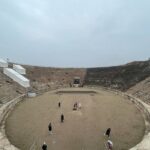
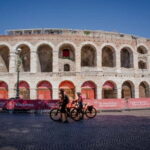
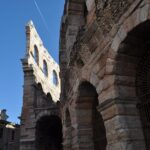
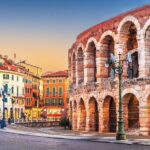
Your first stop is the Arena di Verona, with about 15 minutes there. The tour frames it as a monument with a “secret history,” which is tour language for: you’ll hear the kind of details that don’t appear on the most basic photo captions.
Even if you’ve seen images of the Arena, this is where you start building a mental map. The Arena is not just a pretty landmark. It’s a starting point for understanding how Verona’s identity has layers—Roman-scale grandeur, later medieval and Renaissance influence, and the city’s habit of reusing and reinterpreting older spaces.
Admission is listed as free for this stop. That’s a real plus: it keeps your time focused on the walk and the story, not on shopping around for tickets.
Tip: Plan to arrive ready to look upward and around. The Arena area is a good place to train your eye for “how old stones get reused” themes that will pop up again later on the route.
Scaligero Bridge and Piazza dei Signori: architecture with power behind it
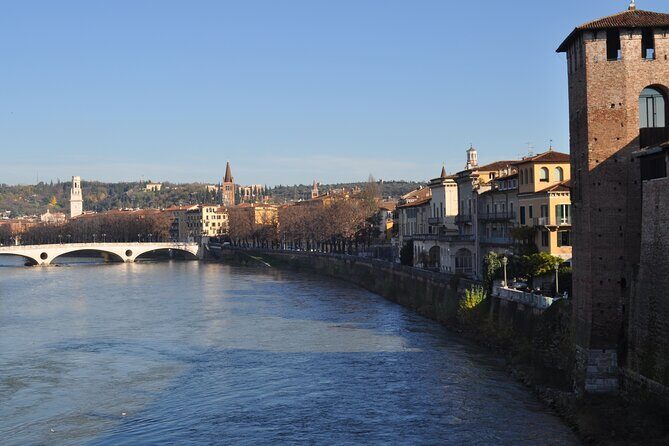
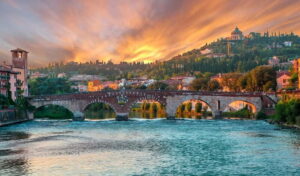
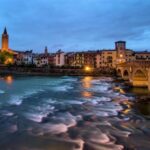
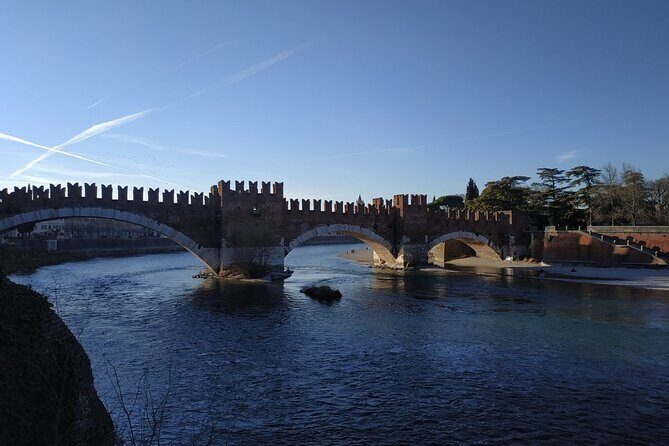
Next comes the Scaligero Bridge. You get around 8 minutes, and the tour notes that pretty much everyone ends up taking at least one photo here. That’s believable, because it’s the kind of medieval structure that looks intentional even from a quick glance.
The tour also includes the admission ticket for this stop. That usually means less friction on the ground, which is exactly what you want in a short 3-hour experience.
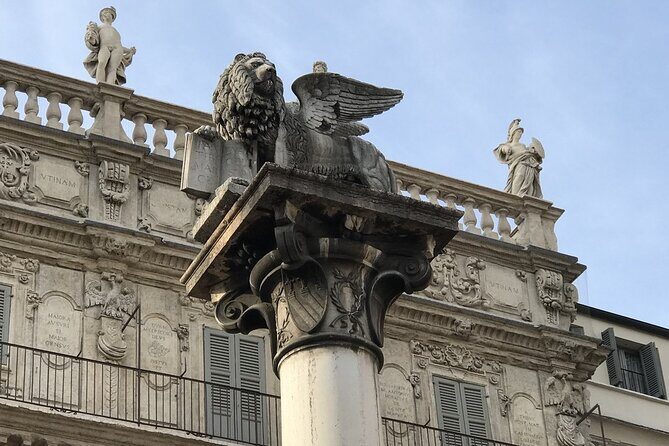
Then you shift to Piazza dei Signori, about 20 minutes, presented as the center of Verona’s political life. This is the kind of stop where a good guide can turn “square” into “system.” Instead of treating it like a pause between photo spots, you’ll hear why this space mattered—who would have gathered here, and how power played out in stone and public space.
My practical takeaway: if you care about how cities work (who held power, where people met, where decisions happened), Piazza dei Signori is the “I didn’t expect that” stop.
Churches on this walk: San Lorenzo, Sant’Anastasia, and an ancient worship site
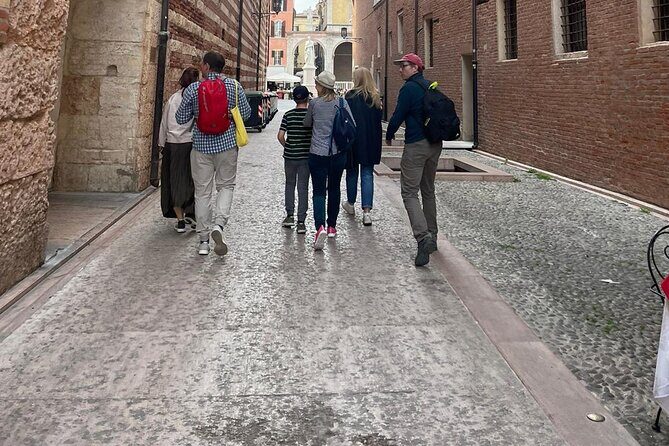
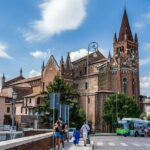
A quick but lovely break comes at Chiesa di San Lorenzo – Verona, about 5 minutes. It’s described as really beautiful, which is the kind of stop that makes the tour feel less like a checklist. These short church visits often work well because they’re long enough to notice details, but short enough that the tour still keeps moving.
Then you reach Cattedrale di Sant’Anastasia, with about 12 minutes. This stop is tied to Pisanello’s frescoes. Frescoes are one of those things you can miss if you only glance and move on—so having a guide here helps you see what’s worth your attention in the time you have.
Later, you’ll visit Chiesa delle Sante Teuteria e Tosca, listed as about 10 minutes and described as the oldest place of worship in the Veneto. Even if you’re not a church architecture expert, this is a meaningful shift in perspective. It’s a reminder that Verona’s history isn’t only public squares and famous names. It’s also ordinary devotion, repeated through time.
Most of these stops list admission as free, so you get variety without extra costs.
If you’re deciding what matters most to you: this is a strong route if you like “city texture” (churches, squares, and architecture) more than only famous literary sites.
Piazza delle Erbe and Casa di Giulietta: atmosphere plus the Romeo and Juliet story
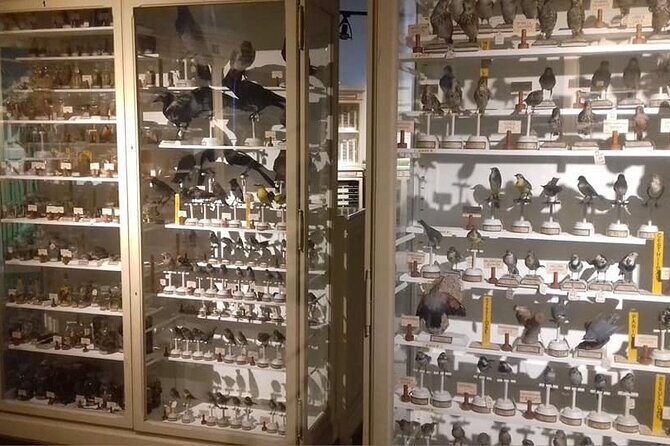
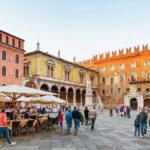
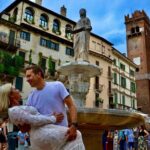
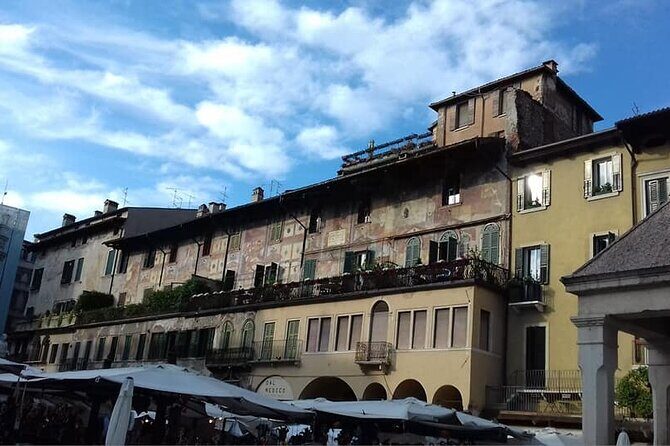
At Piazza delle Erbe, you have about 20 minutes. The tour calls it the center of Verona with a unique atmosphere and a story around every corner. This is where the walk starts to feel like “Verona the place” rather than “Verona the museum.”
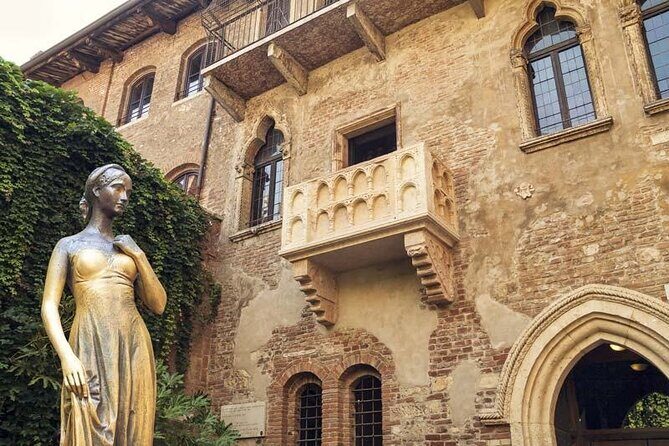
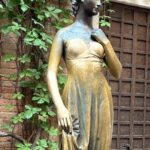
From there, the itinerary heads to Casa di Giulietta, about 15 minutes. The description highlights the famous Romeo and Juliet setting and frames it as the true story behind Shakespeare’s tragedy. I’d treat this as “the story as Verona tells it,” not as a historical courtroom ruling—because literary legends always have a relationship with local tradition.
Still, what makes this portion useful is timing and context. You’re not just stopping at a famous name—you’re getting earlier grounding first (Arena, political square, medieval bridges), so the romance element lands with more meaning.
You can also read our reviews of more guided tours in Verona


Scaligero tomb area, Bra gates, and Arco dei Gavi
After the romance stops, the route turns more structural and symbolic.
You’ll visit Cattedrale di Sant’Anastasia earlier, then move to I Portoni della Bra (about 10 minutes). It’s described as one of Verona’s symbols. Gates and entrances always tell you how a city protected itself and where it wanted visitors to arrive. Even a short stop can give you that “city logic” feeling.
Next is Arche Scaligere at about 20 minutes. The tour describes this as the most beautiful place in Verona, where medieval princes are buried. Whether you call it beautiful or simply powerful, tomb areas are where medieval politics becomes personal: names, dynasties, and a statement that someone expected to be remembered.
Then comes Romeo’s House (Casa di Romeo) around 10 minutes—and the itinerary also lists this stop again later. That duplication can be handy. It may give you a chance to look twice: once for the main points, and once to linger for photos or a second pass after you’ve heard more context about the city.
The tour also includes Arco dei Gavi, about 10 minutes, described as a piece of ancient Rome in the Veronese Renaissance. This is a classic Verona trick: old meets new, not as a straight line, but as a layered conversation.
The oldest devotion meets Romeo’s angle: Sante Teuteria, Casa di Romeo, and a viewpoint stop
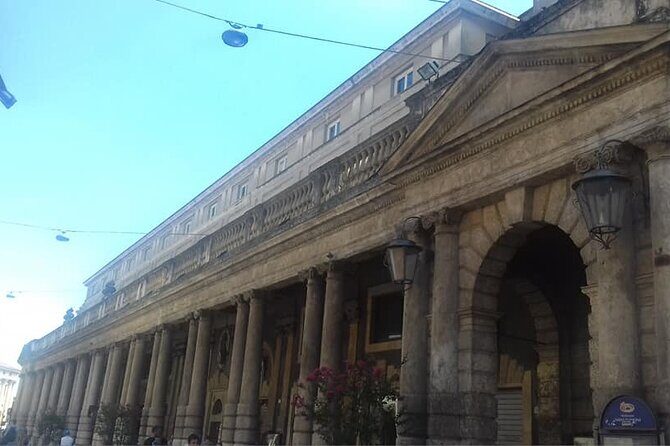
Two parts of this section make the route feel more complete.
First is Chiesa delle Sante Teuteria e Tosca (the oldest worship site in the Veneto), which you’ll already have seen on the earlier church segment. It gives the tour a “bottom-up history” feel. Not everything important in a city is a palace or a battlefield.
Then you return to Casa di Romeo again at about 10 minutes. Having it listed twice suggests the tour wants you to get more than a quick snapshot. You’ll likely leave with a clearer sense of how Verona’s Romeo and Juliet identity sits inside the wider historic center.
Finally, you reach Piazzale Castel San Pietro, with about 10 minutes. The description says it’s where your was born, but the rest of the route is clearly Romeo-focused, so this stop is meant to tie into that narrative thread. Even if you treat it as a “story viewpoint” rather than strict biography, it’s a good final push—because higher ground typically makes it easier to see how the city’s streets relate.
How the 3-hour format keeps it fun (and what you’ll miss)
This tour is approximately 3 hours, and the stops are mostly between 5 and 20 minutes. That structure is the secret. You’ll never spend so long at one sight that you burn out, and you won’t rush past everything either.
But here’s the tradeoff. Short stops mean you’ll get highlights and key context, not deep research time in each monument. If you want to read museum-style panels for an hour at every stop, this isn’t that kind of tour. It’s designed to be more like a guided walk with story beats—built to help you connect the dots.
The upside is you’ll leave with a “Verona map in your head.” Once you know the order—Arena, medieval bridges, political squares, churches, tombs, then Romeo and Juliet landmarks—you can understand the city when you wander on your own later.
Also, this walk is described as workable for most travelers and allows service animals. It’s a walking tour, though, so you’ll want comfortable shoes and a pace that doesn’t depend on constant sitting breaks.
Price and value: where $68.67 makes sense
At $68.67 per person for about 3 hours, you’re paying for more than walking. You’re paying for a guide who can connect architecture and history into a story you can remember.
The value case is helped by a few things your money covers:
- Several stops list admission as free (Arena, Piazza dei Signori, San Lorenzo, Piazza delle Erbe, Giulietta, Sant’Anastasia, Bra gates, Scaligero tombs, Arco dei Gavi, and more).
- Scaligero Bridge is listed with admission included.
- You get a mobile ticket, and English language service.
- The group is capped at 20, which usually improves the experience compared with large, slow-moving groups.
You’re also not paying for a full-day commitment. Three hours is a sweet spot if you’re trying to fit Verona into a tight itinerary, or if you want one guided morning/afternoon and then freedom afterward.
My practical advice: treat this tour as a “foundation layer.” If you’ll spend the rest of the day exploring on your own, it helps you use your time better.
Guide quality: why names like Evgeniy and Eugenio matter
A walking tour lives or dies by the guide’s storytelling rhythm. In this case, guide performance gets strong praise for:
- turning monuments into stories with fun facts
- explaining in a simple, natural way
- adjusting pace and checking in with guests
- handling mixed-language needs (one example includes switching between English and Italian)
- keeping energy up even in less-than-perfect weather
There’s even a note that touring in rain didn’t necessarily ruin the experience. That’s encouraging for planning, as long as you also respect the tour’s weather requirement: it’s marked as requiring good weather, and cancellations due to poor weather can lead to a different date or a full refund.
One more note, balancing the good: there have been unhappy reports about last-minute cancellations and guide problems. That doesn’t mean it happens every time, but if your schedule is emotionally set in stone, I’d confirm details close to departure.
Who this tour fits best
This walking tour is a strong choice if you:
- want a compact way to see key Verona without planning a route yourself
- like history that connects buildings and public squares, not only dates
- want Romeo and Juliet landmarks but also crave the rest of Verona around them
- appreciate church and architecture stops as part of the story
It’s also a good match for couples and small groups who want a guided flow with enough room for questions. The small group cap helps here.
If you’re the type who needs long time in one monument, or you’re a strict museum deep-dive person, you might feel constrained by the short stop durations.
Should you book this Verona walking tour?
I’d book if you want Verona’s story stitched together in 3 hours, starting from the Arena and ending near Porta Leoni. The biggest reason is the way the route mixes iconic sites (Arena, Scaligero Bridge, Piazza delle Erbe, Giulietta, Sant’Anastasia, Scaligero tombs, Casa di Romeo) with stops that add variety and meaning beyond Shakespeare.
I’d pause and plan carefully if your day is too fragile for last-minute changes. The tour has worked well for many, but there are enough cancellation/guide issues reported that you should treat this like any booked experience: don’t schedule an unchangeable timed ticket immediately afterward.
If you do book, I’d treat it as your Verona orientation. After the walk, you’ll know where to go next—and why.
FAQ
How long is the 3-Hour Walking Tour with Guide Discovering Verona?
The tour lasts about 3 hours.
How much does the tour cost?
The price is $68.67 per person.
Is pickup available, and where does the tour start and end?
Pickup is offered. The tour starts at Piazza Bra (P.za Bra, Verona VR, Italy) and ends at Porta Leoni (Via Leoni, 37100 Verona VR, Italy).
What language is the tour offered in?
The tour is offered in English.
Are admissions included for the sights on the route?
Admission is listed as free for several stops, and Scaligero Bridge is listed as included.
What is the cancellation policy if the tour is canceled or you need to change plans?
You can cancel for a full refund up to 24 hours in advance. The experience requires good weather, and if it’s canceled due to poor weather, you’ll be offered a different date or a full refund.