REVIEW · VERONA
Verona Highlights Walking Tour in Small-group
Book on Viator →Operated by Ways · Bookable on Viator
Two hours to read Verona like a map. This walking tour is built for fast context: you hit the big landmarks in the UNESCO historic center and learn what you’re really looking at as you go. It’s set at a relaxed pace, but still moves smartly between Roman, medieval, and Shakespeare-shaped Verona.
I especially like the small-group size (up to 16) and the local-guide storytelling, which turns the streets, arches, and squares into something you can picture. I also like that you’re not stuck only in the guidebook hits; you get pointers for what to notice as you walk past the castle, bridges, and Roman remains.
One consideration: the main sights are mostly exterior stops, and admission tickets for places like the Arena and Juliet’s House aren’t included (plus, Juliet’s Balcony has a seasonal ticket rule from Dec 6, 2025 to Jan 6, 2026). Also, it’s a proper walking tour, and some areas may be tricky for reduced mobility.
In This Review
- Key highlights you’ll feel on the ground
- A 2-hour Verona power walk from Piazza Bra
- Castelvecchio and Scaligero Bridge: medieval Verona in motion
- The Arch of Gavi and Roman Verona’s “why this matters” clues
- Arena di Verona: the 2000-year-old stage you can actually read
- Juliet’s House: what you get, what to watch for
- Romeo’s house: the legend you can see from outside
- Piazza Bra: where cafés meet Roman-scale space
- Arche Scaligere: the Scaligeri cemetery and its power symbols
- Piazza delle Erbe: Roman forum roots under today’s market square
- Piazza dei Signori and Dante’s shadow: power, poetry, and stone
- The guide factor: small group energy with room for questions
- Price and value: $42.33 for a well-built orientation
- Who should book this Verona highlights walk
- Should you book this Verona Highlights Walking Tour?
- FAQ
- How long is the Verona Highlights walking tour?
- What does the tour cost?
- Where does the tour start and end?
- Is the tour in English?
- What’s included in the price?
- Are admission tickets included?
- Does the tour run in bad weather?
- Is access to Juliet’s Balcony included year-round?
- Is this a small group tour?
- Are there any rules for minors or service animals?
Key highlights you’ll feel on the ground
- Arena di Verona built in AD 30: learn how this amphitheater stayed so well preserved
- A Roman-to-medieval route: see Castelvecchio, Scaligero Bridge, and the Roman-era sites in one go
- Juliet’s House courtyard: understand what inspired Shakespeare’s Romeo and Juliet
- Piazza Bra plus the Forum squares: get oriented in Verona’s social centers, not just monuments
- Scaligeri power symbols: Arche Scaligere arches and the Dante connection in Piazza dei Signori
- 2 hours is focused: a great first day plan, especially when you want to return later
A 2-hour Verona power walk from Piazza Bra

Your tour starts and ends in Piazza Bra, right in the heart of the action. That’s a smart choice because you don’t waste time on transit or “getting oriented” with buses and taxis. Instead, you get immediate payoff: you’re already standing in one of Verona’s central squares as the guide lays out the city’s storyline.
This is also a convenient duration. Around two hours is long enough to see several major sights and short enough to stay flexible for the rest of your day. The pace is meant to feel laid back rather than sprint-and-rush, and that matters in old-city Verona where the streets can feel narrow and busy.
One more practical note: it runs rain or shine. So if you’re visiting in shoulder season (or Verona decides to drizzle), you’ll still get the walking plan and the guiding context.
You can also read our reviews of more walking tours in Verona
Castelvecchio and Scaligero Bridge: medieval Verona in motion
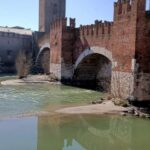
The tour sets up medieval Verona early with Castelvecchio, Verona’s late-medieval castle. Even if you only view parts from the route, Castelvecchio is the kind of landmark that changes your understanding of the city. Verona isn’t just romantic lanes and theater crowds; it has a defense story, and this is where it starts to make sense.
From there, you’ll walk along the area where the Scaligero Bridge connects the castle area to the Adige’s left bank. The bridge’s story is part of the emotional “why” behind the architecture: it was almost destroyed in a bombing and later rebuilt to match the original look. It’s the sort of detail a quick photo won’t teach you, but a local guide makes it stick.
If you’re the type who likes to ask questions, this is a good moment to do it. Early on, your guide can explain what Verona did in the centuries when power shifted fast, and why the riverside mattered.
The Arch of Gavi and Roman Verona’s “why this matters” clues
Next comes a Roman stop linked to the gens Gavia, tied to an early construction associated with Vitruvio. Even if you don’t plan a deep archaeology day, this point is valuable because it gives your route a timeline. Verona’s historic center feels like one continuous blur of stone, but the guide helps you sort Roman features from medieval rebuilds and later reworkings.
This is also where the tour helps your eyes. When you see a Roman arch on a street like it belongs there, you start noticing how later eras adapted the city instead of wiping it clean. That one shift in perspective makes the rest of your walk more enjoyable.
Arena di Verona: the 2000-year-old stage you can actually read
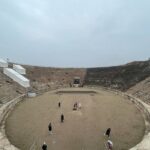
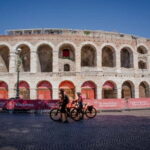
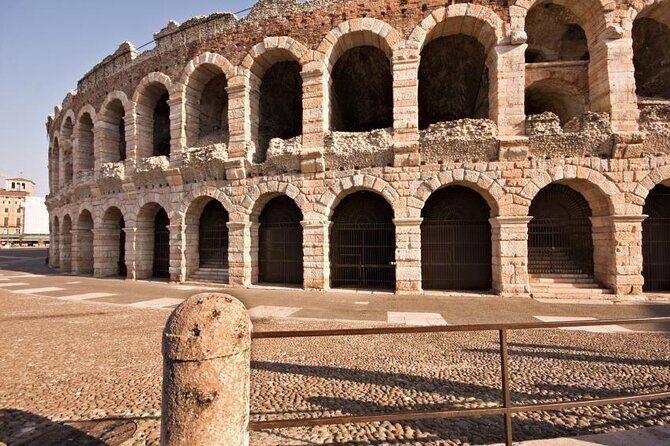
Then you reach the headline: the Arena di Verona, built in the first century AD during the Augustan period (with a build date given as AD 30). The big idea here is preservation. The Arena is very well preserved for something about 2,000 years old, and the guide explains how and why it has survived.
You’ll also learn the scale that once mattered in the Roman world. The Arena could hold up to 30,000 people, and imagining that capacity changes the way you look at the structure. Today it’s famous for performances, but understanding the original civic and entertainment purpose makes it feel less like a tourist object and more like real city infrastructure.
This stop also helps you time your next move. The Arena hosts concerts from international artists, and it’s also the home of the Verona Arena Festival in summer. Even if you’re not attending a performance, knowing that schedule helps you plan what to do next—especially if you want to return for a show or photograph the building at a better hour.
One logistics point: you’ll spend time at the Arena building, but the walk includes an admission-not-included note. If you want to go inside, you’ll likely need to plan that separately.
Juliet’s House: what you get, what to watch for
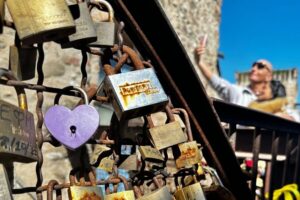
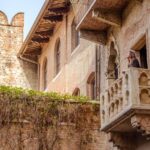
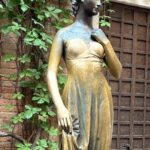
Juliet’s House (La Casa di Giulietta) is next, but here’s the useful framing: you’re seeing the courtyard associated with the Capuleti’s house—the setting that inspired Shakespeare’s Romeo and Juliet. The courtyard is the story engine. It’s where the Shakespeare connection feels real, not just painted on a souvenir shelf.
You’ll also find a practical heads-up in the tour’s rules. From Dec 6, 2025 to Jan 6, 2026, access to Juliet’s Balcony is not included as usual. City administration requires a ticket for Balcony access during that window, and while you can ask for information, you’re not buying the ticket for you through the tour.
So if Balcony views are your must-have, plan to purchase that ticket yourself during that season. Outside that date range, it’s still smart to treat the Balcony as a “separate decision,” not a guaranteed add-on.

Romeo’s house: the legend you can see from outside
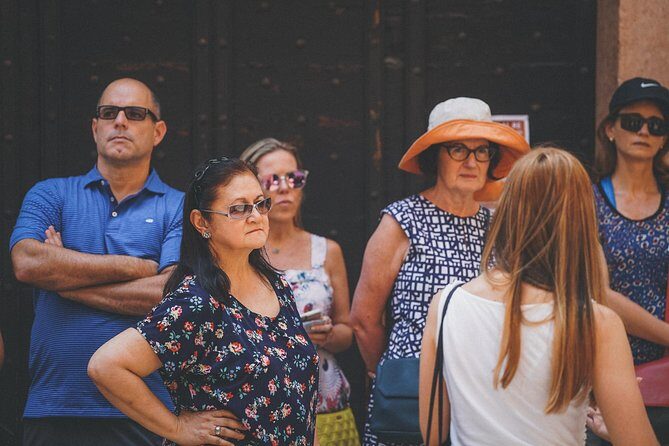
After Juliet’s House, you’ll pass Romeo’s house. The key thing: it’s a medieval palace still inhabited, so you can see it from the outside only. That’s not a disappointment if you understand the tradeoff. The tour doesn’t promise a full interior peek into every legend site. Instead, it keeps you moving and preserves the historical focus of the walk.
From a value standpoint, it’s a good way to cover more ground in a short two-hour visit. You get the iconic associations, but you’re also guided back toward real architecture and city layout.
Piazza Bra: where cafés meet Roman-scale space
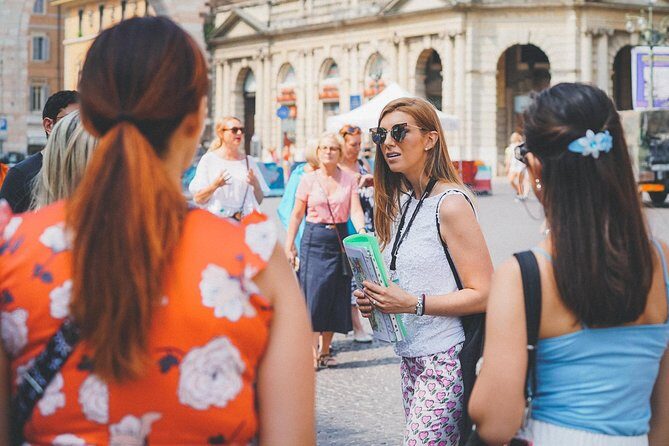
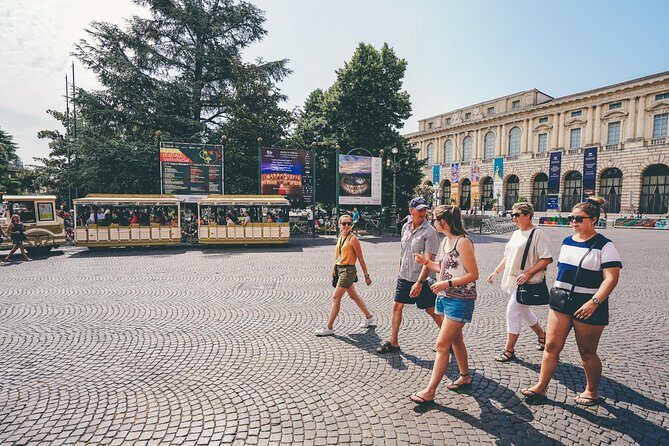
Piazza Bra is the largest piazza in Verona, lined with cafés and restaurants. More than that, it’s where you feel Verona’s “public square” rhythm. Your guide uses it to connect streets to social life—where people gather, where the city breathes between monuments.
This stop is a breather, too. After moving through castle-and-arch zones, Piazza Bra lets your brain reset. It’s also an easy place to spot what you’ll want later: a quick espresso, a rest stop, or just watching how people flow through the historic center.
Arche Scaligere: the Scaligeri cemetery and its power symbols
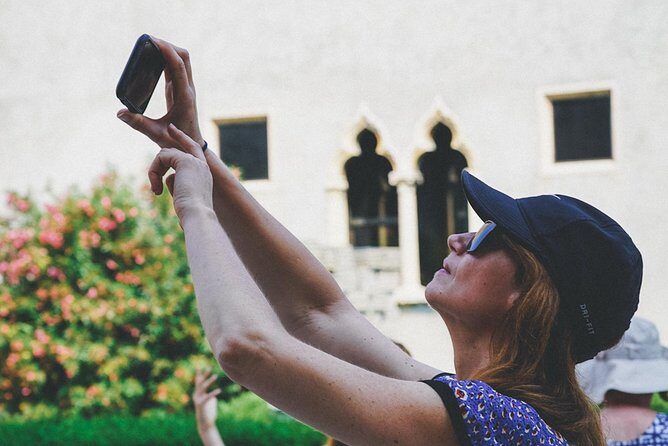
Then the tour shifts to a strong set of monuments: Arche Scaligere, the Scaligeri cemetery. This is where the city’s rulers leave behind visible branding in stone.
You’ll see the arches associated with three rulers: Cangrande I, Mastino II, and Cansignorio. In a short walking tour, it’s a powerful choice because it shows you how medieval power becomes architecture—simple to point at, easy to remember, and visually striking.
If you’re a “I need to know who mattered” person, this stop helps. It gives you names tied to the place, not just generic medieval vibes.
Piazza delle Erbe: Roman forum roots under today’s market square
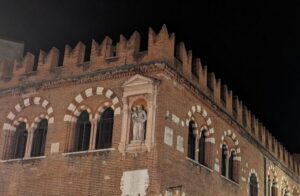
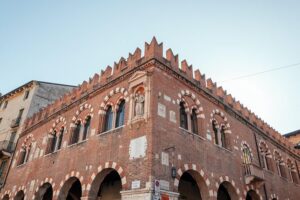
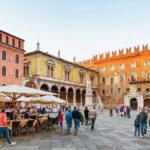
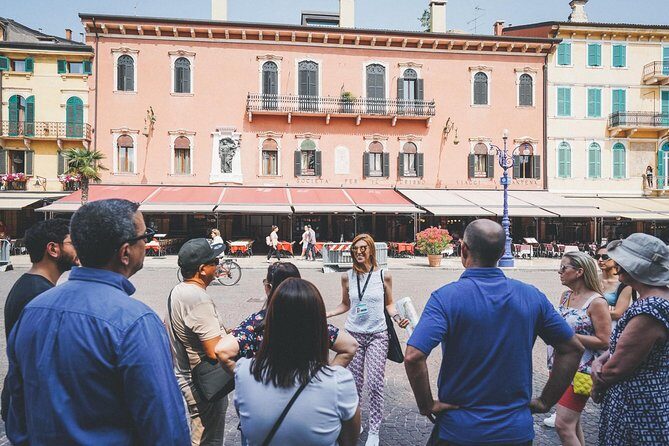
Piazza delle Erbe is one of the best orientation stops on the route. It was the Roman Forum, the center of city life in Roman times, and that explains why it still feels like a focal point even now.
The guide also points out the fountain in the center—built during Scaligeri rule—and uses it to connect different eras without making you feel lost. It’s a quick lesson in continuity: the form changes, but the city still uses the same social geography.
This is the kind of place where you’ll learn what to look for later when you return on your own. After this stop, your second walk through Piazza delle Erbe will feel less like wandering and more like “I know what that is.”
Piazza dei Signori and Dante’s shadow: power, poetry, and stone
The final major square stop is Piazza dei Signori, the former center of power in Verona. The highlight is a statue by the famous Italian poet Dante Alighieri, which has dominated the square since 1865—earning the area the nickname Piazza Dante.
This is a great wrap-up because it ties the idea of “power” to something broader than kings and generals. Medieval Verona’s political center becomes a modern cultural landmark. Your guide’s job here is to show you how the city reassigns meaning over time while keeping the same stone skeleton.
If you’re standing there and you want to make the most of your time in Verona after the tour, this stop helps you choose what to explore next. You’ll know where the city’s civic heartbeat lived, which is useful for planning dinner and a second self-guided walk.
The guide factor: small group energy with room for questions
Most of the reviews for this kind of tour focus on one thing: the guide. You’ll see local names come up again and again, including Isabella, Frank, Priscilla, Maria, and Francesco. The consistent thread is a mix of clear storytelling and a sense of humor that keeps the facts from feeling like a lecture.
In practical terms, that matters because the walk compresses a lot. When your guide can explain how the Arena connects to Roman civic life, or how the bridge story connects to wartime loss and rebuilding, you stop treating Verona like a list of landmarks. You start treating it like a city with cause-and-effect.
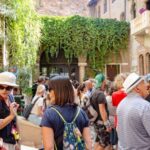
And because it’s a small group (max 16), you’re not lost in a crowd. You can ask questions when something clicks—or when you’re staring at an arch and wondering what you’re actually looking at.
Price and value: $42.33 for a well-built orientation
At $42.33 per person, this tour is priced like an efficient orientation: you’re paying for a local guide plus time-saving structure in a compact route. What you aren’t paying for is entrance tickets to the Arena or interior access to every site, since admission is listed as not included in key stops.
So the true value depends on your goals:
- If you want a first-day overview and plan to see more later, the price looks strong.
- If you want every site inside and on the same schedule, you’ll need to budget extra for admissions and potentially the Juliet Balcony ticket window.
Still, the walk covers enough “major anchors” that it often pays for itself in how quickly you understand where to go next. After this, you’ll likely feel more confident wandering and less likely to miss the details that give Verona its charm.
Who should book this Verona highlights walk
This tour fits best if you:
- have only a short window in Verona and want a smart first introduction
- like history that connects buildings to events, not just dates
- want a relaxed walk with time for questions in English
- prefer small-group pacing over big-bus crowds
It may feel less ideal if you:
- need fully step-free access, since some parts may be hard for reduced mobility
- want lots of interior time at multiple paid attractions in a single visit (because admission isn’t included and some views are exterior only)
- are visiting during Dec 6, 2025 to Jan 6, 2026 and specifically want Juliet’s Balcony access without planning a separate ticket
Should you book this Verona Highlights Walking Tour?
Yes, if you want a focused, story-led orientation to central Verona. I’d book it when you’re trying to build a mental map fast—Arena to squares to Roman/medieval context—and when you’d rather spend your money on meals and later site visits instead of trying to do everything inside one rushed day.
If you’re the type who only cares about interiors and paid sights, look closely at admissions and keep your expectations realistic for exterior viewing. And if Juliet’s Balcony is a top priority in the Dec 6, 2025 to Jan 6, 2026 window, plan the extra ticket in advance so you don’t end up at the gate wondering what happened.
FAQ
How long is the Verona Highlights walking tour?
It runs about 2 hours (approx.).
What does the tour cost?
The price is $42.33 per person.
Where does the tour start and end?
It starts and ends at Piazza Bra in Verona (P.za Bra, Verona VR, Italy).
Is the tour in English?
Yes, it’s offered in English.
What’s included in the price?
A local tour guide is included.
Are admission tickets included?
Admission tickets are not included for some stops, including the Arena and other paid-entry areas. For free stops like certain squares, entry is included as part of the walking route.
Does the tour run in bad weather?
Yes, it runs rain or shine.
Is access to Juliet’s Balcony included year-round?
No. From Dec 6, 2025 to Jan 6, 2026, Juliet’s Balcony access is not included as usual, and access requires a ticket purchased via city administration rules.
Is this a small group tour?
Yes. It has a maximum of 16 travelers.
Are there any rules for minors or service animals?
Service animals are allowed. Minors must be accompanied by an adult.