REVIEW · VERONA
Verona: City Highlights Private Tour
Book on Viator →Operated by Citywalkers · Bookable on Viator
Verona’s top sights line up fast. This private 2.5-hour walking tour gives you a guide to connect the city’s Roman and medieval layers in a single route, and you can tweak the stops to fit how you like to travel. I especially loved how the guide set the Arena di Verona in context, then brought real story detail to Casa di Giulietta so it felt more like a place than a postcard.
One thing to plan for: the schedule is built for highlights, not slow, deep stays. So if you want long time inside major sites, you’ll likely need to add extra time before or after the tour.
In This Review
- Key Points You’ll Care About
- Piazza Bra to Juliet: how the 2.5-hour route works
- Arena di Verona in one stop: scale, acoustics, and why it still matters
- Castelvecchio and Ponte Scaligero: the Scaliger defense system
- The white-marble arch and the French-era rebuild story
- Piazza delle Erbe: the forum that stayed a forum
- Arche Scaligere: Gothic tombs and the stairs motif
- Piazza dei Signori (Piazza Dante): power buildings and a university crowd vibe
- Casa di Giulietta: Shakespeare’s magnet with a 12th-century backbone
- Your guide matters: what the praised guides get right
- Price and value: $279.98 per group and who it suits best
- How to get the most out of it (without overplanning)
- Should you book the Verona City Highlights Private Tour?
- FAQ
- FAQ
- How long is the Verona City Highlights Private Tour?
- Is this tour private?
- What’s the maximum group size?
- What language is the tour offered in?
- Where does the tour start and end?
- What’s included in the price?
- Are tickets required for all stops?
- Is free cancellation available?
Key Points You’ll Care About
- Private guide with itinerary flexibility so you can steer the walk toward what you care about most
- Arena di Verona gets real scale fast: 140 meters long, 110 meters wide, built in the 1st century
- Scaliger power in three modes: castle, fortified bridge, and funerary Gothic tombs
- Piazza delle Erbe is more than a pretty square with Roman roots and the fountain story behind Madonna Verona
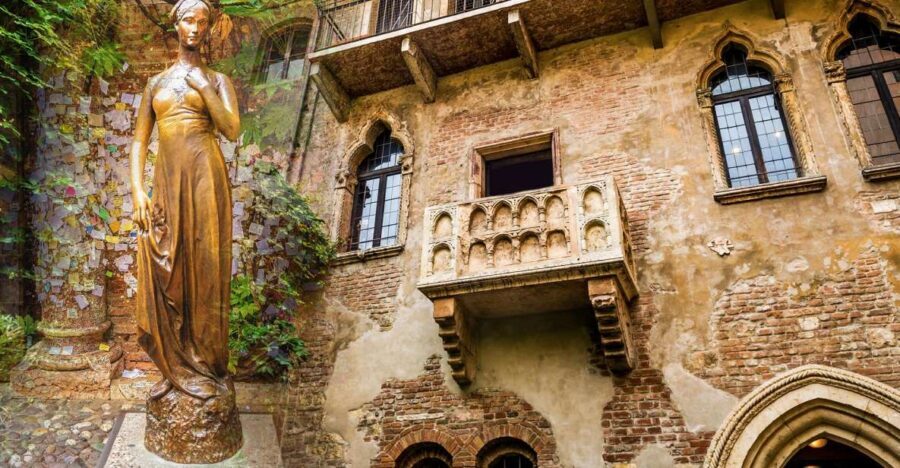
- Juliet’s house is explained in the medieval timeline, including the Dal Cappello coat-of-arms detail
- Guides can vary in style, but named guides like Cecilia and Priscilla were praised for warmth and engagement
Piazza Bra to Juliet: how the 2.5-hour route works
This tour is a tight, smart loop through Verona’s “greatest hits,” starting in Piazza Bra and ending near Juliet’s Balcony on Via Cappello. You’re looking at about 2 hours 30 minutes on foot, with a licensed guide and a mobile ticket. It’s set up so you can get your bearings quickly, then keep exploring on your own afterward with a much better sense of where everything fits.
The best value here is not just seeing landmarks. It’s understanding why Verona developed the way it did: Roman public power first, then medieval rule under the Scaliger dynasty, then the later myths people keep returning for—like Shakespeare’s Verona. Your guide can also adjust the itinerary to suit your interests, which matters a lot in a city where you could easily spend a day just wandering between squares and bridges.
You can also read our reviews of more city tours in Verona


Arena di Verona in one stop: scale, acoustics, and why it still matters
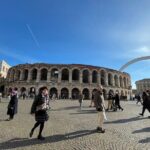
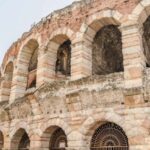
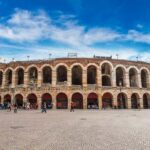
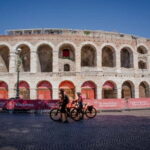
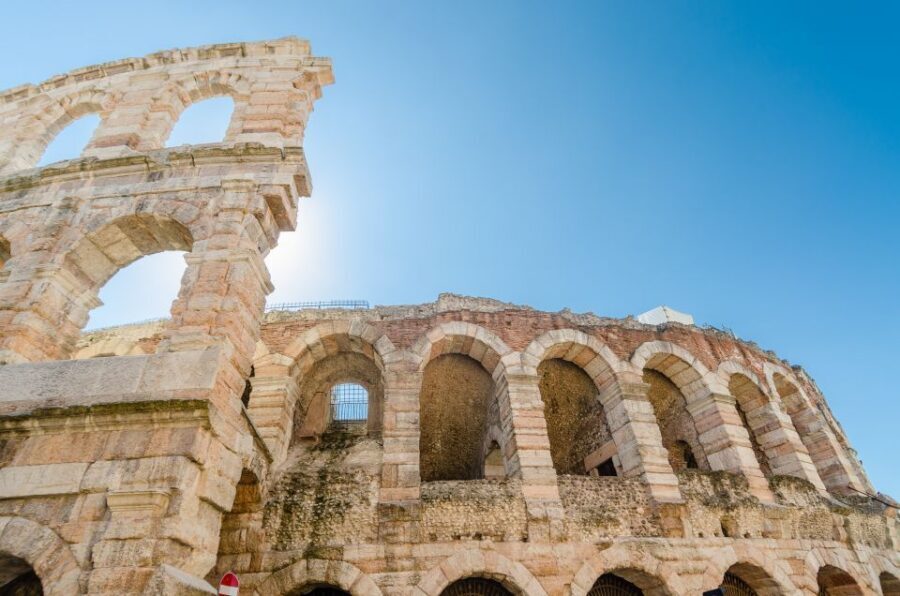
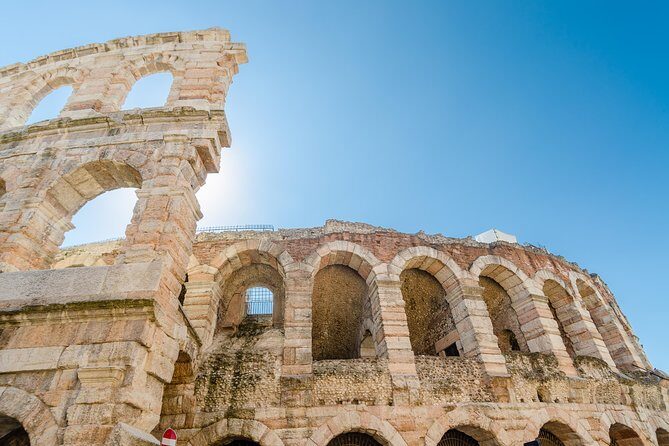
The walk begins at the Arena, and it’s hard not to get hit by the sheer size. This Roman amphitheater is described as 140 meters long and 110 meters wide, dominating Piazza Bra. It was built in the 1st century AD, and what really makes it feel special is that it still works like a sound machine. The guide’s explanation of the great acoustics is useful because it helps you picture why performances lasted and why the place keeps pulling people in.
There’s also the human scale detail: seating for around 30,000 people. Even if you never sit down for a show, that number helps you understand the Arena wasn’t an elite-only monument. It was a massive civic event space. You’ll leave this stop with a different relationship to the building—less wow-from-a-distance, more wow-from-understanding.
Castelvecchio and Ponte Scaligero: the Scaliger defense system
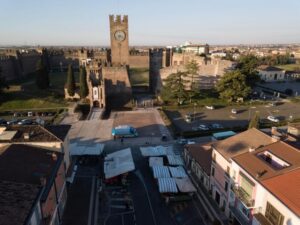
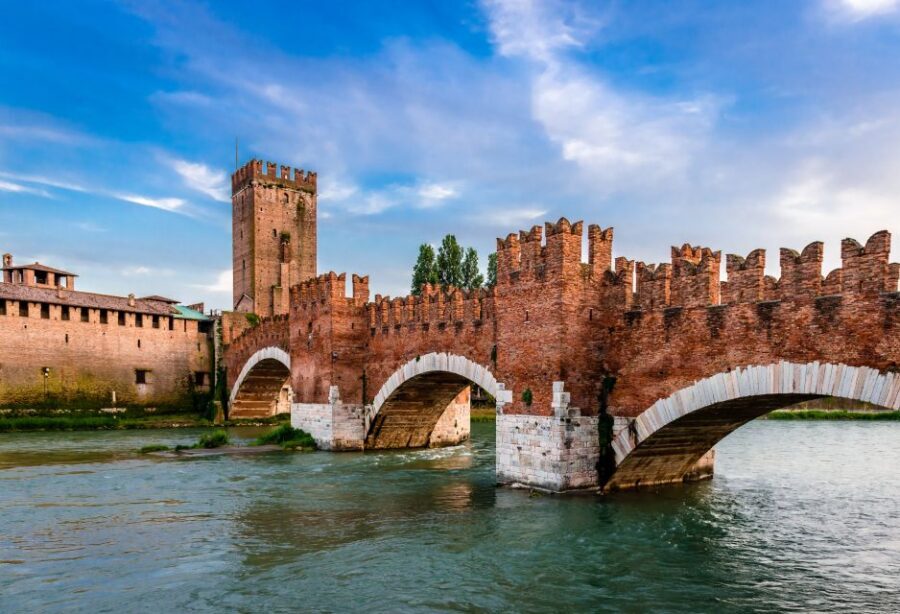
From there, you move into the medieval layer with the city’s famous castle and its river connection. The castle is described as the most important military construction of the Scaliger dynasty—the rulers who shaped much of Verona’s medieval identity.
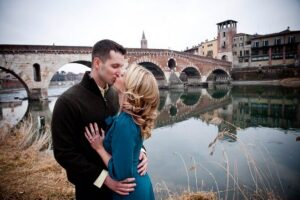
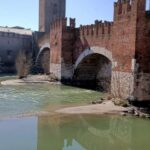
The tour also points out the fortified link across the Adige River: Ponte Scaligero. This bridge matters because it isn’t just a crossing; it’s part of the city’s defense story. The description notes it had the largest supporting arch span in the world when completed in 1356. That’s the kind of detail a walking guide earns their keep by sharing. It turns a bridge from background scenery into a piece of engineering bragging rights from the Middle Ages.
The white-marble arch and the French-era rebuild story
One of the most memorable “wait, what?” moments comes from the arch stop tied to Roman history. The itinerary describes an arch built in white veronese marble, dedicated to the Gavia—an important Roman family—dating back to the 1st century.
Then comes the plot twist: the arch used to stand in the middle of Corso Castelvecchio, connecting the city with the capital, Rome. But the French dismantled it because they viewed it as a traffic hindrance, and the pieces ended up dumped under the arches of the Arena. Later, in 1932, it was reassembled where it stands now, piece by piece.
This is exactly why I like private guiding on a city like Verona. You don’t just look at an object. You learn what happened to it. That one story makes the streets feel like a timeline, not a museum floor.
Piazza delle Erbe: the forum that stayed a forum
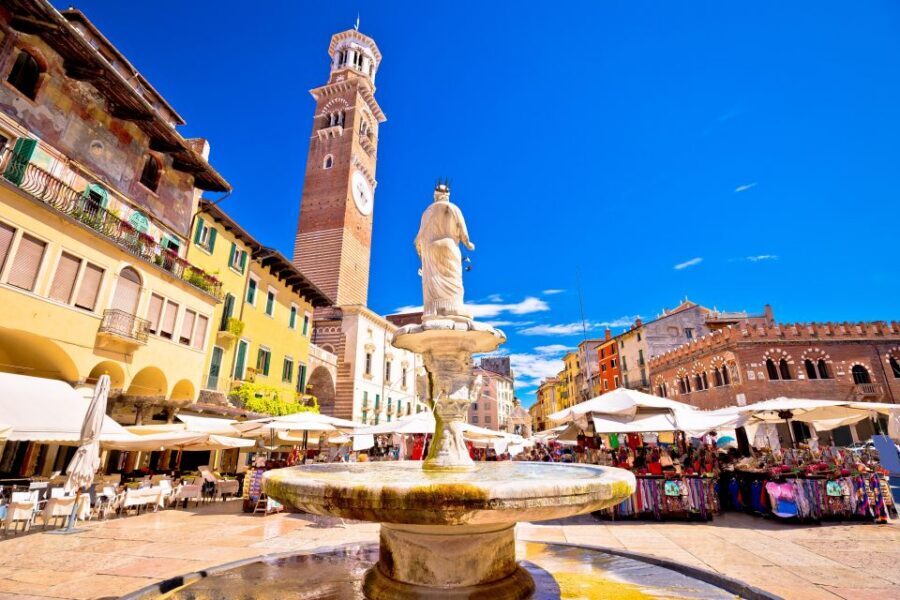
Next is Piazza delle Erbe, one of Verona’s most important public squares. The tour explains that the Forum sat here during Roman times, and the square has kept the same job for centuries: a meeting place, a market, and a center of city administration.
The centerpiece details are what make this stop click. The tour points you toward the fountain associated with the ruler era and the nickname people remember: the fountain was built using a Roman statue during Scaligeri rule and later became known as Madonna Verona. You also get orientation toward the surrounding landmarks—the Gardello Tower and Palazzo Maffei—plus the way the courtyard of the Palazzo del Comune leads your eyes onward to the Lamberti Tower, famous for panoramic views.
Practical note: this is a short stop, but it’s the kind of square where you can quickly decide where you want to spend extra time later. If you love city squares and people-watching, this is one of your best anchors for the rest of the day.
You can also read our reviews of more private tours in Verona




Arche Scaligere: Gothic tombs and the stairs motif
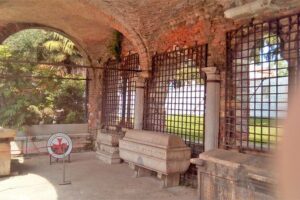
Then you step into the funerary Gothic story with the Arche Scaligere, the tombs that commemorate the Scaliger family from the 13th and 14th centuries. This stop matters because it shows power in a quieter form. Military power gets a castle; dynastic legitimacy gets carved stone and carefully designed tomb spaces.
The description highlights that these are among the most representative monuments of Gothic art. You’ll also see the tombs placed within an enclosure of wrought iron grilles decorated with a stair motif. That detail ties back directly to the family name: della Scala means of the stairs in Italian. Once you connect the visual motif to the name meaning, the whole stop feels less random and more intentional.
Piazza dei Signori (Piazza Dante): power buildings and a university crowd vibe
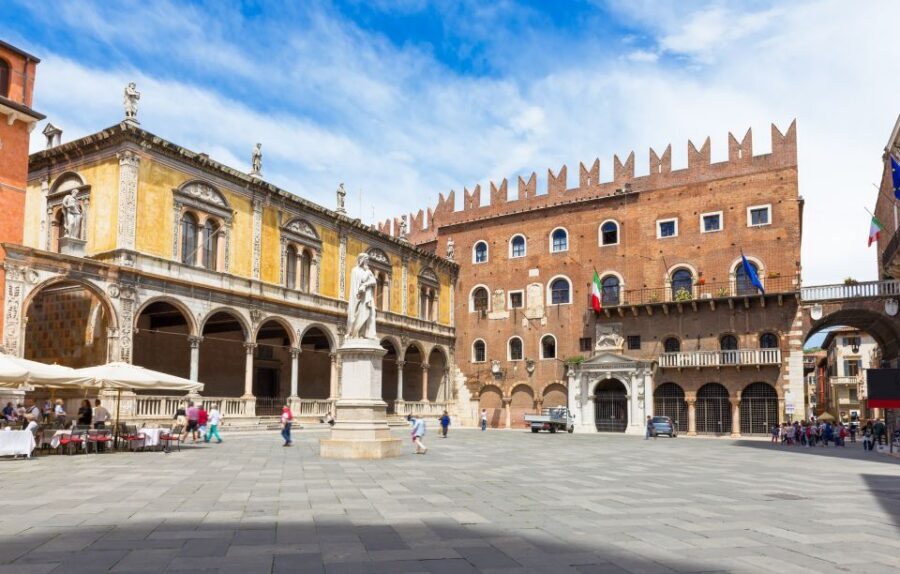
Piazza dei Signori is often described like Verona’s living room, and this stop earns that label. It’s also called Piazza Dante thanks to the statue of Dante Alighieri in the center.
What I like here is how the tour frames the square’s role. The itinerary notes the square is ringed by Renaissance buildings—Palazzo della Ragione, Palazzo del Capitano, Palazzo del Governo, the Loggia del Consiglio, and the Domus Nova—and that it still performs political and administrative functions during the day. That gives the square a working-city feel, not just a sightseeing vibe.
The tour also mentions the student energy: it can be a chosen location for the university crowd. So you get an easy mix of old authority architecture plus modern everyday use. For a first-time visitor, it’s one of the best places to step out of “Roman then medieval then Juliet” mode and simply watch how Verona lives now.
Casa di Giulietta: Shakespeare’s magnet with a 12th-century backbone
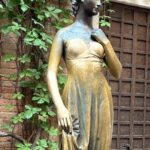
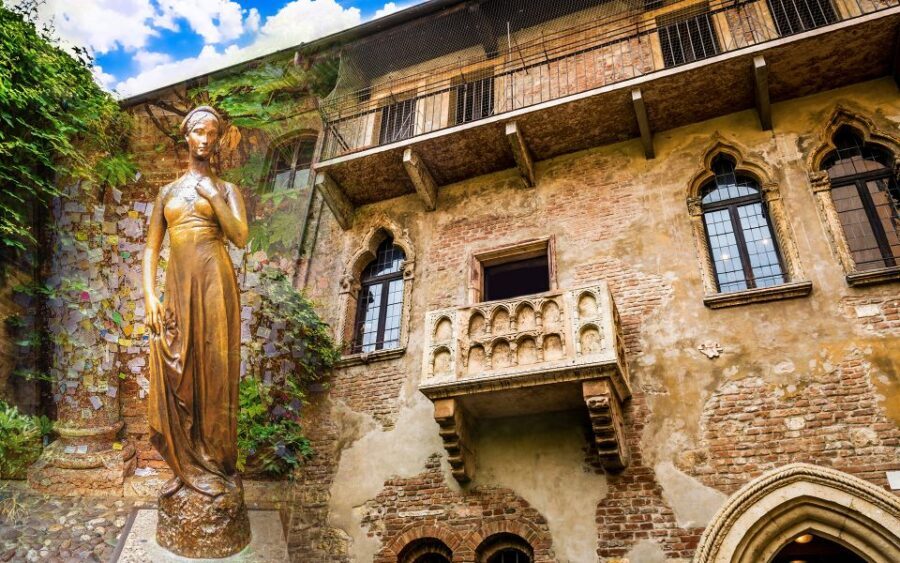
Now the big draw: Casa di Giulietta. The tour is very clear that most people come because of Shakespeare’s love story. But what you should care about is how the guide grounds that myth in the real building timeline.
The house originally dates back to the 12th century and was owned for a long period by the Dal Cappello family. The tour includes a standout detail: their coat-of-arms is carved into the keystone of the courtyard inner archway. It’s a small element, but it turns the stop into something you can actually look for instead of simply admiring the legend.
There’s also a belief explained by the tour: the link between the names Capuleti and Cappello helped fuel the popular idea that Shakespeare’s play had inspiration in a real family rivalry and forbidden love. Ending the tour near Juliet’s Balcony makes the day feel complete—you end right where you’ll want to linger, read, take photos, and decide how long you want to keep going on your own.
Your guide matters: what the praised guides get right
This is a private tour, so the guide’s personality is part of the product. The reviews highlight two named guides—Cecilia and Priscilla—with strong praise for engagement and warmth. Cecilia is described as knowledgeable, warm, and truly engaging, and Priscilla is singled out as first class. That’s the kind of feedback you want if you’re the type who likes asking questions and getting answers that feel human, not scripted.
Still, one review also offers a fair caution: a guide who is less interactive can make a tour feel more like a checklist. The good news is this tour is private and adjustable, so you can often fix that by setting expectations early. If you want more conversation, ask for it right away. If you prefer a quieter, photo-first walk, say so early too.
Price and value: $279.98 per group and who it suits best
The price is $279.98 per group, up to 2 people. That means your per-person cost depends on whether you’re traveling as a pair.
- If you book for 2 people, you’re effectively paying about $140 per person for a 2.5-hour private guide.
- If you’re solo and still want a private experience, it’s the full group price, about $280.
Where I think it’s strong value is when you want more than a route. You’re paying for someone to connect facts across the Arena, the Scaliger sites, and Juliet’s house, plus the option to tailor the itinerary. For a couple—especially one that loves stories and context—this can be a very economical way to get clarity in a short time. If you’re traveling alone and you’re mostly happy with self-guided wandering, it may feel expensive unless you really value a guide’s explanations.
How to get the most out of it (without overplanning)
A walking highlights tour lives or dies on comfort. Wear shoes you can stand in for a while, and keep your phone charged because you’ll want photos around Piazza Bra, the squares, and the Juliet area.
Timing helps too. Since the tour ends near Juliet’s Balcony, it’s smart to plan your next step around that area. You’ll likely want extra time there after the guide points out the building’s backstory. If you’re the type who likes to turn a tour into a self-guided mini-day, use the stops as anchors: Roman era at the Arena, medieval power with Scaliger landmarks, civic life at the squares, and storybook Verona at Casa di Giulietta.
Should you book the Verona City Highlights Private Tour?
Book it if you want a clean, guided intro to Verona’s biggest themes in a short window. This tour is especially good for first-timers who want the city to make sense fast: Roman architecture, Scaliger-era politics and defense, then the Juliet story that puts Verona on the map.
Skip it (or plan around it) if you prefer long time in fewer places. This route is designed for highlights, not extended museum-style stays. You’ll get the essential stories and orientation, but you’ll probably want to add extra time afterward if you fall in love with a specific square or monument.
FAQ
FAQ
How long is the Verona City Highlights Private Tour?
The tour lasts about 2 hours 30 minutes.
Is this tour private?
Yes. It’s a private experience, and only your group participates.
What’s the maximum group size?
The price is per group (up to 2).
What language is the tour offered in?
The tour is offered in English.
Where does the tour start and end?
It starts at Piazza Bra, Verona and ends near Casa di Giulietta on Via Cappello, 23, 37121 Verona.
What’s included in the price?
The tour includes a licensed guide. Lunch is not included.
Are tickets required for all stops?
The itinerary marks admission ticket free for Piazza delle Erbe, Arche Scaligere, Piazza dei Signori, and Casa di Giulietta. The tour description does not say that all other stops include admission details.
Is free cancellation available?
Yes. You can cancel for a full refund if you cancel up to 24 hours in advance of the experience start time.