Verona can feel endless, so this helps. In a compact private walking tour, you get a smart hit list of Roman, medieval, and everyday city life in about two hours, with a guide who brings the streets to life. I like the way the route blends big-name sights (like the Roman Arena area) with the smaller moments you’d miss alone, and I especially enjoy the Juliet stop paired with the quieter architectural details that make Verona feel real.
The only thing to plan for is weather and walking time. You’ll be on your feet for the full loop, and this experience is noted as weather-dependent, so if rain is heavy, expect some re-routing.
In This Review
- Key highlights to look for
- A 2-hour Verona walk that actually gets you oriented
- Where you start: Piazza Bra and the “main streets” mindset
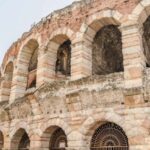
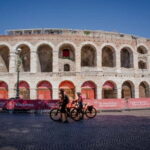
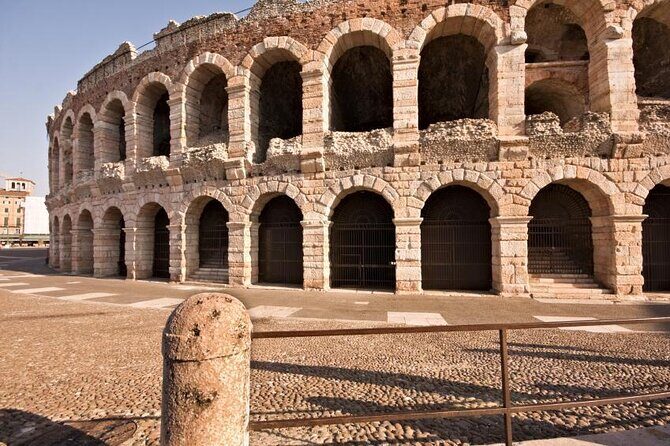
- Stop 1: Arena di Verona from outside (no wasted effort)
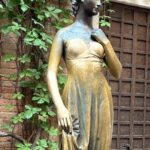
- Stop 2: Casa di Giulietta and the Juliet balcony moment
- Stop 3: Piazza delle Erbe for color, commerce, and street energy
- Stop 4: Piazza dei Signori and the Dante statue framing
- Stop 5: Arche Scaligere (Scaliger tombs in front of you)
- The medieval portico stretch: where osterias shape the walk
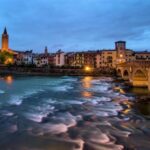
- Adige river views and the hillside angle
- Passing under Verona’s Roman main entrance
- The pink marble staircase and the old wool market
- Who this private tour fits best (and who should consider something else)
- Price and value for a group of up to 15
- Timing, weather, and how to make this feel effortless
- Practical tips before you go
- Should you book Hidden and fascinating Verona: 2 hour private walking tour?
- FAQ
- How long is the Verona private walking tour?
- What is the price?
- Is this tour private?
- Where do we meet?
- Where does the tour end?
- What language is the tour offered in?
- Are tickets included for the Arena di Verona?
- Are there any stops with free admission?
- What hours does the tour run?
- What happens if weather is bad?
- Is there a mobile ticket?
Key highlights to look for
- Private pacing so you can ask questions and slow down when something catches your eye
- Roman Arena views from outside so you still get the feel without committing to extra entry
- Casa di Giulietta moments including the Juliet balcony and Juliet statue
- Two market squares back to back: Piazza delle Erbe and Piazza dei Signori
- Arche Scaligere facades in front of the decorated Scaliger tombs
- Adige river + pink marble staircase plus a stop near the old wool market
A 2-hour Verona walk that actually gets you oriented
Verona is one of those cities where the center looks easy on a map… until you start walking and realize the sights are layered. This tour is designed for exactly that problem: you get your bearings fast, then you follow a route that moves through the city’s most important eras without turning into a marathon.
You’re not just seeing postcards. You’re learning how the parts connect—Roman power here, family legacy there, and the local food-and-market rhythm in between. If you only have a short window in town, this is a practical way to build a foundation for the rest of your trip.
And because it’s private, the guide can adjust. One of the most praised parts of this tour style is the flexibility: if conditions change, the pace and order can shift so you don’t waste time.
You can also read our reviews of more walking tours in Verona
Where you start: Piazza Bra and the “main streets” mindset
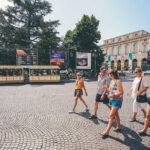
You meet at Piazza Bra (Piazza Bra, Verona VR). It’s a good starting point because it’s central and easy to orient yourself from. Also, since it ends back at the meeting point, the walk feels like a loop you can trust—even if you’re arriving for the first time and you’re still figuring out Verona’s layout.
From the start, the guide sets up what you’re about to see. That matters because Verona’s best details are often small: carvings, marble texture, and building transitions that are easy to overlook when you’re focused on finding the next landmark.
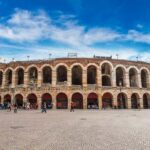
Stop 1: Arena di Verona from outside (no wasted effort)
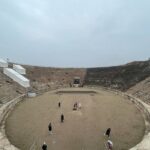
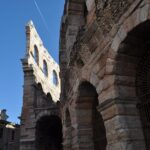
You’ll head toward the Arena di Verona and see it from the outside. The tour notes that admission isn’t included, which is helpful if your goal is to get the atmosphere and the scale without adding another ticket decision.
Even from outside, the Arena tells you Verona has serious Roman roots. And because you’re not spending time queueing or negotiating entry, you keep the schedule smooth. In a short tour, that’s a big value.
What to watch for: look for how the Arena anchors the surrounding streets. It’s not just a standalone monument—it shapes the way people flow through this part of the city.
Stop 2: Casa di Giulietta and the Juliet balcony moment
Next is Casa di Giulietta, where you’ll admire the famous Juliet balcony and the Juliet statue. The key here is the stop is brief and focused—about 10 minutes—so it works even if you’re squeezing this in between other plans.
This is one of those locations where you’ll see a lot of emotion tied to literature and legend. The real win for many people is having context: the guide helps you understand what you’re looking at and why it became such a magnet for visitors.
Quick tip: treat this as a photo-and-stories stop, not a long museum stop. You’ll get the iconic moment, then you move on while Verona still feels like Verona instead of a line of people.
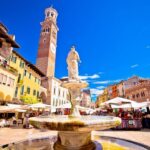
Stop 3: Piazza delle Erbe for color, commerce, and street energy
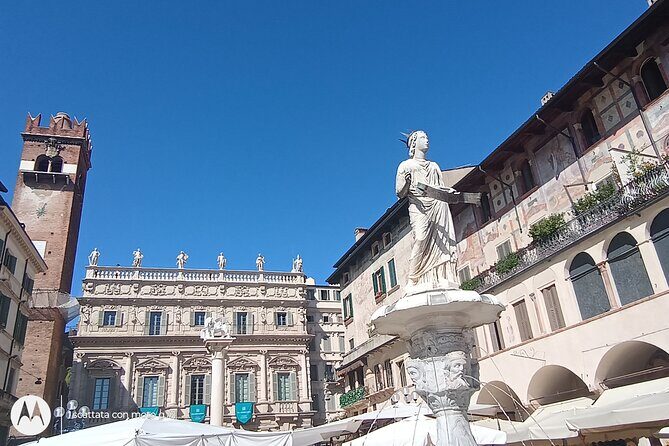
From there, you walk into Piazza delle Erbe, Verona’s colorful market square. This is one of the best places to feel the city’s everyday life. The stop is only about 10 minutes, but it’s timed well—after the Juliet stop, the mood shifts from romance to daily rhythm.
The guide will point out details that help you read the square like a local: what the market atmosphere is doing, how the surrounding buildings create the space, and what kinds of corners and textures you’d normally skate past.
Drawback to consider: market squares are active, and even on calm days you may have to share space with other pedestrians. If you want quieter time for photos, ask the guide for the best angle and timing.
You can also read our reviews of more private tours in Verona



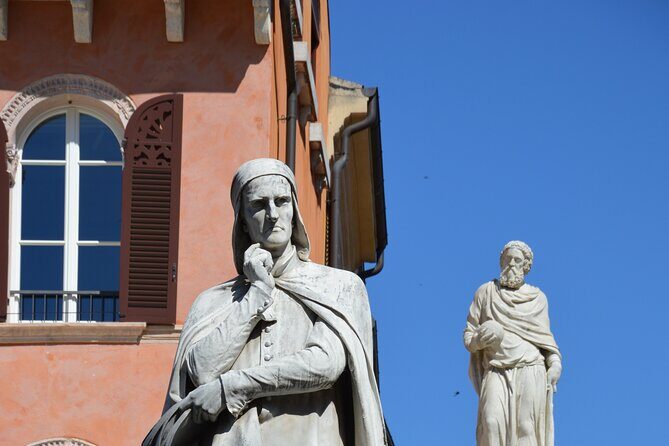
Stop 4: Piazza dei Signori and the Dante statue framing
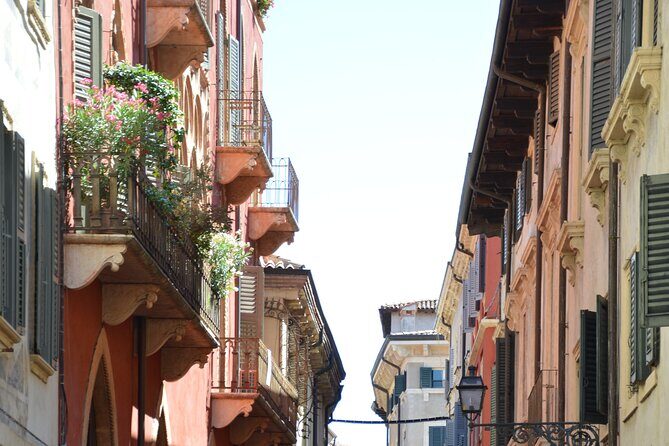
Next up is Piazza dei Signori, again about 10 minutes, where you’ll walk in front of the Dante statue and take in the grand buildings tied to Verona’s political power.
This stop is valuable because it changes the feeling from commerce to authority. You’re in a square that communicates the city’s role in governance and identity. The guide’s job here is to help you connect what you see—statues, facades, and civic architecture—to why the city looked and acted the way it did.
What I like about this layout: it keeps the walking tour from feeling like a checklist. Each square answers a different question about Verona: who mattered, where power lived, and how the public space was designed.
Stop 5: Arche Scaligere (Scaliger tombs in front of you)
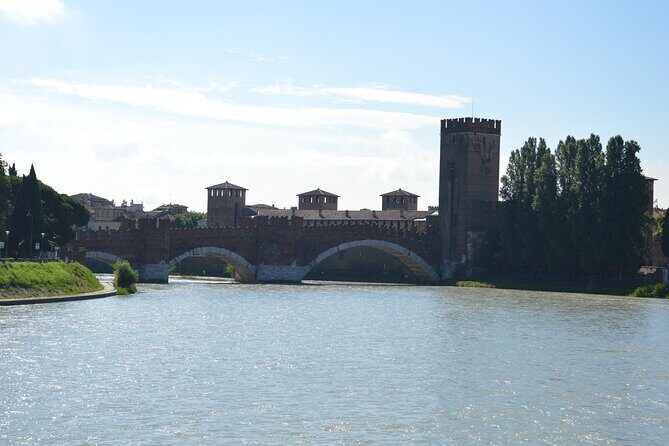
You then stop at Arche Scaligere, standing in front of the private and extremely decorated tombs of the Della Scala family (Scaliger family). It’s another 10-minute moment—short, but memorable.
This is where Verona shifts into something more intense. Even if you don’t know the full story ahead of time, you can see that these tombs were meant to communicate status and permanence. The guide helps you notice sculptural details you might miss if you just glance at the overall view.
Watch for texture: the decorations can look busy at first. When the guide points out what to focus on, suddenly the carvings and marble details become readable, not just ornamental.
The medieval portico stretch: where osterias shape the walk
After the main civic and historical points, you move under a medieval portico and pass through the tables of typical Italian Osterias. This is more than a “nice break.” It’s a real shift in how the city feels.
A portico corridor does three helpful things for a walking tour:
- It offers partial shelter if the weather shifts.
- It creates a slower, more human pace.
- It lets you experience Verona as a dining city, not only a sightseeing city.
If you’re traveling with kids or you’re simply tired of hearing facts, this is a good reset moment. You can smell the food, hear conversation, and see how daily life still happens around the historic structures.
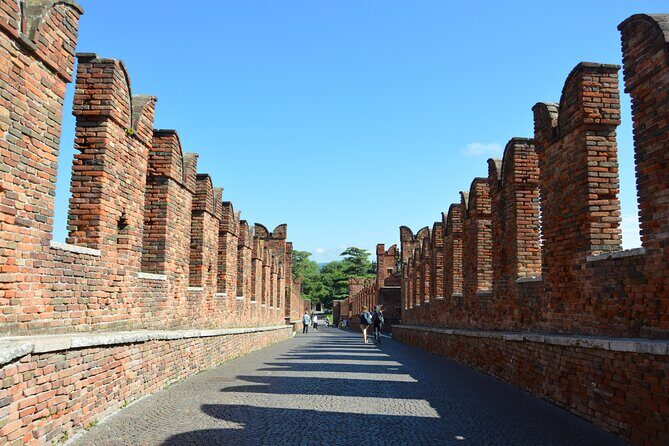
Adige river views and the hillside angle
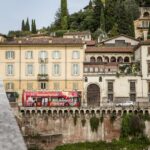
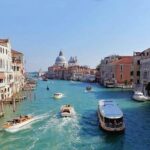
You’ll also admire the view over the Adige river and toward the hillside. This is one of those stops that changes your perspective. Verona isn’t only architecture; it’s setting.
When you get a view like this mid-tour, it helps you understand why the city grew here and why the skyline matters. It’s also a good time to pause, regroup, and enjoy the shift from stone details to open sight lines.
Pro tip: if you care about photos, ask the guide where to stand before you stop moving. In tight city centers, the best angles are often available only for a few seconds before the crowd flows.
Passing under Verona’s Roman main entrance
Another standout moment is when you pass under the Roman main entrance to Verona. This is a clever part of the route because it turns an abstract idea—Roman layers—into something physical you walk through.
You’re not just looking at Rome in the distance. You’re literally moving through a doorway tied to older city structure. It’s a quick shift, but it makes the walking experience feel like a guided story instead of a series of monuments.
If you like “how cities used to work” details, you’ll probably enjoy this section most.
The pink marble staircase and the old wool market
Near the end of the walk, you’ll step on a pink marble staircase, then you’ll see the old wool market.
This combination works because it’s about materials and daily economy. Marble underfoot is eye-catching, and the wool market is a reminder that Verona’s history wasn’t only about nobles and emperors—it was also about trade and work.
What I’d do with this stop: treat it as a last-chance photo moment. By the time you reach it, you’ll be ready to slow down and notice the ground-level details that make the city feel handcrafted.
Who this private tour fits best (and who should consider something else)
This is a good match if:
- You have a short time in Verona and want a confident overview.
- You prefer a private setting where the pace can match your group.
- You want architecture and history explained in a way that points out small details (like decorative stone work and subtle carvings).
It’s also a strong choice for families, since the guide style described includes engaging children and keeping energy up during the walk. If you’re the adult who gets tired of tours that feel like lectures, this format tends to work because it’s built around movement, stories at each stop, and frequent visual payoff.
Consider a different option if:
- You don’t like walking city centers for about two hours.
- You’re looking for long indoor time or museum-style pacing. This walk is outdoors and concise at every major location.
Price and value for a group of up to 15
The price is listed at $337.90 per group for up to 15 people, lasting about 2 hours. On paper, that sounds pricey for a single couple—but the value changes dramatically when you split it.
- If your group is close to the maximum size, you’re effectively paying roughly the low $20s per person.
- If it’s just a few of you, it’s more of a premium choice, and you’ll want the guide time to be worth it through customization and attention.
Where it shines is the “private time for your money” part. Instead of paying per person for a crowded group bus tour, you’re buying a focused route that returns you to where you started. That’s especially useful if you’re trying to fit Verona between train times, a dinner reservation, or another booked activity.
Timing, weather, and how to make this feel effortless
The tour runs through the day with opening hours listed from 8:30 AM to 7:30 PM, Monday through Sunday. Since it’s noted as requiring good weather, I’d treat the sky like part of your plan.
Here’s what helps the experience feel smooth:
- Wear comfortable walking shoes. The stops are short, but the total time adds up.
- Bring a light layer or umbrella if forecast conditions look questionable.
- Be ready to go with the guide’s pace. Flexibility is part of what makes this work when conditions change.
Practical tips before you go
- Use the mobile ticket on your phone so check-in feels quick.
- Plan to arrive a few minutes early at Piazza Bra so you don’t have to hunt for the guide.
- If your group has priorities (Juliet focus vs. Roman focus), tell the guide early. The private setup is meant for that.
Also, note that the tour is in English and is marked as suitable for most people. It’s near public transportation, which helps if you’re combining it with other Verona stops.
Should you book Hidden and fascinating Verona: 2 hour private walking tour?
Yes, if you want a fast, well-structured overview that mixes major landmarks with the kind of details that make Verona feel lived-in. The strongest reasons to book are the private pacing, the tight route that covers Roman roots and civic squares, and the way the guide style turns stonework, statues, and city corners into stories you can actually picture later.
Skip it only if you’re looking for a long, slow, deep-dive museum day. This tour is built for momentum, smart stops, and getting you ready to explore on your own afterward.
FAQ
How long is the Verona private walking tour?
It lasts about 2 hours.
What is the price?
The price is $337.90 per group, up to 15 people.
Is this tour private?
Yes. It’s a private experience for only your group.
Where do we meet?
You meet at Piazza Bra, Verona VR, Italy.
Where does the tour end?
It ends back at the meeting point.
What language is the tour offered in?
The tour is offered in English.
Are tickets included for the Arena di Verona?
No. The plan includes viewing the Arena from outside, and the Arena admission is not included.
Are there any stops with free admission?
The Casa di Giulietta, Piazza delle Erbe, Piazza dei Signori, and Arche Scaligere stops are listed as free.
What hours does the tour run?
It runs daily from 8:30 AM to 7:30 PM.
What happens if weather is bad?
The experience requires good weather. If it’s canceled due to poor weather, you’ll be offered a different date or a full refund.
Is there a mobile ticket?
Yes, a mobile ticket is provided.