REVIEW · VERONA
Tour to discover the Unique History of Verona, the City of Art
Book on Viator →Operated by Guide in Verona · Bookable on Viator
Verona’s past walks right beside you. In a single morning or afternoon stretch, this small-group history walk strings together the city’s big story—from the Arena to Juliet—with an energetic guide who explains what you’re looking at and why it mattered.
I really like how the route balances famous sights with the lesser-noticed links between eras. You end up seeing Verona as one connected place, not a list of postcards, and that makes the whole city feel more real.
A fair heads-up: church entries can be tricky. A couple of religious stops can be affected by events, and one major church’s admission is not included, so you may need to plan for either a ticket or a quick look from the outside.
In This Review
- Key highlights at a glance
- Verona history in 3 hours: what you’re really buying
- Where to meet and how the route flows toward Juliet
- Arena di Verona: the monument with the secret timeline
- Scaligero Bridge and the medieval Verona you actually feel
- Arco dei Gavi and Porta Borsari: Roman Verona in plain sight
- San Lorenzo (and a church reality check at Santa Anastasia)
- Arche Scaligere and Piazza dei Signori: where power shows up in stone
- Piazza delle Erbe: local life where your camera will keep going
- Romeo’s House and Casa di Giulietta: the love story with real Verona weight
- Price and admissions: what’s included, what might cost extra
- The guide factor: Eugenio’s style and how he keeps it personal
- Who this tour is best for
- When to book: timing can make the day feel smooth
- Should you book this Verona history walk?
- FAQ
- Where does the tour start and end?
- How long is the Verona history walking tour?
- What language is the tour offered in?
- Is pickup available?
- Is the group small?
- Are tickets included for the stops?
- What time options are available?
- Is there free cancellation?
- Is the tour wheelchair-accessible or suitable for most travelers?
Key highlights at a glance
- Secret Arena history tied to one of the world’s best-known monuments
- Scaligero Bridge and its medieval design made easy to photograph
- Roman Verona stops like Arco dei Gavi and Porta Borsari in one tight route
- Romanesque San Lorenzo plus a reality check on church access and timing
- Power centers at Piazza dei Signori and the tombs at Arche Scaligere
- Romeo and Juliet ending at Casa di Giulietta, with the love story placed in context
Verona history in 3 hours: what you’re really buying
This is a 2.5- to 3-hour walking tour that focuses on telling Verona’s story through landmarks, not lectures. You’ll move at a pace that works for most people, but it’s still a steady walk through the center—bring comfy shoes and plan to enjoy the stops, not just race between them.
The other value-maker is the max group size of 15. Small groups usually mean more chances to ask questions and fewer moments where you feel invisible. It also keeps the conversation moving, which matters here because the guide connects art, politics, and everyday life instead of tossing dates at you.
Price is $70.14 per person. What makes it feel fair is the way the tour mixes free admissions with a couple of ticketed moments, so you’re not constantly paying again to see the places that define Verona.
You can also read our reviews of more city tours in Verona


Where to meet and how the route flows toward Juliet
You start at I Portoni della Bra, Corso Porta Nuova, 2 and finish near Casa di Giulietta on Via Cappello, 23. That matters: you’re not ending back where you started. You walk the city center’s main story and naturally drift toward Verona’s most famous literary landmark.
Hours run across the day, with multiple time windows (morning and afternoon slots). If you’re planning around trains, heat, or dinner reservations, pick a slot that gives you breathing room after the tour—because once you hit Piazza delle Erbe and the signori squares, you’ll want time to linger.
Also note this is designed to be easy to access. It’s near public transportation, and a pickup option is offered. If you’re arriving by bus/train and want less stress, pickup can be a big deal—especially in a compact historic center where signage and street changes can confuse first-time visitors.
Arena di Verona: the monument with the secret timeline
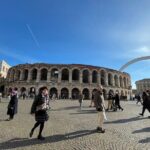
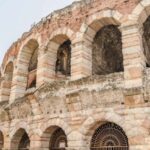
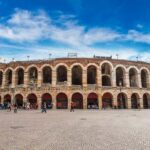
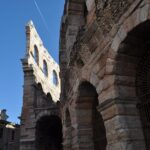
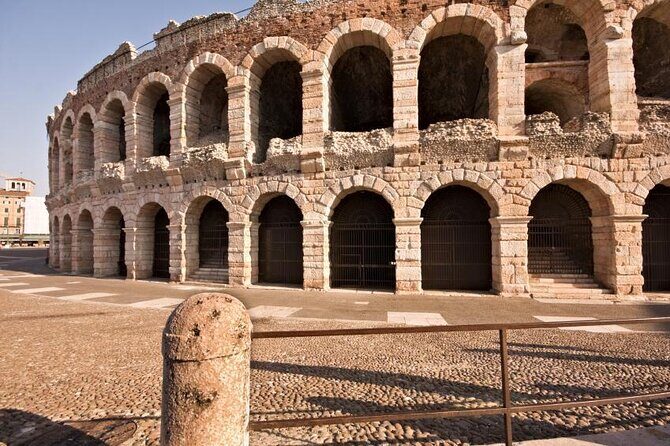
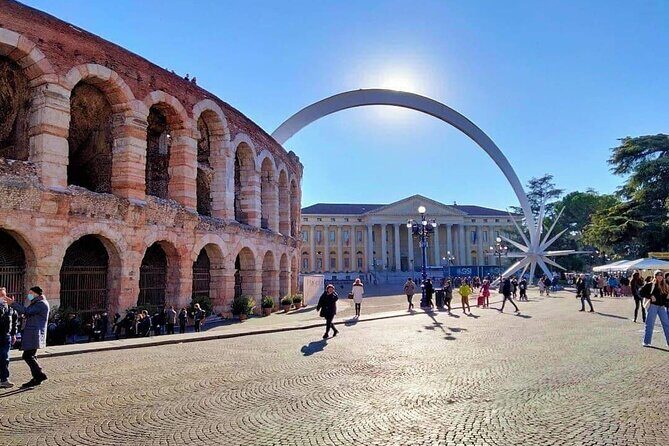
The tour begins at Arena di Verona, and it’s a smart choice. This place is famous enough that you’ll likely recognize it instantly, but the guide’s angle puts it in a larger timeline. You don’t just see an old amphitheater—you learn what the monument represents across centuries, and how people used it long after the initial story you learned in school.
Look for two things while you’re there: the sheer scale, and the way the structure’s purpose evolved. That’s the “history link” theme of the whole walk—how Verona reuses what earlier generations built, and how power leaves fingerprints in stone.
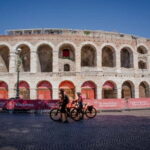
One practical note: this is a stop where you’ll often see crowds. The tour timing helps, and the guide’s pacing keeps it from becoming a photo line. If you’re serious about photos, arrive with your phone charged and take a minute to step back and frame the arena before the group moves on.
Scaligero Bridge and the medieval Verona you actually feel
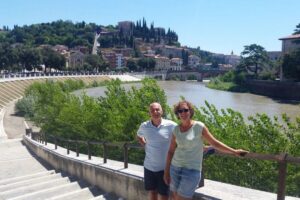
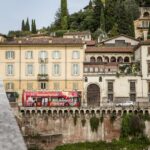
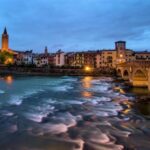
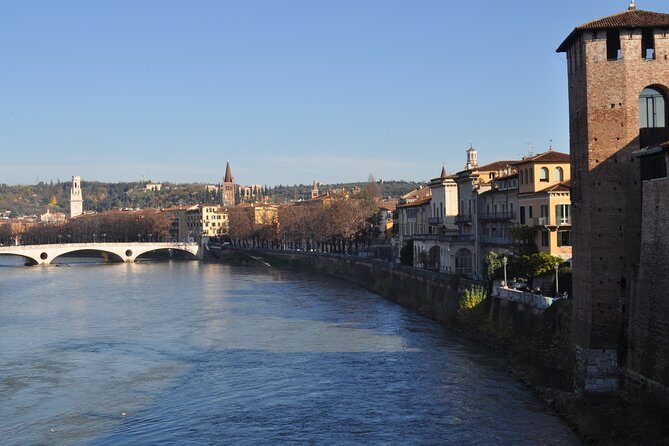
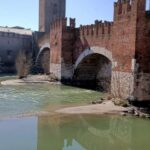
Next comes Scaligero Bridge—the medieval architectural masterpiece everyone shoots at least once. The good part about having it inside a story-based tour is that you understand what you’re photographing. Bridges in Verona aren’t just pretty spans; they connect political identity to city planning.
The time here is short, about 8 minutes, so use it wisely. Get your main shot quickly, then turn slightly and look for the lines and proportions. The guide will point out details you’d normally miss at a glance, and that’s where the bridge becomes more than a backdrop.
If you’re traveling in warm weather, expect people to stop suddenly for pictures. Stay flexible. A tight group pace helps, but you still need a few seconds to absorb what the guide shows you.
Arco dei Gavi and Porta Borsari: Roman Verona in plain sight
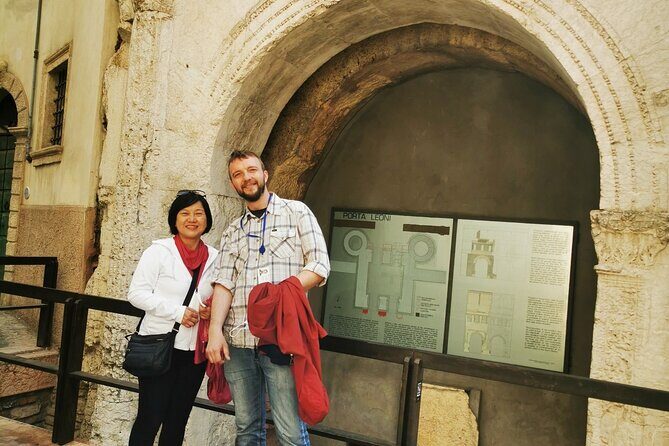
Then you move to Arco dei Gavi, a Roman-era triumphal arch with a unique story. A short 10-minute stop can still feel satisfying when you know what to look for. You’ll learn how Roman architecture signals status, and how that kind of messaging shows up again and again in Verona’s later eras.
After that, Porta Borsari gives you a direct look at the entrance to Roman Verona, a World Heritage Site. This is one of the most “stop-and-stare” moments in the route because the Roman city feeling hits fast. Even if you don’t love museums, Roman gates tend to grab you. They’re practical objects that also broadcast authority.
Porta Borsari is typically easier to appreciate when you understand it as a boundary—what came in, what belonged inside, and how the city’s layout shaped daily life.
You can also read our reviews of more historical tours in Verona

San Lorenzo (and a church reality check at Santa Anastasia)
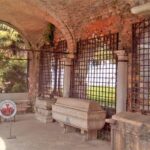
You’ll visit chiesa di San Lorenzo – Verona, a 12th-century Romanesque church, with admission included for the stop. Romanesque churches can feel simple from the outside, but inside they often reward patience. The guide’s explanations help you see structure and style as meaningful choices—not just old walls.
Then comes Basilica di Santa Anastasia, the biggest church in the city. Here’s where the “consideration” becomes real: admission is not included. That doesn’t mean the stop is useless. It usually means you’ll need to decide on the spot if you want paid entry or prefer to focus on what you can see without it.
Also keep in mind that church access can be unpredictable. You might find doors closed due to weddings or other events. The good news: even when entry is limited, the guide’s talk usually still helps you connect the place to Verona’s wider art and power story. But it’s smart to come with flexibility, not a strict “I must see every interior” mindset.
Arche Scaligere and Piazza dei Signori: where power shows up in stone
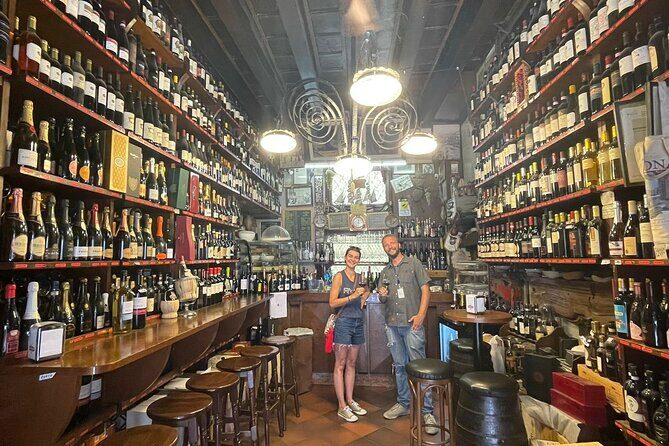
This is the part of the walk that turns Verona from pretty to political.
You’ll reach Arche Scaligere, described as the city’s most representative medieval Middle Ages site. These tombs aren’t just grave markers. They’re messages—about who mattered, what legitimacy looked like, and how families used art to project strength.
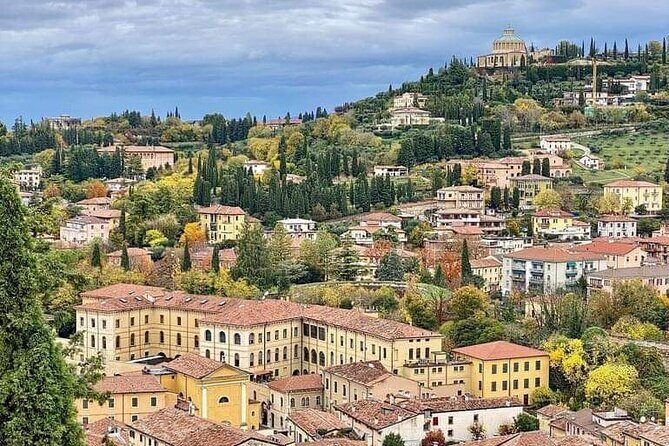
Next, Piazza dei Signori gives you the political center of Verona. The time here is about 20 minutes, and it’s perfect for slowing down. This square works well for getting your bearings because it connects buildings to decision-making. You’ll also see why this area still feels like Verona’s “thinking room,” even in modern times.
My practical tip: don’t rush through the square. Sit for a moment if you can, and let the guide’s points land. Once you understand the function of the place, the architecture starts making sense fast.
Piazza delle Erbe: local life where your camera will keep going
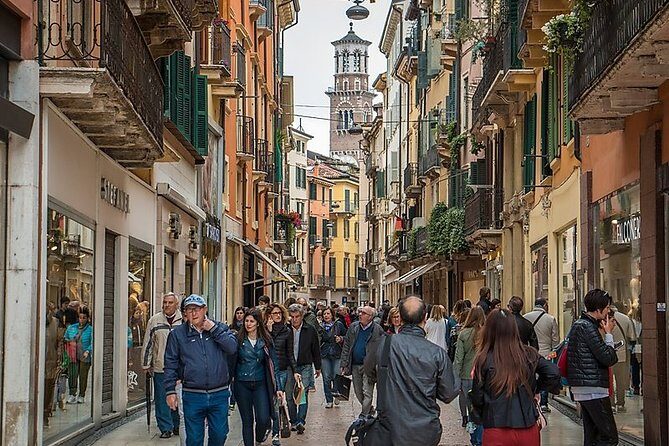
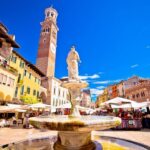
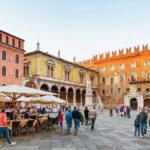
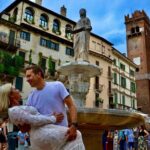
Then you arrive at Piazza delle Erbe, the city-center zone where there’s always something happening. It’s time to switch gears from power to everyday life.
This stop is also about 20 minutes, and it’s a great place to grab a drink or snack if you want an easy break. The guide’s context makes the square more enjoyable. Instead of seeing it as just a market spot, you start understanding how the city’s social rhythm is tied to these public spaces.
If you’re heat-sensitive, pace yourself here. By the time you reach the Erbe, you may be walking under open sky for part of the route. Bring water, and don’t feel bad about taking a pause so the tour stays fun instead of tiring.
Romeo’s House and Casa di Giulietta: the love story with real Verona weight
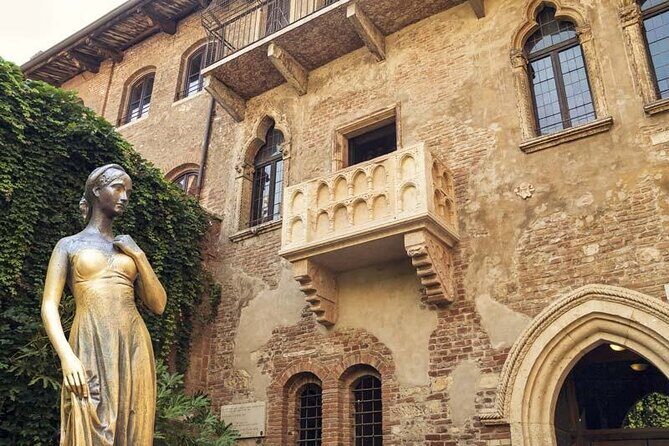
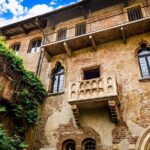
The walk closes in the area most people come to see: Romeo’s House (Casa di Romeo) and then Casa di Giulietta.
Romeo’s House is a quick 5-minute stop, but it works well as a warm-up. It sets the narrative so that when you get to Juliet, you’re not just standing in a tourist crush—you’re seeing how Verona marketed its literature and how that story stuck to real streets.
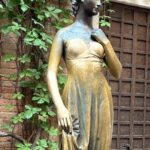
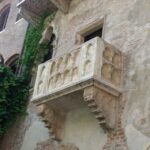
Casa di Giulietta is your final 20 minutes. The best way to enjoy this ending is to treat it as a cultural moment, not only a romance postcard. You’ll get the framing of why the story belongs here, and how the city uses literature to brand itself while still being stubbornly historical in the background.
If the balcony area is crowded, don’t panic. Enjoy the surrounding details and the perspective your guide brings. Sometimes the best photos aren’t the most famous ones.
Price and admissions: what’s included, what might cost extra
Here’s the simple way to think about the money.
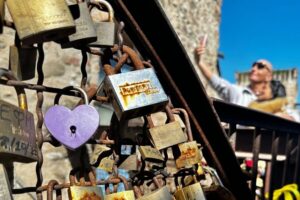
Many stops are listed with free admission or admission included, including major anchors like Arena di Verona, Scaligero Bridge, Arco dei Gavi, San Lorenzo, Porta Borsari, Arche Scaligere, and both Romeo and Juliet-related stops.
The one stop you should plan for is Santa Anastasia, where the admission is not included. If you care about going inside, keep that in mind so you’re not stuck deciding under time pressure.
Also, you’re paying for the guide’s work: the story thread, the pacing, and the way art and architecture connect. That’s usually what turns a “seen it before” city visit into something you actually remember.
The guide factor: Eugenio’s style and how he keeps it personal
The experience stands or falls on the guide, and this one is led by Eugenio (spelled Evgeny in one place). In practice, his style is friendly and adaptable. He answers questions, keeps the tone light, and uses humor without making the history feel like a joke.
I especially like the way he centers the group. If you have a specific curiosity—political power, architectural design, or how the story of Romeo and Juliet got tangled with real city spaces—he adjusts the emphasis rather than sticking to one script for everyone.
Communication is also part of the value. People have noted that he can be accommodating when plans need changing, and he’s willing to work with the reality of the day. If you’re traveling solo, that matters too; some tours only feel designed for a crowd.
One more practical note from real-world experience: if you show up late, or the meeting spot is hard to spot, you can lose the start momentum. Use your map app for the exact meeting place at Corso Porta Nuova 2 and arrive a few minutes early.
Who this tour is best for
This is a great fit if you:
- want a high-impact overview of Verona’s main historical layers without hopping museums all day
- like learning that connects Roman, medieval, and literature-era Verona
- prefer a small-group walk where you can ask questions and get specific answers
- want the tour to end near Juliet so you can continue at your own pace
It may be less perfect if you:
- need lots of long interior church time, because access can vary by events and one admission is not included
- get easily frustrated by crowd movement around the most famous areas, since the ending zone can be busy
When to book: timing can make the day feel smooth
The tour is commonly booked about 50 days in advance. That’s your hint to lock in your slot sooner rather than waiting for the last minute—especially if you’re tying Verona to trains or a specific lunch or dinner plan.
Also, match your booking time to your energy. Morning and afternoon both work, but if you’re sensitive to heat, consider a time that leaves you less wiped out afterward.
And if you’re planning multiple Verona activities, remember this is designed to be a guided walk with a finish in the same day’s “famous zone.” Don’t schedule something that requires sprinting across town right after.
Should you book this Verona history walk?
If you want Verona to make sense fast, I’d book it. This tour is strong at the exact sweet spot: major landmarks plus the connective tissue that explains why they belong to the same city story. It ends near Casa di Giulietta, so you finish in the area where you can keep exploring on your own.
Book it with one caveat in mind: church access isn’t guaranteed inside every stop, and Santa Anastasia admission isn’t included. If you can handle that, you’ll get a fun, structured walk that turns Verona into more than a photo list.
FAQ
Where does the tour start and end?
The tour starts at I Portoni della Bra, Corso Porta Nuova, 2, Verona and ends near Casa di Giulietta, Via Cappello, 23, Verona.
How long is the Verona history walking tour?
It runs about 2 hours 30 minutes to 3 hours.
What language is the tour offered in?
The tour is offered in English.
Is pickup available?
Yes, pickup is offered.
Is the group small?
Yes. The tour has a maximum of 15 travelers.
Are tickets included for the stops?
Many stops have free admission or admission included. Santa Anastasia is the one listed with admission ticket not included.
What time options are available?
Tours run during set windows listed as 9:30–11:30, 12:00–2:00, and 2:30–4:30 (Monday–Sunday).
Is there free cancellation?
Yes. You can cancel for a full refund up to 24 hours in advance.
Is the tour wheelchair-accessible or suitable for most travelers?
The experience notes that most travelers can participate. It also allows service animals, and it’s near public transportation.