REVIEW · VERONA
2-hour Private Guided Walking Tour of Verona
Book on GetYourGuide →Operated by Veronatours · Bookable on GetYourGuide
Verona in two hours hits the highlights fast. I love starting at the Roman Arena, where the stone feels real and immediate, and I love the shift from Roman leftovers to lively medieval squares like Piazza Erbe. One possible drawback: with just two hours, you’ll need to keep moving through top sites unless you’re happy with quick stops and photos.
This is a private guided walking tour in English with a licensed local guide, built for people who want structure and context without the pressure of a huge group. It runs rain or shine, and you’ll come back to the starting point in the heart of the city.
In This Review
- Key Things to Know Before You Go
- Where It Starts: Piazza Bra and the Roman Arena
- Roman-Era Stops and the City’s Ancient Frame
- Capulet House and Juliet’s Balcony (Plus the Juliet vs. Romeo Answer)
- Piazza Erbe: The Old Marketplace That Still Feels Laid-Back
- Piazza dei Signori: The City’s Living Room and Its Statues
- Roman Theatre and the Extra Proof You’re Not Just Doing One Landmark
- Pacing and Private-Group Value: What Two Hours Feels Like
- What You’ll Actually See on the Route
- What to Bring and How to Stay Comfortable
- Who This Tour Is Best For (and Who Might Want Something Else)
- Should You Book This Private Walking Tour of Verona?
- FAQ
- How long is the Verona private guided walking tour?
- Where do I meet the guide for the tour?
- Is this tour wheelchair accessible?
- What does the tour include?
- Does it run in rain, and what should I bring?
- When will I get confirmation, and how late can I cancel?
Key Things to Know Before You Go
- Roman Arena as the opening act: you start at Verona’s biggest Roman landmark and set the historical tone immediately.
- Juliet’s area, explained in plain terms: you’ll hear why Juliet is far more famous than Romeo, plus details about Juliet’s Club.
- Piazza Erbe’s market history: you’ll get context for a square that’s been working as a marketplace for ages.
- Piazza dei Signori as the city living room: expect guidance on statues and the role this square plays in local culture.
- Roman Theatre on the route: you’ll see more than one Roman stop, not just the Arena.
Where It Starts: Piazza Bra and the Roman Arena
Meet at Piazza Bra in central Verona, at the statue of King Vittorio Emanuele on Horse. This matters more than it sounds. It puts you in walking distance of the main sights and helps you get oriented fast, so your two hours feel “spent,” not wasted.
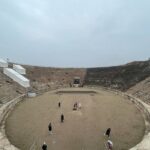
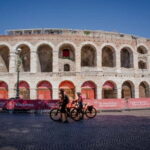
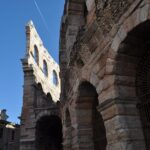
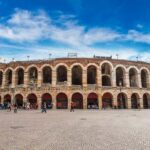
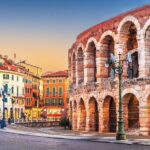
From there, the tour begins at the Roman Arena—the imposing Roman amphitheater that still looks surprisingly intact. Even if you know the Arena di Verona name, seeing it as part of a walking route gives you a different picture. Your guide can point out how this place shaped the city around it, and why it’s often treated like the heartbeat of Verona.
Practical tip: start the tour with your camera ready and your expectations realistic. You’re not going inside for an extended visit based on what’s described here; you’re there to understand the site, take photos, and keep the flow going.
You can also read our reviews of more walking tours in Verona

Roman-Era Stops and the City’s Ancient Frame
A big part of why this walk works is the way it moves between time periods. You don’t just jump from one “must-see” to the next. You’re shown Roman-era excavations and remains, then guided toward the medieval layers that grew around them.
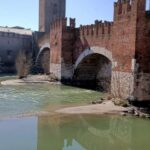
The tour route includes an ancient Roman gate, so you’ll get a feel for how Verona’s older boundaries and corridors shaped what came later. It’s the kind of information that makes the streets easier to read. Once you know what you’re looking at—stone from one era, architecture from another—the city starts to line up in your head.
If you’re the type who likes history but not museum overload, this is a good mix. The guide connects what you’re seeing with what it meant, without turning the walk into a lecture marathon.
Capulet House and Juliet’s Balcony (Plus the Juliet vs. Romeo Answer)
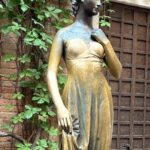
Next comes the Capulet house area and the story people actually travel for: Juliet’s balcony. The guide’s job here is to explain what you’re looking at and why the legend works the way it does.
You’ll also hear about Juliet’s Club, which adds a modern, quirky layer to the timeless story. And you’ll get the behind-the-scenes explanation for why Juliet is so immensely more popular than Romeo—something you can’t really guess just from the balcony photo.
Here’s the value for you: the balcony is easy to recognize, but it’s hard to place without context. With a guide, it becomes more than a selfie stop. It turns into a story checkpoint in Verona’s larger cultural timeline.
Piazza Erbe: The Old Marketplace That Still Feels Laid-Back
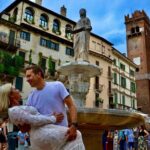
After the drama of Juliet, you land in a real Verona scene at Piazza Erbe. This is described as likely the oldest, continuously functioning marketplace in the world, and your guide helps you understand why that matters.
What I like about starting here (and what you’ll likely appreciate on a first visit) is how the square works at two levels. There’s the daily-life feel—this is a place people associate with commerce, meeting, and errands. Then there’s the older layer, where the stone and location tie back to centuries of city life.
Your guide also helps you notice details that you’d normally walk right past. One highlight from the tour experience is being pointed out old flood markings and engravings on a building. That’s the kind of thing that makes Verona feel lived-in, not staged. It also gives you a concrete human scale for the city’s past—weather, flooding, survival, rebuilding.
Piazza dei Signori: The City’s Living Room and Its Statues
Right next door, Piazza dei Signori earns its reputation as the city’s living room. This square shifts the mood from market energy to an elegant, more “people gather here” vibe.
The tour includes the statues of poets and knights, and the guide explains why these figures belong here. Again, the point isn’t just to see sculptures. It’s to learn what kind of city Verona wanted to be—and how it signaled identity in public spaces.
If you like learning what a square is for (not just what it looks like), this stop is one of the stronger moments of the whole walk.
You can also read our reviews of more guided tours in Verona


Roman Theatre and the Extra Proof You’re Not Just Doing One Landmark
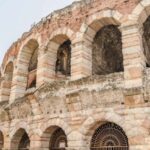
This tour doesn’t treat Roman Verona as a single stop. You’ll also visit the Roman Theater, giving you a broader understanding of how Roman entertainment shaped the city.
The Arena gets the headlines, but the Roman Theater adds balance. With both, you can start to see patterns: where the Romans put performance spaces, how they used architecture to create audience focus, and how later Verona adapted those strong shapes into its own urban map.
Even if you’re not a Roman-history superfan, you’ll probably enjoy this part because it turns the Roman theme from “one big thing” into a system of places. That’s where walking tours can genuinely help—when the information connects instead of repeating.
Pacing and Private-Group Value: What Two Hours Feels Like
The tour is set up as a private group with English guide service, and the price is listed as $335.32 per group up to 20. Since it’s per group (not per person), your value depends on how many people are in your group. If you’re a small party, it can be a smart way to avoid rushing through Verona’s key sights with strangers.
What makes this experience feel worth it in practice is the pacing style. The tour is described as well paced, with time for questions, photos, and slowing down at interesting details. That matters in Verona because some sights can feel compressed if you’re moving with a big crowd and a tight schedule.
A small, practical note: it’s still a walking tour, not a sit-down tour. If you like long breaks and extended indoor time, you may want to pair this with additional independent time afterward.
Also, the starting point is right where you want to be: Piazza Bra. That makes it easier to roll into lunch or an evening walk after you finish.
What You’ll Actually See on the Route
You can think of this as a highlights loop through Verona’s signature layers:
- Roman Arena (start point and centerpiece)
- Ancient Roman gate and Roman-era remnants along the way
- Capulet house area and Juliet’s balcony, plus Juliet’s Club
- Piazza Erbe (the historic marketplace square)
- Piazza dei Signori (the city living-room square with statues)
- Roman Theater (another major Roman stop)
- Back to Piazza Bra by the end
The best part is that each stop has a reason tied to the last one. You’re not just collecting landmarks—you’re learning how Verona grew into the city you see today.
What to Bring and How to Stay Comfortable
This tour runs rain or shine, so plan for wet pavement if the weather turns. The requirement list is straightforward:
- Comfortable shoes (you’ll be walking)
- Face mask or protective covering (bring one even if you’re not sure you’ll need it)
Since it’s only two hours, you don’t want blisters stealing your attention. Wear shoes you already trust.
If you’re visiting in warmer months, bring water and take your cue from the guide for where you can pause briefly. If you’re visiting in cooler weather, dress in layers so you can stay comfortable while moving.
Who This Tour Is Best For (and Who Might Want Something Else)
This experience is a strong fit if you:
- want a first-time Verona orientation without feeling lost
- like a mix of Roman sites and medieval-era squares
- appreciate a guide who explains context at a walking pace
- prefer a private setup over a large-group tour
It may not be the best choice if you:
- plan to spend long periods at each single attraction
- want a highly flexible itinerary that changes minute by minute
- dislike walking with occasional crowds around famous story sites
For most people, though, the two-hour format is exactly right. It gives you the key sights and the context that turns those sights into memories.
Should You Book This Private Walking Tour of Verona?
Book it if you want Verona’s most famous stops—Roman Arena, Juliet’s balcony, Piazza Erbe, and the Roman Theater—with a guide who can connect the dots. The structure helps, and the private format helps even more.
I’d especially recommend it if you’re the type who likes to understand what you’re seeing rather than just ticking boxes. The walk includes the kind of small, meaningful details that make the city feel real, like being guided to things you’d normally miss, including historic marks on buildings.
One more practical reason to choose this: ending back at Piazza Bra makes it easy to keep exploring right away. You finish in the middle of the action.
FAQ
How long is the Verona private guided walking tour?
The tour lasts 2 hours.
Where do I meet the guide for the tour?
You meet in Piazza Bra, in Verona (I-37121), by the statue of King Vittorio Emanuele on Horse.
Is this tour wheelchair accessible?
Yes, this activity is listed as wheelchair accessible.
What does the tour include?
It includes a licensed, professional English-speaking guide, and the experience covers major stops such as the Roman Arena, the Capulet house area with Juliet’s balcony, Piazza Erbe, Piazza dei Signori, and the Roman Theater, with the tour ending back at the meeting point.
Does it run in rain, and what should I bring?
It runs rain or shine. Bring comfortable shoes and a face mask or protective covering.
When will I get confirmation, and how late can I cancel?
You receive ticket confirmation within 48 hours. You can cancel up to 24 hours in advance for a full refund.