REVIEW · VERONA
Verona: Traditional Balsamic Vinegar From Modena Tasting
Book on GetYourGuide →Operated by La Botteghetta La Bottega di Verona · Bookable on GetYourGuide
Black gold has a flavor story. In Verona, this 1-hour tasting turns traditional balsamic vinegar into a guided lesson you can actually taste, not just hear about. You’ll also get paired bites that show why this stuff earned the nickname people use for it—black gold.
What I like most is the focus on IGP vs DOC and how to tell the difference with your palate. I also like that the tasting doesn’t stay in theory; you sample vinegar styles alongside cheese, bread, and fruit, so the flavors make sense fast.
One catch to plan around: the meeting area can be tricky to reach by car if you’re not already local. In particular, getting parking near Via Leoncino 31 may take time.
In This Review
- Key highlights to look forward to
- Verona’s balsamic tasting turns food talk into flavor talk
- Price and what you really get for $53
- Where you meet: Via Leoncino 31 and the parking reality
- The lesson behind black gold: history and production explained simply
- IGP vs DOC: how to taste the label, not just the liquid
- Tastings paired with real food: cheese, bread, fruit (and how to use them)
- Your host matters: language support and Natalie’s teaching style
- Duration, pacing, and group feel for a 1-hour stop
- Where this experience fits best in your Verona trip
- Who should skip it (or at least adjust expectations)
- Should you book Verona: Traditional Balsamic Vinegar From Modena Tasting?
- FAQ
- How long is the balsamic vinegar tasting in Verona?
- Where is the meeting point?
- How much does it cost?
- What languages are available for the guide?
- What is included in the tasting?
- Is the water sparkling or still?
- Can I cancel and get a refund?
Key highlights to look forward to
- IGP vs DOC clarity so you taste with context, not confusion
- Multiple balsamic styles served for comparison in a short 1-hour session
- Pairings that teach (cheese, bread, fruit) rather than just fill the plate
- Roman-era to modern production explained so the vinegar history feels practical
- Language support in English, Italian, or Russian, with hosts like Natalie described as especially engaging
Verona’s balsamic tasting turns food talk into flavor talk
Verona is famous for opera and romance, but this experience pulls you into Italian food culture beyond pasta and pizza. You start with balsamic vinegar as the main character, then everything else supports it: the history, the production, the labeling rules, and finally the taste comparisons.
The format is designed for people who want something real, but don’t want a half-day tour. With a 1-hour duration, you get a concentrated story and enough samples to understand what makes each vinegar type different. That matters because balsamic vinegar can be confusing when you only see bottles on a shelf. Here, you taste the differences immediately, then you learn how Italians approach them.
You can also read our reviews of more food & drink experiences in Verona

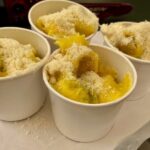
Price and what you really get for $53
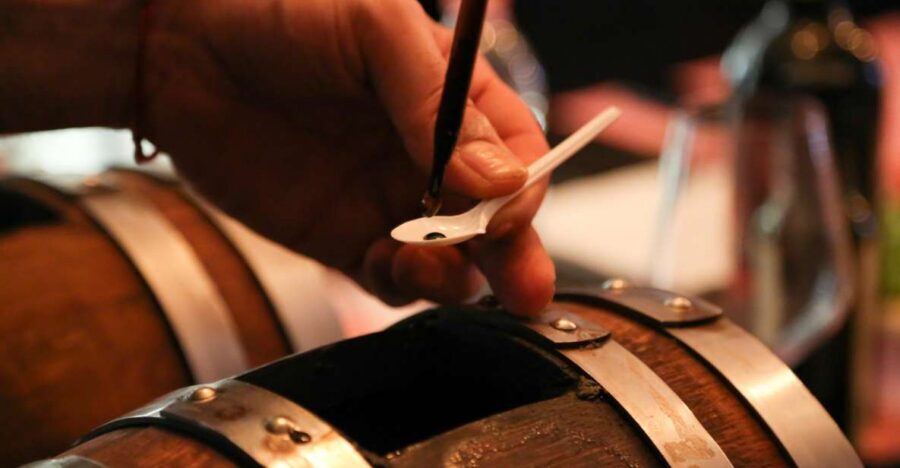
At $53 per person, this is not a cheap snack. The upside is that you’re paying for guided learning plus multiple tasting pours with food pairings, not just a one-flavor sample.
Here’s what your money is really buying:
- A structured explanation of balsamic vinegar history and production evolution through the Roman era
- Help understanding the difference between IGP and DOC
- Tastings of different kinds of balsamic vinegar
- Pairings with local foods like cheese, bread, and fruit
- Sparkling or still water during the session
If you’re the type who likes to bring home more than a souvenir—someone who wants to know what to look for next time you shop—this price is easier to justify. If you mainly want a casual bite and don’t care about labels or production, you might find it a bit focused.
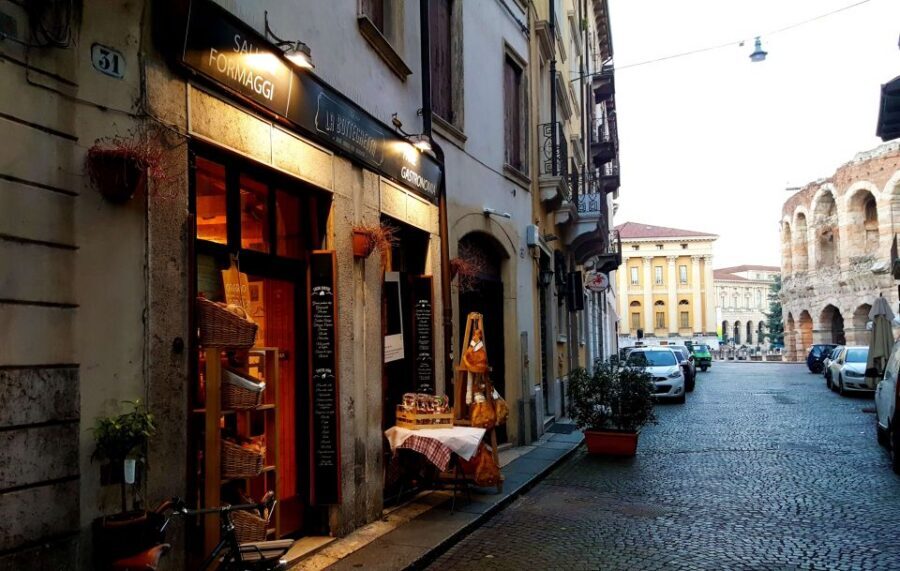
Where you meet: Via Leoncino 31 and the parking reality
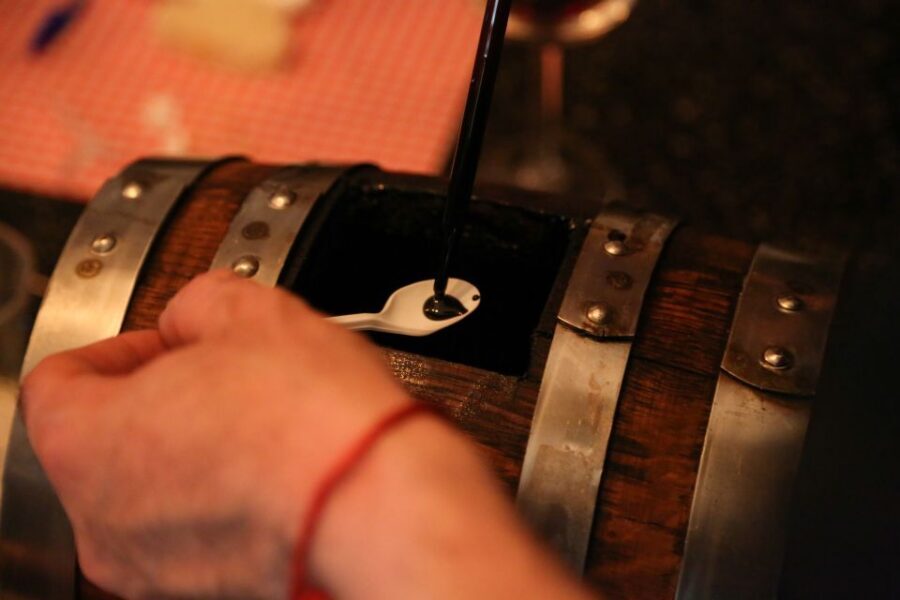
Your meeting point is Via Leoncino 31. This kind of city-center address is usually fine if you’re walking, using a local pickup drop-off, or already familiar with the area.
If you’re driving from outside Verona, plan for extra time. One important review flagged a practical issue: if you arrive without an easy plan for parking, you may waste time circling and still not find a spot quickly. I’d treat this as a serious planning note, not a minor inconvenience.
Practical tip: if you can, arrive early on purpose and decide how you’ll handle parking before you set out. Otherwise, the tasting starts before you know it, and you’ll be stressed instead of tasting.
The lesson behind black gold: history and production explained simply
This tasting is built around storytelling, but it’s not just a lecture. The experience is designed to connect you to why balsamic vinegar matters in Italy and why it’s called one of the country’s most valuable exports.
You’ll hear the centuries-old history and how balsamic vinegar evolved through major periods, including the Roman era. That context helps you understand why this isn’t treated like a generic condiment. It’s more like a traditional product with a carefully managed process.
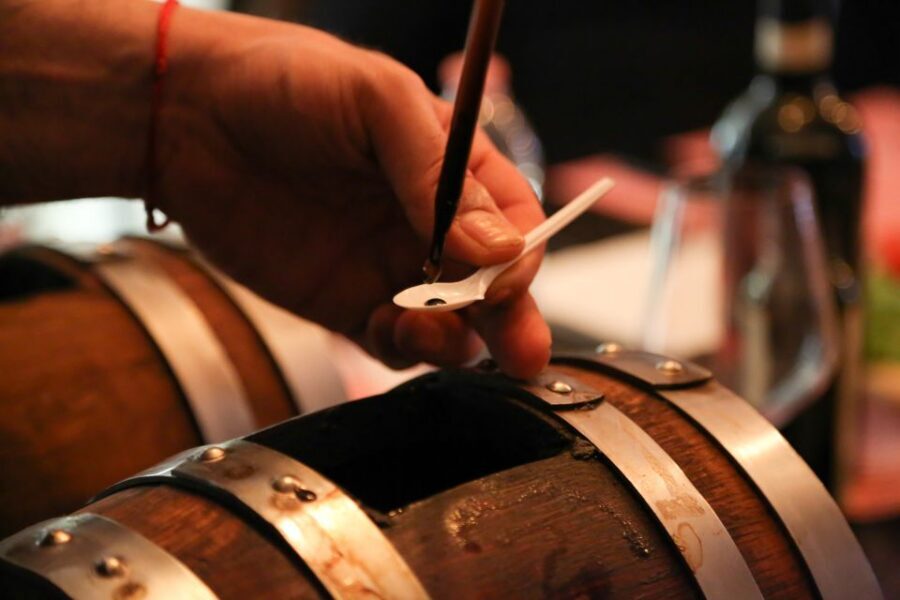
Then the host walks you through the secrets of production—how it becomes the vinegar Italians recognize and value. Even if you’re a complete beginner, the pairing system does the heavy lifting. When you taste multiple types, you can link what you learn (production and rules) to what you feel on your tongue (sweetness, density, acidity, and complexity).
IGP vs DOC: how to taste the label, not just the liquid
One of the biggest reasons this works in real life is that it tackles IGP vs DOC. In a store, those letters can feel like paperwork. In a tasting, they become a shortcut to understanding quality and style.
You’ll learn how to appreciate balsamic vinegar the way Italians do—meaning you don’t just ask, Is it good? You ask, What is it, and how should it be used?
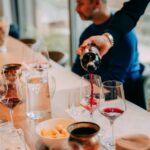
During the tasting, you’ll sample different vinegar types side by side. That comparison is the key. When you taste one style and then another right after, the differences stop being vague. You start to notice how each one behaves in a bite:
- some feel smoother and more balanced
- some read sharper and more vinegar-forward
- some come across richer, especially when paired with cheese or fruit
The label lesson matters because it gives you a framework for when you’re shopping later. Without it, you’re stuck choosing based on price or marketing.
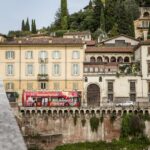


Tastings paired with real food: cheese, bread, fruit (and how to use them)
This is not a vinegar-only experience. The tasting pairs balsamic with classic supporting flavors: cheese, bread, and fruit. That pairing approach is practical because it shows how balsamic vinegar changes food instead of sitting on its own.
Here’s what these pairings help you learn:
- Cheese + balsamic: You’ll notice how the vinegar cuts through fat and how sweetness can soften acidity. This is one reason balsamic works so well in Italian eating—small amounts can make the whole bite feel more complete.
- Bread + balsamic: Bread is forgiving. It helps you taste texture and balance without overcomplicating things.
- Fruit + balsamic: Fruit brings natural sweetness, so you can compare how balsamic adds depth rather than just sugariness.
Some sessions also include extra comparisons beyond the core pairings. One review mentioned that the host included wine and olive oil in training to help relate categories people might already know. That’s useful if you’re trying to build a bigger flavor vocabulary, not just memorize facts.
If you go in expecting a few tastes, keep in mind this is a guided pairing experience. Pay attention to how the same vinegar tastes different depending on what it’s paired with.
Your host matters: language support and Natalie’s teaching style
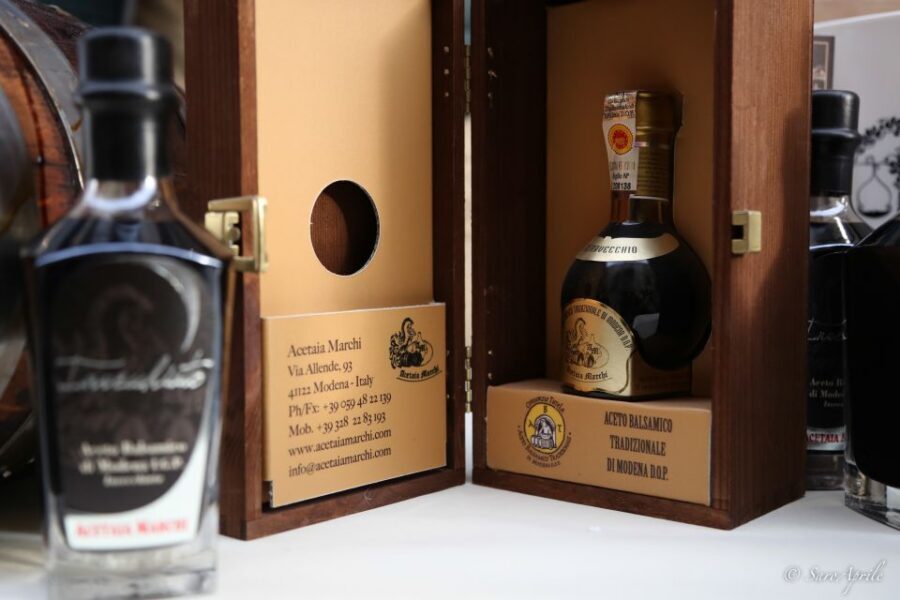
The experience is led by a guide in one of these languages: English, Italian, or Russian. That’s a big deal because balsamic vinegar is a nuanced topic. If you can understand the explanation cleanly, the tastings land harder.
One name you’ll see in feedback is Natalie. Reviews specifically praised her as informative and passionate, and they highlighted how she explained different types of balsamic vinegar and helped people understand how to enjoy each method differently. Another review also praised her effort with French, noting her spoken communication was strong.
That kind of teaching makes the difference between tasting as entertainment and tasting as learning. When the host connects history, production, and practical use, you walk away with something you can use later.
Duration, pacing, and group feel for a 1-hour stop
The total time is 1 hour. That short window affects pacing. You shouldn’t expect a long meandering tour or multiple rooms. Instead, you’ll get a tight structure: explanation, tastings, and food pairings.
For you, that likely means:
- You’ll need to arrive on time so the session flows.
- You’ll get a clear overview rather than an exhaustive course.
- You’ll taste enough to form opinions, but it won’t turn into a shopping spree inside the tasting.
It’s a good format if you’re stacking activities in Verona and want something focused that doesn’t chew up the whole day.
Where this experience fits best in your Verona trip
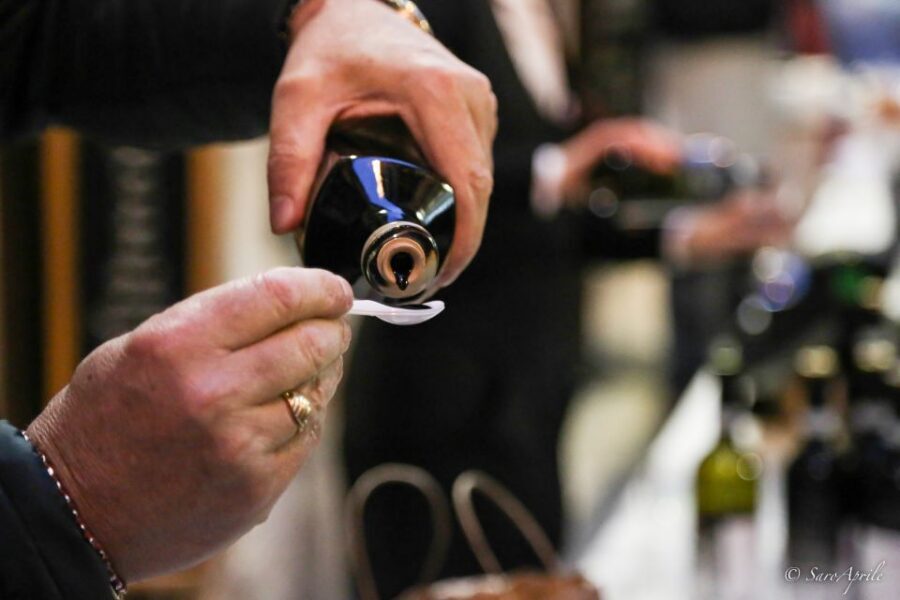
This is ideal if you want a food experience that feels Italian but isn’t the usual checklist. It suits:
- Food lovers who like to understand what they’re eating
- People who enjoy comparing similar products
- Couples or small groups who want a short shared activity
- Travelers who want something memorable enough to bring home, like a clearer idea of what IGP vs DOC means
It’s also a nice change of pace if you’ve been spending your time on sights and want one practical, sensory lesson to balance it out.
If you’re extremely rushed and need a flexible stop, remember the duration is fixed at 1 hour. The experience is also built around a meeting point—Via Leoncino 31—so plan your arrival timing accordingly.
Who should skip it (or at least adjust expectations)
Consider skipping or adjusting expectations if:
- You mainly want a casual snack with minimal explanation
- You don’t want to think about labels, production, or how vinegar should be used
- You’re relying on finding parking nearby with no buffer time
If you’re driving, I’d strongly consider building extra time into your schedule or using a different arrival plan.
Should you book Verona: Traditional Balsamic Vinegar From Modena Tasting?
I’d book this tasting if you’re the kind of traveler who likes learning through taste—especially if you want a quick education on black gold and how to appreciate it the Italian way.
This is good value when you care about the story and the comparisons: multiple vinegar types, paired with cheese, bread, and fruit, plus the IGP vs DOC explanation that helps you make smarter choices afterward.
The main reason to hesitate is logistics by car. If parking is your weak spot, plan your arrival carefully so you start the tasting relaxed, not frantic.
If you’re ready for a focused food lesson that fits into a tight schedule, this one-hour balsamic session is exactly the kind of small, hands-on experience that makes a trip feel personal.
FAQ
How long is the balsamic vinegar tasting in Verona?
The experience lasts 1 hour.
Where is the meeting point?
You meet at Via Leoncino 31.
How much does it cost?
The price is $53 per person.
What languages are available for the guide?
The guide is available in English, Italian, or Russian.
What is included in the tasting?
The tasting includes balsamic vinegar samples paired with local products such as cheese, bread, and fruit, plus water.
Is the water sparkling or still?
You’ll get sparkling or still water (as provided as part of the experience).
Can I cancel and get a refund?
Yes. You can cancel up to 24 hours in advance for a full refund.