REVIEW · VERONA
Verona Arena and Historic Highlights: A Guided Walking Tour
Book on Viator →Operated by Opatrip.com Italy · Bookable on Viator
Verona feels like a time machine on foot. This guided walking tour links the Roman Arena to medieval and Gothic Verona, with stops that explain how the city looked and worked across centuries. You get a clean route that ends at Juliet’s House, so you don’t waste time figuring out what goes where.
I especially like the art-and-history guidance. In my experience with this style of tour, the guide focus stays sharp on culture and what to notice, and one guide named Frank stood out for being super friendly and well prepared with clear answers. I also like that the itinerary is built around big-name places without feeling rushed into a checklist.
One drawback to consider: it’s only about 2 hours, and each stop is scheduled in tight time blocks. Also, the experience requires good weather, so rain can mean a date change or a full refund.
In This Review
- Key moments on this Verona route
- Verona Arena and medieval Verona: what this walking tour gets right
- Price and value for a 2-hour private highlights route
- Start at Arena di Verona (P.za Brà, 1) and end at Juliet’s House
- Stop 1: Arena di Verona and why it still works for performances
- Stop 2: Castelvecchio Old Castle—fortress walls and museum art
- Stop 3: Scaliger Arcs (Scaliger Tombs) and Gothic funerary power
- Stop 4: Piazza dei Signori and how Verona governed itself
- Stop 5: Piazza delle Erbe—Roman forum roots under fruit market life
- Stop 6: Casa di Giulietta and Shakespeare’s legend in real Verona
- Timing, weather, and how to make the most of a short tour
- Who this tour suits best (and who might want a different option)
- Should you book this Verona Arena and Historic Highlights walk?
- FAQ
- How long is the Verona Arena and Historic Highlights guided walking tour?
- Where does the tour start and where does it end?
- How much does the tour cost?
- What stops are included on the tour?
- Is the tour ticketed at each stop?
- What happens if the weather is poor?
Key moments on this Verona route
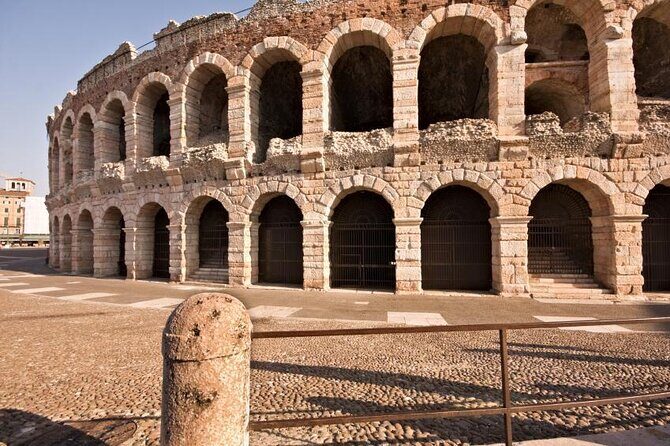
- Roman Arena di Verona still performs today, thanks in part to its famous acoustics
- Castelvecchio’s 7-tower fortress story connects defense, water, and medieval power
- Scaliger Arcs (five Gothic funerary monuments) makes the Scaliger family’s legacy visual
- Piazza dei Signori shows how power worked, including Venetian-era administration around major palaces
- Piazza delle Erbe blends today’s café-and-market vibe with Roman forum roots (including chariot races)
- Casa di Giulietta brings Shakespeare’s legend into the real streets of Verona
Verona Arena and medieval Verona: what this walking tour gets right
If you’re trying to understand Verona fast, this route is smart. You’re not just looking at famous buildings. You’re walking through layers: Roman public spectacle, medieval fortification and art, then Gothic memorials and the civic squares where Verona’s drama played out.
I like that the tour doesn’t treat history like a textbook. It points you toward what those places were for. The Arena wasn’t just a pretty structure—it was built for crowds and performance. Castelvecchio wasn’t just scenic walls—it was a defensive system. Piazza squares weren’t just a place to sit—they were where Verona did real business, from politics to public gatherings.
It also helps that the tour format keeps things focused. This is a private experience for your group, so you can ask questions and get answers without feeling swallowed by a large tour mob.
You can also read our reviews of more walking tours in Verona

Price and value for a 2-hour private highlights route

At $196.66 per person for about 2 hours, this is not a budget-only option. The value comes from what you’re paying for: an organized walking route that hits multiple major landmarks, plus a guide to explain what you’re seeing while you’re still standing in front of it.
Another value point: the itinerary lists admission as free for each stop. That means your money is largely going toward the guided experience and the time efficiency. You’ll still want to keep an eye on what’s actually included for each specific stop on the day, but the plan you’re given is set up to minimize extra ticket hassle.
And because it’s private for your group, you’re paying less for logistics and more for time. If you hate wasting half a day hopping between sites on your own, this format can be a win.
Start at Arena di Verona (P.za Brà, 1) and end at Juliet’s House
Your walk starts at Arena di Verona, P.za Brà, 1. The tour ends at Casa di Giulietta, Via Cappello, 23, which is convenient if you want to tack on time for photos, a snack, or a slow wander afterward.
This “start strong, finish romantic” layout also makes sense geographically. You begin at the biggest Roman landmark and end in the heart of the city where Shakespeare’s legend has become a magnet. You’ll feel that arc as you move from one historic purpose to the next.
The meeting area is near public transportation, which matters in a city where getting across town can eat time if you’re relying only on taxis or long walks.
Stop 1: Arena di Verona and why it still works for performances
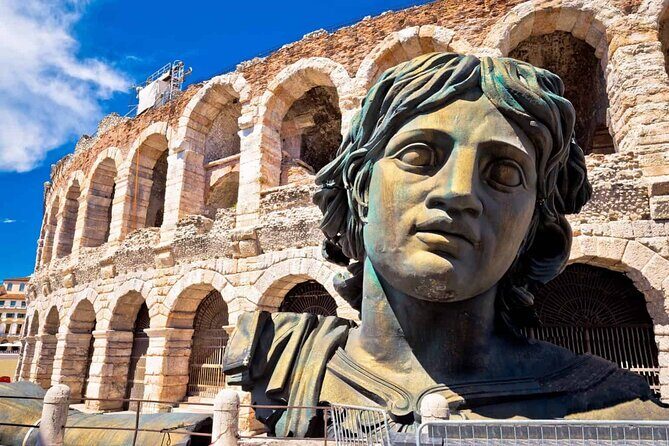
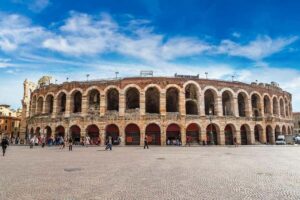
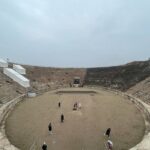
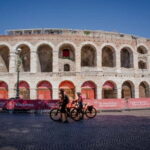
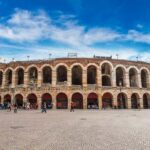
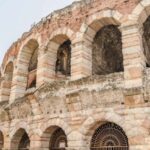
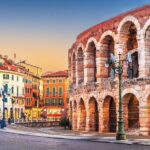
The tour’s first stop is the Arena di Verona, a well-preserved Roman amphitheater. In ancient times it hosted gladiator shows and other crowd spectacles—basically, the medieval version of the thing everyone gathered around for entertainment.
Today, the Arena is used for opera performances and concerts, and the reason is practical: the structure has ideal acoustics. When you’re standing there, that detail helps you picture the space working as an entertainment machine. It’s not just history behind glass.
Time-wise, you’re scheduled for about 17 minutes here. That’s enough for orientation and a few key insights, but it’s not enough to linger for a long, slow look. If you’re the type who wants to read everything at your own pace, plan to add extra time before or after the tour.
Stop 2: Castelvecchio Old Castle—fortress walls and museum art
Next up is Castelvecchio, often described as the Old Castle. The focus here is the castle itself: it’s described as sublimely restored, and it has deep defensive roots, including a seven-tower defense system and the idea that waters once surrounded parts of it.
This stop is a great reminder that medieval Verona wasn’t only about art and romance. It needed protection. Seeing the castle in the context of how it was built helps you understand why towns invested so heavily in walls, towers, and controlled routes.
You also get museum context. Castelvecchio houses the Castelvecchio Museum, with collections that include medieval and Renaissance sculptures, paintings, jewelry, weapons, and armor. Even if you don’t spend a full museum day inside, the guide’s framing helps you connect objects to the world that produced them.
You’re scheduled for about 16 minutes at Castelvecchio. That’s ideal for getting your bearings and learning what to pay attention to later if you return.
You can also read our reviews of more guided tours in Verona


Stop 3: Scaliger Arcs (Scaliger Tombs) and Gothic funerary power

Then you’ll see the Scaliger Tombs, also known through the term Scaliger Arcs. This group includes five Gothic funerary monuments built to commemorate the Scaliger family, who ruled Verona.
What I like about this stop is that it’s not just another pretty building. Gothic funerary art can feel emotionally distant if you don’t know the purpose. Here, the guide’s explanation makes the monuments make sense: they’re a public message about power, memory, and identity.
Time is about 16 minutes, which is perfect for spotting the style, understanding why the monuments exist, and then moving on before the emotional weight turns into “same-stone overload.”
Stop 4: Piazza dei Signori and how Verona governed itself

Piazza dei Signori is one of those places that feels like it should have stories behind every corner. The tour treats it that way.
The square historically took on political and administrative functions during the Venetian reign. You’ll also hear about the palaces built around it, including Palazzo della Ragione and Palazzo di Cansignorio. That detail matters because it explains why this square kept pulling the city’s life into one focal point.
Even with a scheduled 16 minutes, the guide’s interpretation helps you look beyond the scenery and see the square as a governance stage. It’s easier to understand how public space works when you’re told what it was used for.
Stop 5: Piazza delle Erbe—Roman forum roots under fruit market life
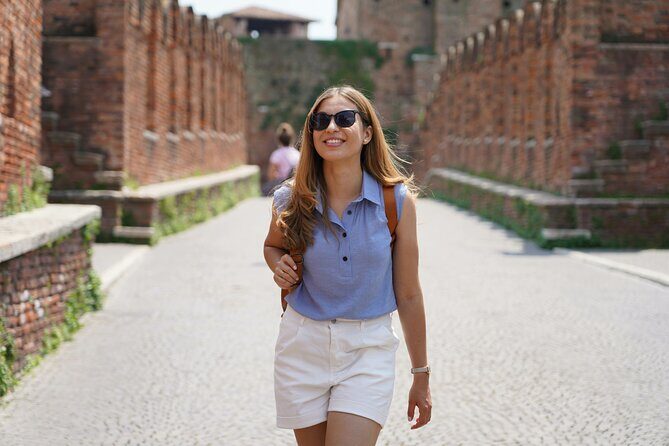
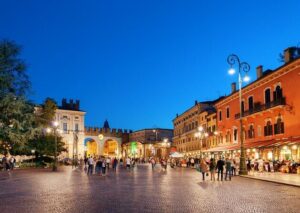
Piazza delle Erbe is described as Verona’s oldest square and it shows. It has that mix that keeps people coming back: fruit market energy, cozy cafés, and buildings of different styles and ages.
The tour also connects the present to the Roman past. In Roman times, this area served as a forum and it even hosted chariot races. That’s a fun mental shift: you’re not only eating gelato or shopping produce—you’re in a place that once handled major public business and public spectacle.
Your time here is about 16 minutes. That should be enough to soak in the atmosphere and understand the historical layering. It’s also a good point in the tour to grab water or a quick snack if you haven’t yet, because the rest of the walk moves quickly.
Stop 6: Casa di Giulietta and Shakespeare’s legend in real Verona
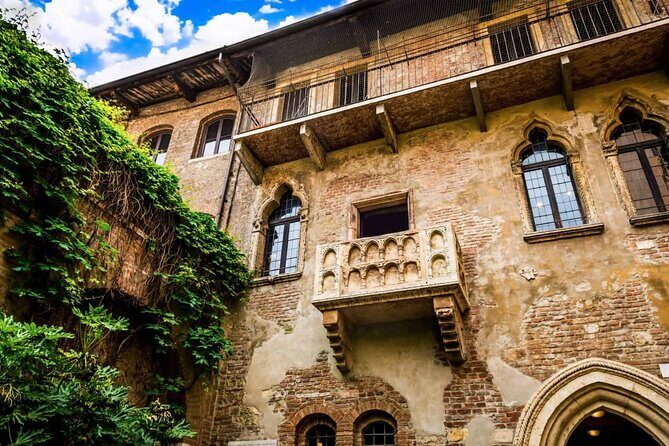
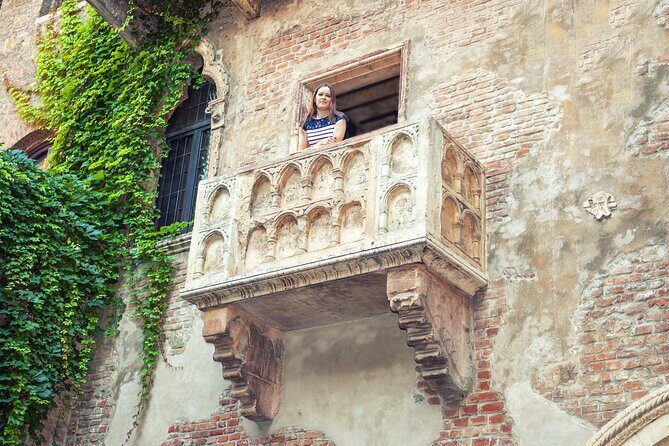
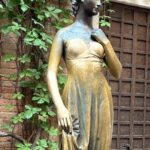
The tour finishes at Casa di Giulietta. This is where the Verona story turns romantic and pop-cultural, but the reason it works is that it ties into a global myth: Shakespeare’s Romeo and Juliet.
The tour frames the house through the legend connected to the story, so you’re not just visiting a famous name. You’re connecting the myth to the street-level Verona where it’s been kept alive through generations of visitors and local storytelling.
You get about 15 minutes here. That’s typically enough for the main sights and the guide’s context, but if you want to do more than a photo-and-move-on pass, plan extra time on your own.
Timing, weather, and how to make the most of a short tour
Because this is about 2 hours, you’ll get the best experience if you go in with a simple mindset: think of it as a guided “big picture” route. You won’t have hours at each site, and that’s okay. The strength here is linking sites so they explain each other.
You also need to plan around good weather. The experience can be canceled due to poor weather, with an alternate date or a full refund. Verona can be very walkable, but rain changes the feel fast—so I’d rather you go on a day when you can enjoy the squares and open-air spaces without rushing.
Finally, use the tour as a setup for your own follow-up. After a route like this, you’ll know which places you want to revisit for more time.
Who this tour suits best (and who might want a different option)
This guided walking tour is a strong fit if you want:
- a fast orientation to Verona’s main historic areas
- clear explanations of Roman, medieval, and Gothic highlights in one route
- a private group experience with time for questions
- a walking plan that ends in a convenient location near Juliet’s House
You might want to consider a different pace if you:
- prefer long time inside museums or want a slow, solo stroll with no structure
- hate the idea of scheduled time windows per stop
- are hoping to combine the tour with heavy extra sightseeing immediately afterward
Should you book this Verona Arena and Historic Highlights walk?
I think this is a good booking if your goal is understanding Verona quickly. The route hits the Arena, Castelvecchio, the Scaliger Tombs, and two of the city’s signature squares—then it finishes at Casa di Giulietta. That blend of Roman, medieval, Gothic, civic, and Shakespeare-level storytelling is exactly what makes Verona memorable.
The main reason to book is value-by-efficiency. For about two hours, you cover a lot of ground with a guide who can explain what you’re seeing—especially if you get Frank, who came across as friendly and well ready with answers and an eye on the group’s needs.
If you’re sensitive to time limits or weather changes, that’s the only real warning. Otherwise, this is the kind of guided walk that leaves you with mental maps, not just photos.
FAQ
How long is the Verona Arena and Historic Highlights guided walking tour?
It’s approximately 2 hours.
Where does the tour start and where does it end?
It starts at Arena di Verona, P.za Brà, 1, 37121 Verona VR, Italy. It ends at Casa di Giulietta, Via Cappello, 23, 37121 Verona VR, Italy.
How much does the tour cost?
The price is $196.66 per person.
What stops are included on the tour?
The tour includes Arena di Verona, Castelvecchio, Scaliger Tombs (Scaliger Arcs), Piazza dei Signori, Piazza delle Erbe, and Casa di Giulietta.
Is the tour ticketed at each stop?
The itinerary lists admission as free for each stop.
What happens if the weather is poor?
The experience requires good weather. If it’s canceled due to poor weather, you’ll be offered a different date or a full refund. You can also cancel up to 24 hours in advance for a full refund.