REVIEW · VERONA
Verona: Romeo and Juliet Guided Walking Tour
Book on GetYourGuide →Operated by Timonfaya Travel Lanzarote · Bookable on GetYourGuide
Love stories meet real stone in Verona. This Romeo and Juliet walking tour uses a friendly local guide to connect Shakespeare’s drama to the city’s actual monuments, starting at the big Arena and working through the squares where emotions have been running high for centuries.
I especially love how the guide makes the walk feel like a story you can follow with your feet. Two standouts for me are the chance to see Juliet’s balcony and the statue of Juliet up close, and the practical orientation you get as you move from one landmark to the next—complete with helpful tips along the way. One drawback: it is a real walking tour, and the guide waits up to 10 minutes after the scheduled departure, so you’ll want to arrive early.
In This Review
- Key highlights you’ll actually feel on the walk
- Piazza Bra to the Arena: where Verona flexes its power
- The city as a map of Shakespeare: how the story connects to real places
- Juliet’s balcony and the statue of Juliet: the stop that never gets old
- Piazza Erbe: markets, Lamberti Tower, and Roman-era leftovers
- Piazza dei Signori: where Verona’s drama feels more serious
- A walk through time: Roman to Romanesque to Gothic to Renaissance
- Passing medieval courtyards toward the Scala Family Tombs
- Casa di Romeo and the lead-up to Juliet’s House
- Timing, walking pace, and why 1.5 hours is a good deal
- How to prepare for Verona weather and the 10-minute rule
- Guide impact: why Maria Pia and Mauro make the difference
- Who this tour suits best
- Should you book the Verona Romeo and Juliet guided walking tour?
- FAQ
- How long is the Verona: Romeo and Juliet Guided Walking Tour?
- What language is the tour guide speaking?
- Where does the tour start and end?
- What are the main sights you’ll see?
- Is the tour canceled if it rains?
- Are entrance fees included in the price?
- How late can I arrive before the guide leaves?
Key highlights you’ll actually feel on the walk

- Arena starting point (bigger than you expect): You begin at the Arena area, built before Rome’s Colosseum and still used for cultural events.
- Juliet’s House, balcony, and the Juliet statue: You get the famous sights, with a guide to explain the why behind them.
- Piazza Erbe stop with major details: Lamberti Tower and the Domus Mercatorum show up right where you’d expect Roman-era Verona to leave fingerprints.
- Piazza dei Signori for the drama vibe: This square adds another layer to the city’s staged romance and political tension.
- A centuries-through route: You’ll see structures tied to Roman, Romanesque, Gothic, and Renaissance periods rather than just one time slice.
- Named guides like Maria Pia and Mauro: The best reviews focus on storytelling energy and clear explanations (Maria Pia and Mauro come up again and again).
Piazza Bra to the Arena: where Verona flexes its power

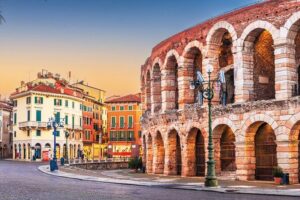
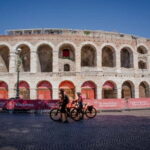
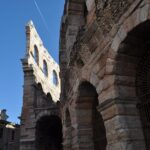
Your tour starts under the equestrian statue of King Vittorio Emanuele II in Piazza Bra. That’s a smart choice because Piazza Bra is open and easy to orient yourself in, and the Arena looms nearby like a spotlight. Verona’s big-ticket sights can feel scattered, but beginning here helps you anchor everything that comes after.
From the start, the guide sets the tone: Verona isn’t just scenic; it’s a stage. You’ll hear about the romance, drama, and family feuds that led Shakespeare to choose the city as the setting for Romeo and Juliet. Even if you’re only loosely familiar with the play, the framing works. It’s not about reciting plot. It’s about showing you why Verona would have made the perfect backdrop.
One of the most satisfying parts here is that the Arena isn’t a dead monument. It was built before Rome’s Colosseum, and it’s still used for cultural events. That matters for your experience: you’re not only looking at old stone—you’re witnessing a city that still puts on shows.
You can also read our reviews of more walking tours in Verona
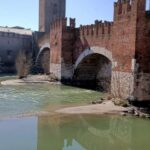


The city as a map of Shakespeare: how the story connects to real places
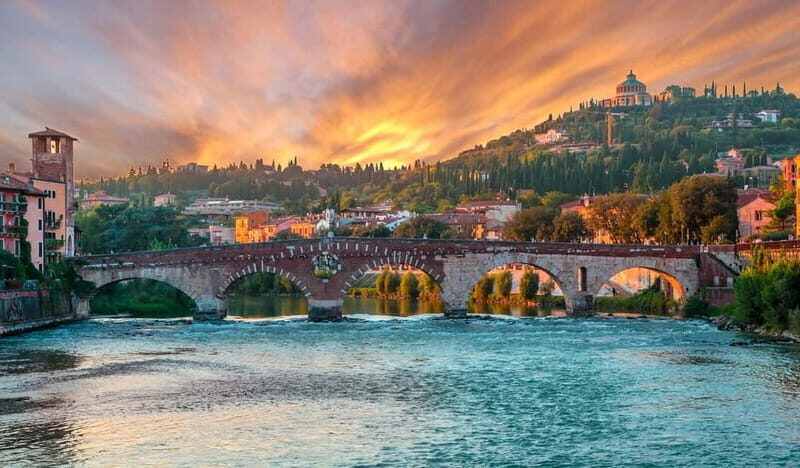
As you move through central Verona on foot, you’ll notice something you can miss on your own: the city is arranged in layers. The tour keeps pushing you to connect the literature to the geography.
You’ll walk along and through the areas that help the guide explain how the play’s family conflicts and romantic tension fit into Verona’s layout and civic history. The route also includes short guided segments—enough time for real context without dragging you into a lecture.
Between stops, the city itself fills in the blanks. You’ll pass through streets that lead directly toward the showpieces: squares, courtyards, and the kind of architectural transitions that make Verona feel like it grew in chapters. That’s what you’re paying for here: not just a checklist of famous spots, but the thread tying them into one coherent walk.
Juliet’s balcony and the statue of Juliet: the stop that never gets old
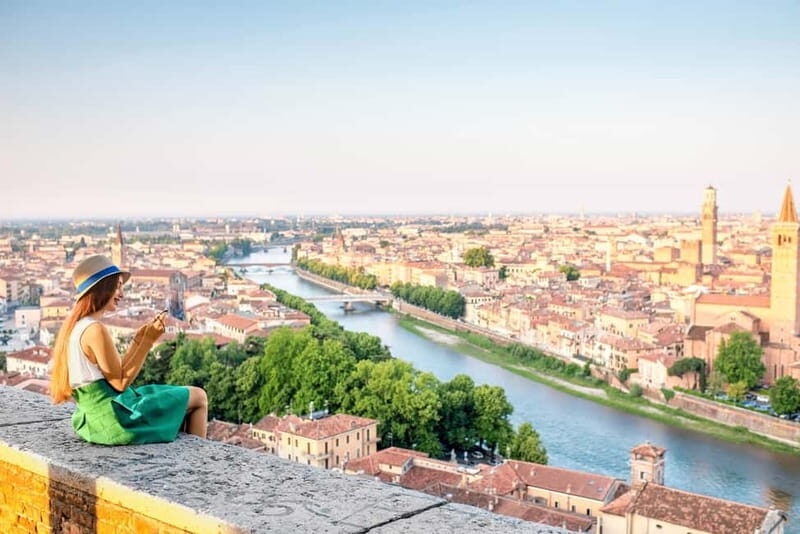
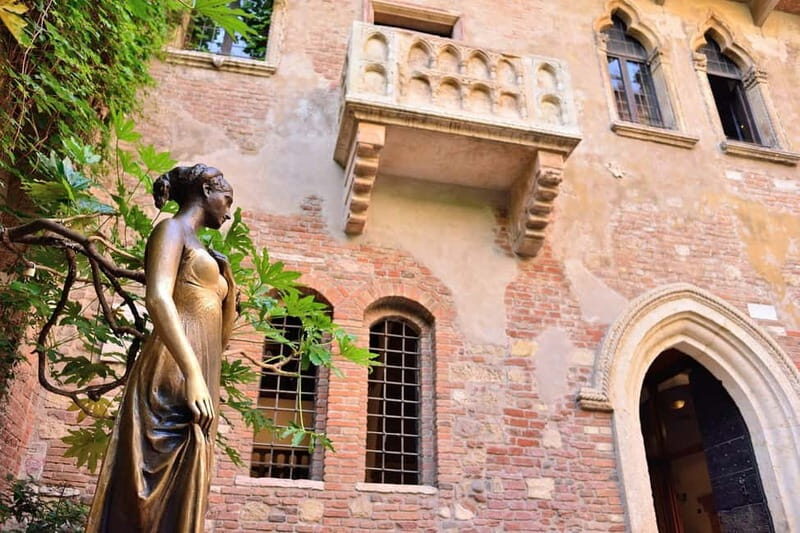
At Juliet’s House, the tour goes straight for the iconic moments: the balcony and the statue of Juliet. This is one of those places where the photos are expected—but the guide’s explanations make it more meaningful than a quick sightseeing stop.
Standing in the Juliet area, you get the feeling of why this corner became a global symbol. The balcony isn’t just a prop from a play; it’s part of Verona’s cultural identity now. And seeing the statue of Juliet adds a strange-but-effective reality check: people don’t just read the story here; they leave it with them, in ritual form.
If you’ve ever worried that Juliet’s House will feel like a tourist trap, this tour helps you separate the facts from the noise. The guide ties the moment back to Verona’s themes of romance and conflict. That turns the stop into a story beat, not just a photo opportunity.
A practical note: the tour includes the guided time here, but entrance fees are not included. If you want to go inside where tickets apply, plan for that cost separately so you’re not surprised.
Piazza Erbe: markets, Lamberti Tower, and Roman-era leftovers
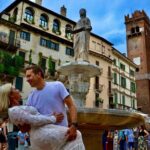
Next you’ll reach Piazza Erbe, one of Verona’s most recognized public squares. The guide focuses on what makes it worth your time: you’re not just looking at a pretty plaza, you’re standing in a place that historically gathered commerce, power, and everyday life.
Here are three details you’ll want to pay attention to as you’re moving:
- Lamberti Tower, which gives the square a vertical landmark to orient by.
- Domus Mercatorum, a key stop that connects the square with ancient trading activity.
- The lively market atmosphere, which helps the square feel like it’s doing something right now, not only replaying the past.
This is also where the tour really helps you with scale. When you’re on a self-guided walk, it’s easy to treat each building like an isolated postcard. With a guide, you start noticing relationships: how the tower sets sightlines, how the ancient structures reinforce the square’s role, and how the city’s medieval and Roman layers sit next to each other.
Piazza dei Signori: where Verona’s drama feels more serious
From Piazza Erbe, the walk continues to Piazza dei Signori, a square with a different mood. If Piazza Erbe feels like everyday public life (with romance nearby), Piazza dei Signori feels like the political side of Verona’s story.
The tour pauses here for guided sightseeing. This is a good use of time because squares like this often require context. Left on your own, you might recognize the big features but not understand why this particular place matters. With the guide’s framing, you’re watching the city like a set designer: where authority sits, how space is arranged, and how that supports the kind of tensions that make Shakespeare’s plot feel plausible.
If you’re a fan of the play, this square can feel like the pause right before a confrontation. Even if you don’t want to get dramatic, it’s an atmospheric stop—one that turns Verona from scenery into a lived-in world.
You can also read our reviews of more guided tours in Verona


A walk through time: Roman to Romanesque to Gothic to Renaissance
One of the tour’s biggest strengths is that it doesn’t treat Verona as a single-era attraction. The route passes by structures spanning Roman through Romanesque, Gothic, and Renaissance periods. That’s valuable because it changes how you understand what you’re seeing.
In plain terms: Verona didn’t freeze. It evolved. Buildings were added, styles changed, and the city kept reinventing itself while still leaning on older foundations. When your guide points out transitions between styles, you start seeing patterns instead of random details.
This is also where the walking pace helps. The tour doesn’t sprint. It gives you just enough time to absorb a shift in architecture, then moves you toward the next shift. You’ll learn how courtyards and building details can act like visual clues, telling you what era the city was in while still using space that’s remained in use.
Passing medieval courtyards toward the Scala Family Tombs
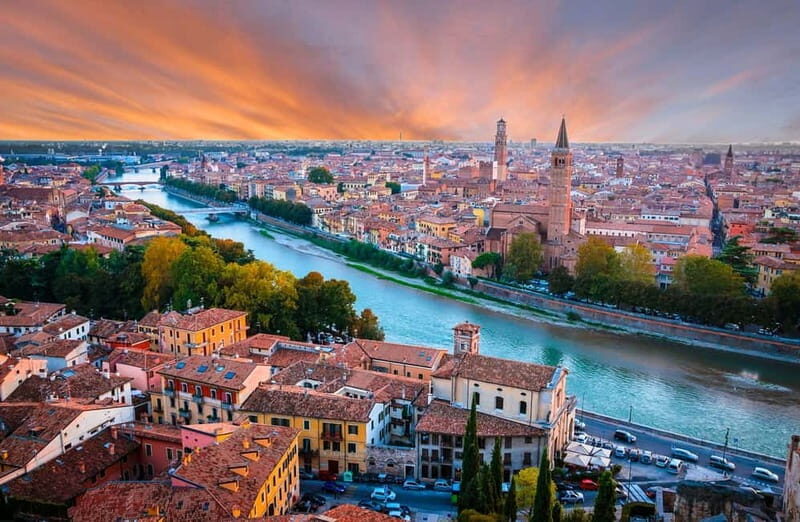
As the tour continues, you move through medieval courtyards on your way to the Scala Family Tombs. This segment is quieter and more atmospheric than some of the big-sight stops.
Courtyards can be underrated on a first visit, mainly because they don’t always look important from street level. But in Verona, they often hold the emotional logic of the place: power, family, and the kind of public memory that outlasts politics.
The Scala Family Tombs add weight here. Even if your interest in architecture is casual, this stop helps you appreciate how Verona honored influential families and how those honors lasted through time. It’s one of those moments where the tour shifts from “look at this famous thing” to “understand why the city preserved this.”
Casa di Romeo and the lead-up to Juliet’s House
The route also includes the Casa di Romeo stop. This is one of the places that can feel either meaningful or purely symbolic, depending on your expectations.
What makes it work on this tour is that it’s presented as part of the larger narrative. You’re not only chasing locations associated with characters. You’re learning how Verona’s story became linked to the play’s version of love and conflict. A guide helps you read the symbolism without losing sight of the real urban context around it.
And because the tour ties this into the rest of the walk—Arena to squares to courtyards—it feels like a coherent chain. Each stop supports the next one rather than acting as an isolated point on the map.
Timing, walking pace, and why 1.5 hours is a good deal
The tour runs for about 1.5 hours. That duration is a sweet spot in central Verona: enough time to hit the main Romeo and Juliet landmarks plus the key squares, without exhausting you before dinner plans.
You should also know what the schedule feels like on your legs. There are multiple short walking segments, with guided time at the key sights. The pacing is designed to keep you moving while still giving the guide room to explain what you’re seeing. If you’re trying to fit Verona into a busy itinerary, this format is practical.
Now the price: $67.19 per person. For a guided walk that includes an English live guide, the major Romeo and Juliet touchpoints, and stops at Piazza Erbe and Piazza dei Signori, I think it’s reasonable. You’re not paying just for standing near famous spots. You’re paying for a guide who ties the city’s layers together and helps you interpret details you would likely miss when walking alone.
The best value comes if:
- you like learning as you walk (not only taking photos)
- you want orientation in a compact historic center
- you’d rather have someone else map the story for you
How to prepare for Verona weather and the 10-minute rule
This tour operates rain or shine as long as conditions are safe. That’s great news for Verona planning because weather changes fast, and flexible tours reduce stress.
Pack for standing and walking on uneven historic surfaces. Comfortable shoes matter more than you think, especially if you’re pairing this with other sightseeing later. Also, because the guide waits up to 10 minutes after the departure time, set yourself up to arrive early and not rely on last-second luck.
If you’re traveling with kids or you’re doing a first-day Verona “get your bearings” moment, the rain option is a win. But if you hate wet weather on cobbles, bring a light rain layer so you can stay focused on the story instead of getting cold and distracted.
Guide impact: why Maria Pia and Mauro make the difference
A walking tour lives or dies on the guide. This one gets high marks because the guiding style sticks. In the strongest examples, guides like Maria Pia and Mauro are described as enthusiastic, detail-focused, and willing to share extra tips—so the experience feels personal rather than scripted.
You can feel the difference when a guide does three things well:
1) explains what you’re seeing right then
2) gives context that helps you understand why it matters
3) offers practical advice so you can keep exploring after the tour ends
I like that you’re not left with a list of buildings. You leave with a sense of how Verona works: which squares to pay attention to, where architectural styles show up, and how the Romeo and Juliet connection fits into the city’s real identity.
Who this tour suits best
This tour is a strong choice if you:
- want Romeo and Juliet sights with real interpretation
- enjoy guided storytelling tied to architecture and public spaces
- like short, efficient city walks that still feel complete
- want an English-speaking guide who keeps the pace comfortable for sightseeing
It may be less ideal if you want a fully independent wandering day, or if you’re hoping for long, slow time in one museum-like site. The tour is built around moving between major landmarks, not lingering for hours.
Should you book the Verona Romeo and Juliet guided walking tour?
If your Verona trip includes the Arena area and you want Juliet’s balcony plus the major squares, I’d book it. This tour earns its price by doing the hardest part for you: turning famous places into a connected story. You’ll see the iconic sights, but you’ll also understand what you’re looking at as the architecture shifts across eras.
One quick check before you go: decide how you want to handle entrance fees, since they’re not included. If you’re the type who likes to step inside when possible, budget accordingly. Then show up early (that 10-minute wait is real), wear comfortable shoes, and let the guide do what they do best—make Verona’s drama make sense while you walk through it.
FAQ
How long is the Verona: Romeo and Juliet Guided Walking Tour?
The tour lasts about 1.5 hours.
What language is the tour guide speaking?
The live tour guide speaks English.
Where does the tour start and end?
It starts under the equestrian statue of King Vittorio Emanuele in Piazza Bra and ends back at the same meeting point.
What are the main sights you’ll see?
You’ll visit the Arena area, Juliet’s House (including the balcony and statue of Juliet), Piazza Erbe, Piazza dei Signori, and the Scala Family Tombs, plus the Casa di Romeo area.
Is the tour canceled if it rains?
No. The tour runs in bad weather as long as conditions are safe.
Are entrance fees included in the price?
No. Entrance fees are not included.
How late can I arrive before the guide leaves?
The guide will wait up to 10 minutes from the departure time.