REVIEW · VERONA
Guided Tour in the center of Verona accompanied by an Angel
Book on GetYourGuide →Operated by SEI1ANGELO · Bookable on GetYourGuide
Verona gets theatrical with an angel in your headphones. This one-hour guided stroll in the center turns the historic streets into a little stage, with a local secret character helping you read the city while the audio steers your attention to the big sights. You’re not just passing by landmarks here; you’re following a story.
I love how stroller-friendly the route feels for a city-center walk: there’s a leisurely pace and no stairs along the way. I also like the focus on major icons without wasting time, including the Lamberti Tower area and the Duomo district, all from the outside.
One thing to consider: you’ll see churches and squares from outside only. If your main goal is stepping inside for views or chapels, plan an extra stop after this tour.
In This Review
- Key highlights at a glance
- Where the Angel Story Starts: Piazza Erbe and the Madonna Verona Fountain
- Headphones and “Live” Audio: How the Sound Changes the Streets
- Piazza Erbe to Lamberti Tower: Learning Verona’s Layout by Walking It
- Piazza dei Signori and the Tower Views: Medieval Power in Plain Sight
- Scaligeri Arches, Via Ponte Nuovo, and Via Sottoriva: The City Starts to Feel Like a Story
- Ponte Pietra: One of Verona’s Best Exterior Moments
- Basilica of Sant’Anastasia: Big Presence Without Needing to Go In
- Verona Cathedral and Piazza Duomo: Finishing at the Center of the Center
- How Family-Friendly It Really Is for Kids and Strollers
- What You’re Really Paying For: Price, Value, and One-Hour Efficiency
- Practical Tips So You Get the Most Out of It
- Should You Book This Angel-Guided Verona Center Walk?
- FAQ
- FAQ
- How long is the Verona center walking tour with an angel?
- Where does the tour start?
- Where does the tour end?
- Is the tour wheelchair accessible?
- Are there stairs on the route?
- What languages are available?
- Do you enter the attractions or just see them from outside?
- Is it suitable for young children?
Key highlights at a glance
- Angel-led storytelling you hear through provided headphones while you walk
- Stroller and wheelchair friendly route with no stairs along the way
- Big landmarks in 1 hour, including Lamberti Tower, Ponte Pietra, and the Duomo area
- Outside-only sightseeing, so you get atmosphere over entry tickets
- Family-ready pacing, with interactive moments that can involve kids’ participation
- A local secret character adds a resident perspective as you move through the medieval center
Where the Angel Story Starts: Piazza Erbe and the Madonna Verona Fountain
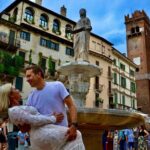
Most Verona moments begin in the same place: Piazza delle Erbe, the heart of the old city. Your tour kicks off near the Madonna Verona fountain, so you get a quick mental map before you even start walking. From there, you’re set up for the kind of sightseeing that feels like you’re learning the city’s “script,” not just collecting stops.
The setting matters. Verona’s center is compact, but it can still feel maze-like if you arrive fresh. Starting here gives you orientation fast, and you can see why landmarks like towers and arches earned their place in the skyline in the first place.
You can also read our reviews of more guided tours in Verona
Headphones and “Live” Audio: How the Sound Changes the Streets
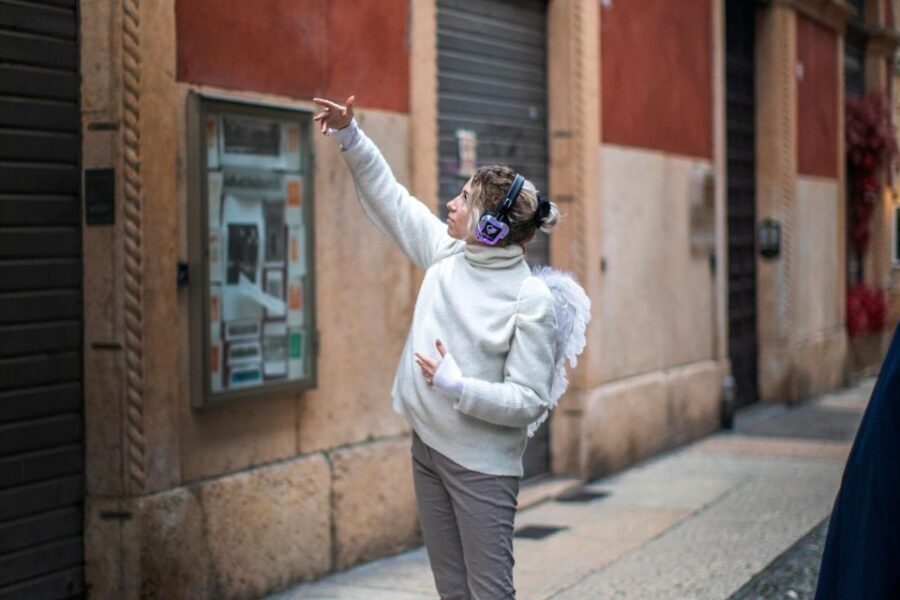
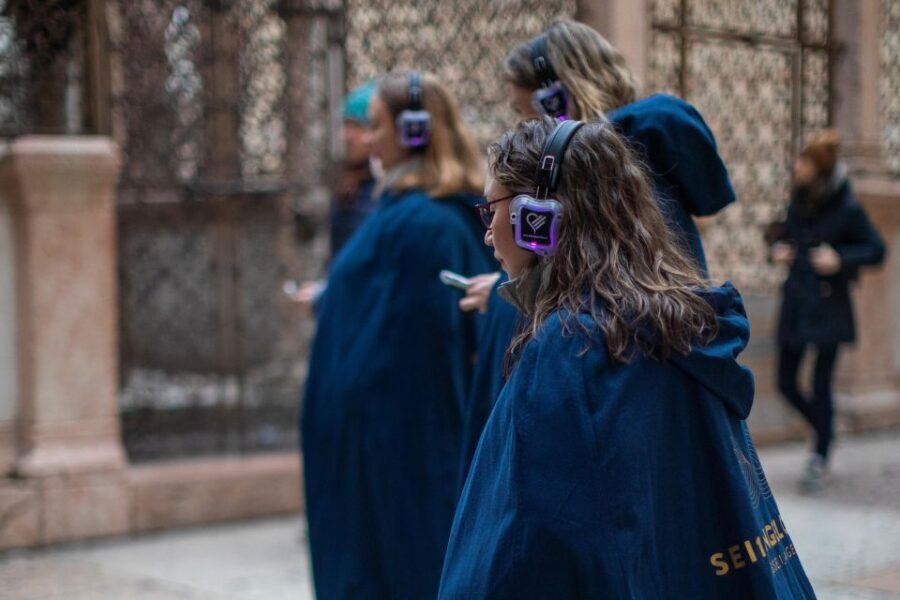
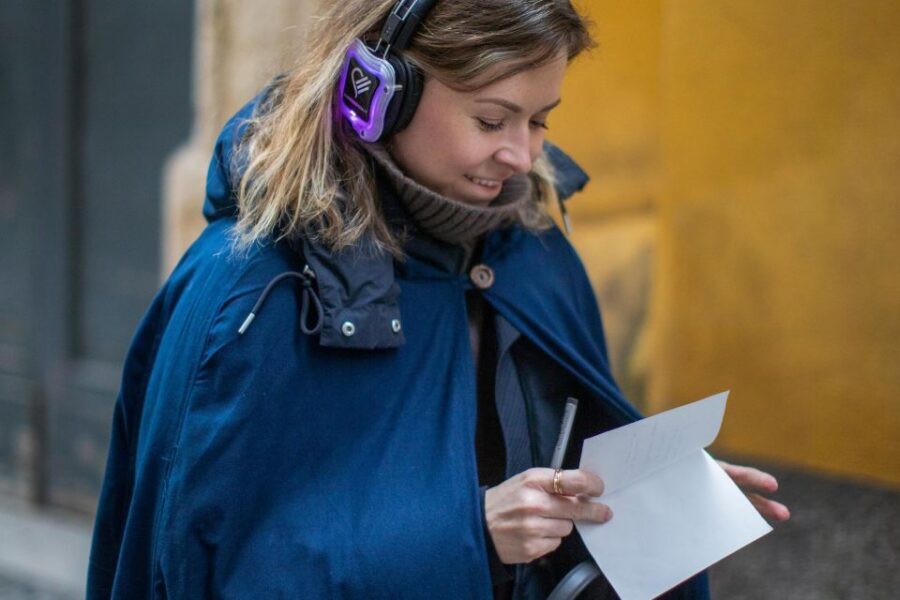
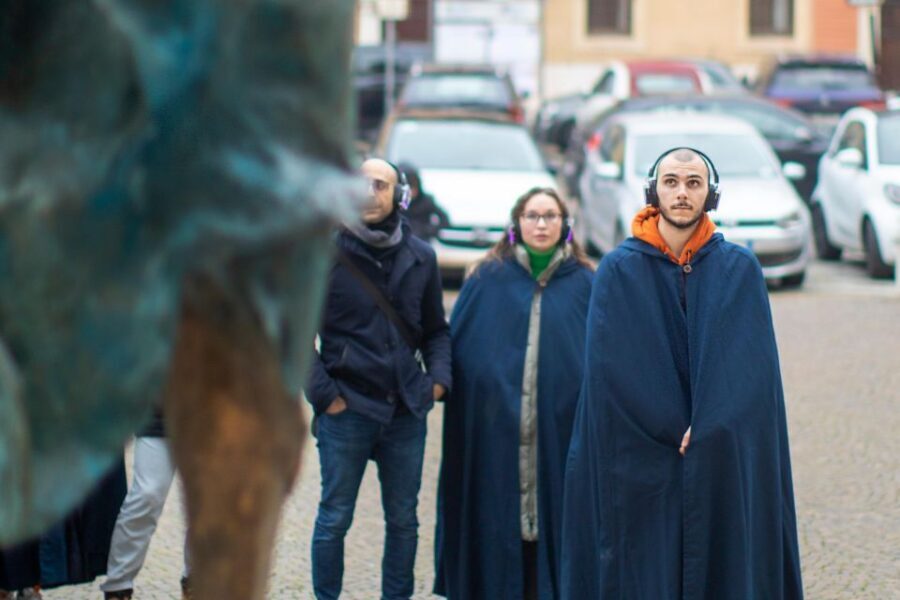
You’ll be handed your equipment and headphones before the walk begins. Then the audio does something practical: it tells you where to look next, so the streets don’t blur together. In the best moments, the narration feels like you’re part of what’s happening, not just hearing a description while you stroll.
Two things make this setup worth your time. First, the sound guide is available in English and Italian, so you can choose what works best for your group. Second, the guide isn’t alone with the story; there’s a local secret character who walks with you, which keeps the experience from turning into a disconnected phone-audio walk.
Piazza Erbe to Lamberti Tower: Learning Verona’s Layout by Walking It
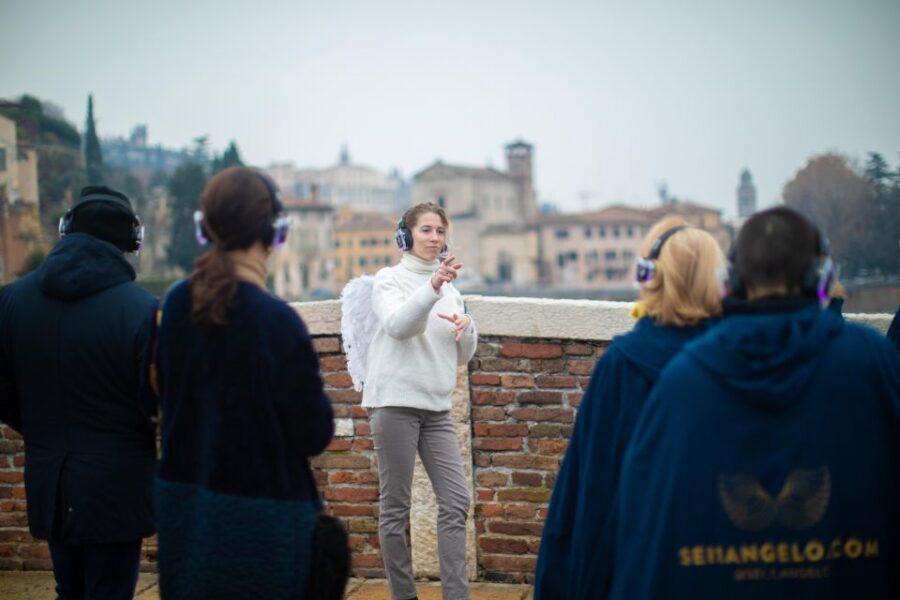
After you start around Piazza delle Erbe, the tour focuses you on the sights that define the area. The Lamberti Tower is one of those Verona anchors: you see its presence in the way the surrounding spaces are shaped and connected. Even when you’re only viewing from the outside, it helps you understand how the tower functions as a reference point for the city.
This is also where the tour’s pacing shows its value. You’re moving at a leisurely walking pace, and it’s designed to work for groups with mixed abilities. For me, that’s a big deal in a place like Verona, because many “sightseeing in an hour” options end up feeling like a sprint.
Piazza dei Signori and the Tower Views: Medieval Power in Plain Sight
Next up is the Piazza dei Signori area, another essential Verona scene. This square is all about medieval civic identity—where power, architecture, and public life overlap. The tour route connects you with nearby landmarks you can spot from the street level, including stops along the edges of the old urban plan.
As you move through this section, you’ll also get views connected to the major towers and landmark buildings the area is famous for, including the Gardello Tower, Palazzo Maffei, and the Loggia fra Giocondo. You won’t be going inside, but you’ll still get the “why” behind them: they’re positioned to be seen, and the city’s layout makes that clear.
A small practical win: because the walk is guided and structured, you don’t have to decide on the fly which corners to chase for the best photo angles. The audio and guide help you keep your eyes up and your feet moving.
Scaligeri Arches, Via Ponte Nuovo, and Via Sottoriva: The City Starts to Feel Like a Story
Here’s where the experience really leans into atmosphere. The tour takes you along the kind of narrow lanes that make Verona feel intimate, especially compared with bigger cities. You’ll pass areas connected with the Scaligeri Arches and walk down streets such as Via Ponte Nuovo and Via Sottoriva.
These streets may look ordinary on first glance, but that’s the point. With the sound narration and the angel-themed performance elements, the route frames those same streets as part of the city’s stagecraft. Instead of asking you to memorize facts, it helps you notice details you’d otherwise miss—street geometry, how buildings face the walkway, and how the center funnels you from one highlight to the next.
If you’re traveling with kids, this stretch tends to work because it breaks up the routine of “look, take photo, move on.” It’s more like a guided walk you can react to as the story shifts.

Ponte Pietra: One of Verona’s Best Exterior Moments
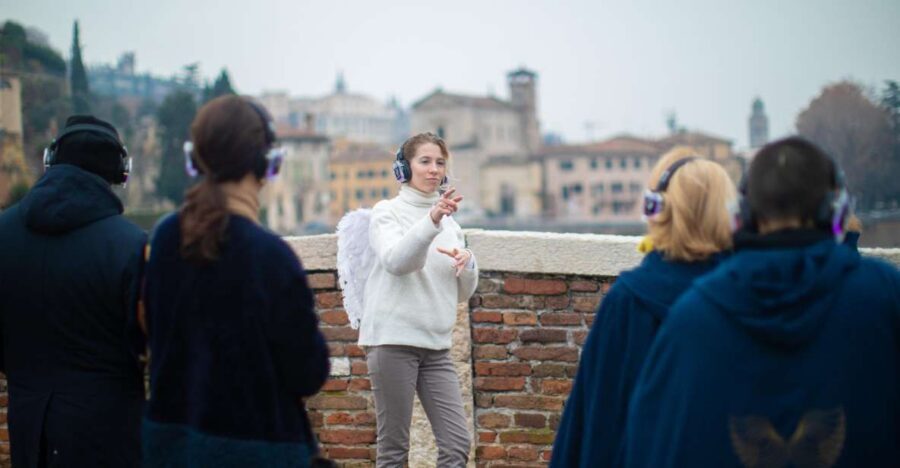
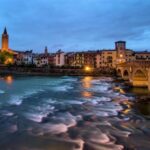
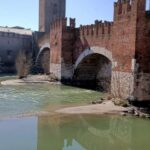
Then you reach Ponte Pietra, the ancient bridge crossing the Adige River. This stop is excellent for photos and for atmosphere, because the bridge gives you a sense of scale—Verona isn’t just squares and towers; it has a working geographic backbone.
You’ll only be sightseeing from the outside, but that’s ideal for Ponte Pietra. The bridge’s viewpoint and the river framing are the main event, and the walking pace keeps it comfortable. You’re not standing under museum lights, you’re out in the open city, which is exactly what makes Verona feel like Verona.
Basilica of Sant’Anastasia: Big Presence Without Needing to Go In
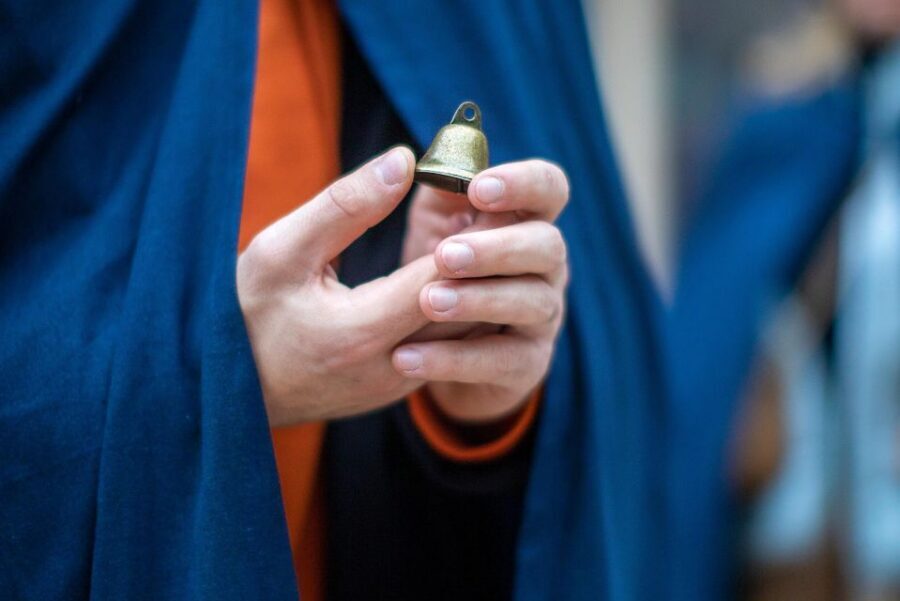
The tour continues to the Basilica of Saint Anastasia. Again, you’re not entering. But the outside view is still worthwhile because the basilica’s size and position shape what the surrounding streets feel like. It’s one of those landmarks where seeing it in context matters more than any interior details.
This is also a good moment to take a breath. A one-hour walking tour can feel “busy” by the end, so having a major visual anchor like this helps reset your focus. You’ll likely find it easier to connect the earlier medieval towers and civic squares to the sacred architecture later in the route.
Verona Cathedral and Piazza Duomo: Finishing at the Center of the Center
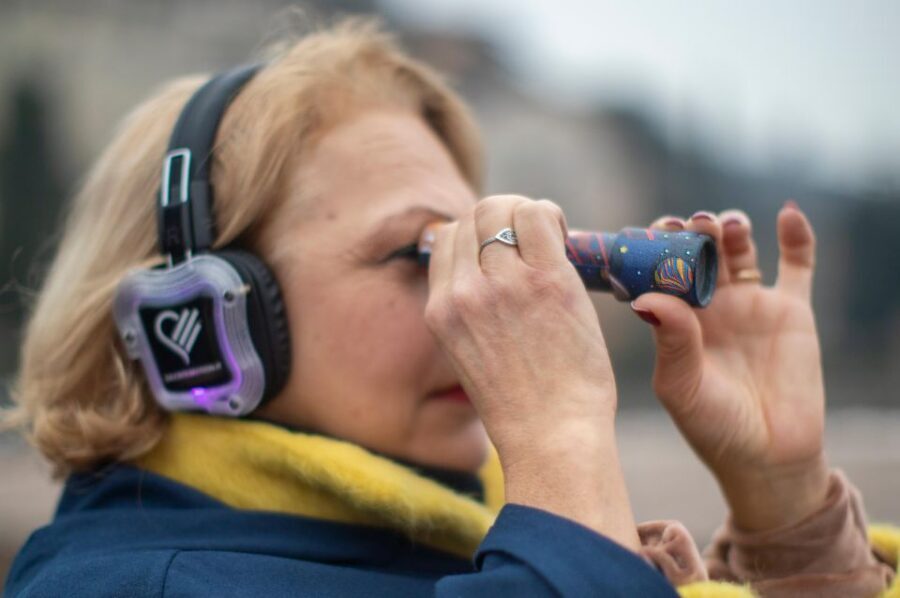
The final stretch brings you toward the Cathedral area and ends at Piazza Duomo. In Verona, that end point is a smart choice. Piazza Duomo sits at the pulse point of the city, and it’s a natural place to transition into whatever you want next—shopping, a gelato stop, or a longer walk to explore on your own.
Your tour ends at Piazza Duomo, and the activity is described as returning you back to the meeting point. So you get both: a proper finish in the Duomo atmosphere and the convenience of not having to figure out how to get back after a structured hour.
How Family-Friendly It Really Is for Kids and Strollers

The tour is built for families, with an age guideline of 6+ and it’s not suitable for children under 6. That’s clear. What’s more useful is the design: no stairs along the way and a leisurely pace. In a historic center, that combination makes the difference between a tour that works and one that becomes everyone’s least favorite way to spend time.
I also like that the experience doesn’t ignore kids. In past groups, guides added interactive moments to keep children engaged, with activities such as dancing, drawing, sparklers, and conversations. You shouldn’t assume every group will get the same exact activities, but the pattern is real: the tour is willing to make noise and movement parts of the storytelling.
For parents, strollers matter most when routes are tight and uneven. Here, you’ll at least have a route intended to be stroller-friendly, which can save you from the constant “can we actually do this?” stress.
What You’re Really Paying For: Price, Value, and One-Hour Efficiency
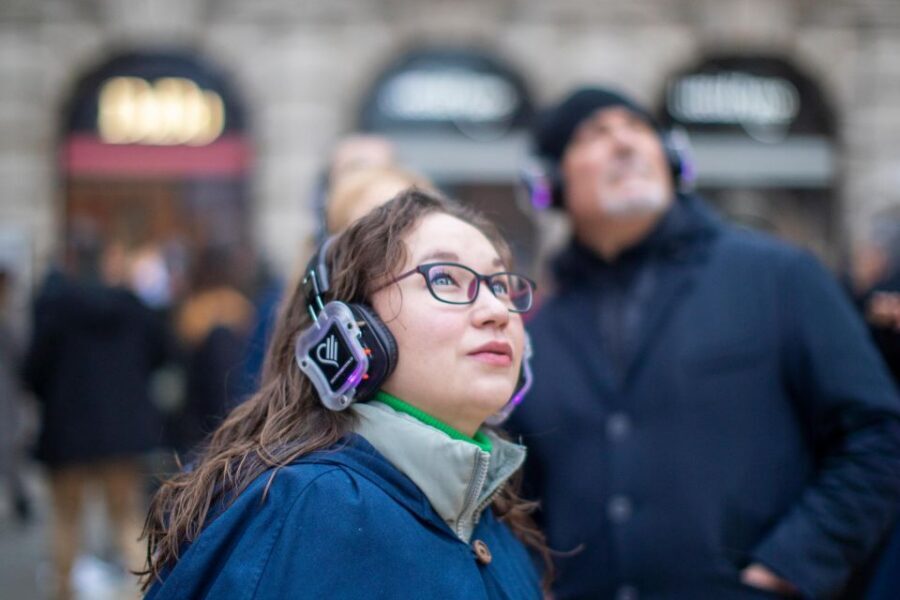
The price is $44.41 per person for a 1-hour experience. That’s not the cheapest walking tour in Italy, so I treat it like a storytelling product: you’re paying for the headphones, the guided performance approach, and the structured route through the main landmarks.
Here’s how I judge value on tours like this:
- You’re seeing the city’s key exterior landmarks—Lamberti Tower area, Ponte Pietra, Sant’Anastasia, and the Cathedral/Duomo zone—within a short window.
- You’re getting language support in both English and Italian, plus a live guide component.
- The sound setup reduces the work of planning. You can show up, put on the headphones, and let someone else handle the sequence.
If your ideal Verona day is packed with tickets, museum entrances, and long stops inside churches, this may feel like too much “outside only.” If your ideal Verona day is about getting your bearings and learning the story of the center without logistics headaches, this price starts to look fair.
It can also help that you have flexibility with booking: free cancellation up to 24 hours in advance and a reserve now and pay later option.
Practical Tips So You Get the Most Out of It
A few small things will make this tour more fun:
- Wear comfortable walking shoes. Even a one-hour tour in old streets adds up.
- Bring your camera, because Ponte Pietra and the tower-and-square zones are the kind of places where you’ll want photos at multiple angles.
- Dress for weather. The walk happens outdoors, and you’ll be moving steadily from plaza to plaza.
Also, manage expectations about entries. Everything listed is discovered from the outside. That’s fine if you want atmosphere, but it means you’ll need to add separate visits if you want interiors.
Should You Book This Angel-Guided Verona Center Walk?
If you’re visiting Verona with limited time, I’d lean yes. This tour is purpose-built to show you the center’s big icons in a short, family-friendly loop, with a story-driven approach that makes the streets feel purposeful. The combination of headphones, a local resident secret character, and angel-themed performance elements is a fun twist on the usual guided-walk format.
Skip it only if you strongly prefer museum-style tours with inside entries. Since you won’t go in anywhere, the experience will feel more like reading the city’s faces than touring its rooms.
If your group includes kids 6 and up, or you want a route that accommodates strollers and avoids stairs, this one deserves a spot on your Verona plan.
FAQ
FAQ
How long is the Verona center walking tour with an angel?
It lasts 1 hour.
Where does the tour start?
It starts near the Madonna Verona fountain in the area of Piazza delle Erbe.
Where does the tour end?
It ends at Piazza Duomo, and the activity is described as ending back at the meeting point.
Is the tour wheelchair accessible?
Yes, it is wheelchair accessible.
Are there stairs on the route?
The tour is described as having no stairs along the way.
What languages are available?
The live guide and audio guide are available in English and Italian.
Do you enter the attractions or just see them from outside?
You discover the attractions from the outside only.
Is it suitable for young children?
It is suitable for ages 6 and up, and it is not suitable for children under 6.