REVIEW · VERONA
Fascinating Verona: in the Footprints of Romeo and Juliet
Book on Viator →Operated by Curioseety SRLS · Bookable on Viator
Verona has a way of turning into a stage. This walk is built around Romeo and Juliet flavor, but the real draw is how the guide stitches together Verona’s Roman, medieval, and Renaissance layers into one easy route. You start at the ancient Arena and end at Casa di Giulietta, so the story arc feels complete from stop to stop.
I love the small-group size (max 15), because the guide can keep the pace human and answer questions. I also like that the tour treats Juliet as a chapter, not the whole book—so you walk away understanding why Verona could fuel Shakespeare’s drama. Guides named Frank and Maria get especially strong praise for their energy and storytelling.
One possible drawback: if you’re expecting a heavy Romeo-and-Juliet deep-dive, you may feel slightly shortchanged. The balcony and Juliet statue are a key moment, but they’re not the center of the whole tour—history and architecture take most of the time.
In This Review
- Key Tour Highlights to Know Before You Go
- Starting at Piazza Bra and the Arena di Verona (Roman first, questions later)
- The 1.5–2 Hour Stroll Through Verona’s Medieval Maze
- Juliet’s House Balcony Stop: Famous, but tickets are extra
- Herbs Square and Domus Mercatorum: Where merchants ran the city
- Signori Square: One stop where Verona’s eras collide
- Scala Family Tombs: Verona’s family drama, no fictional disguise
- Price and Logistics: Is $83.45 worth it?
- Who This Tour Fits Best (and who might skip it)
- My Booking Recommendation: Book it if you want Verona to make sense fast
- FAQ
- How long is the Verona walking tour?
- Where do I meet the guide?
- Is the tour in English?
- Is the tour indoors, or do I walk outdoors?
- Does the tour include tickets for Juliet’s House?
- What’s the group size?
- Can I cancel for a full refund?
Key Tour Highlights to Know Before You Go
- Arena di Verona first: start with a Roman monument that still hosts cultural events
- Story-led walking route: medieval streets + clear context for what you’re seeing
- Juliet stop includes famous sights: the balcony and Juliet statue, with ticket caveats
- Architecture walk-through: Romans to Romanesque, Gothic, Renaissance, and more in one day
- Herbs Square market energy: palaces, Lamberti Tower, and the merchant-guild Domus Mercatorum
- Scala family tombs finale: power, scandal, and family drama that hits close to the Shakespeare vibe
Starting at Piazza Bra and the Arena di Verona (Roman first, questions later)

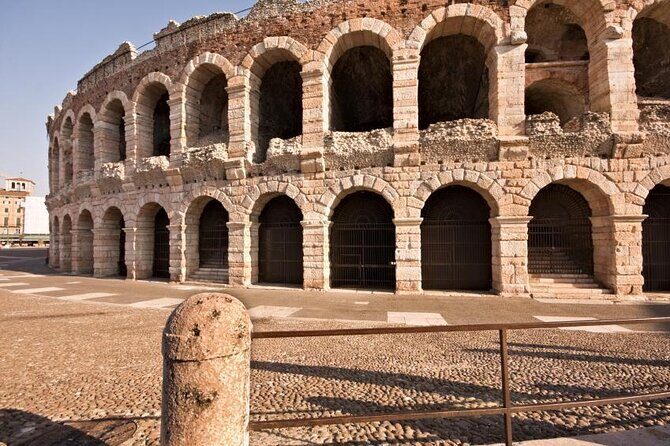
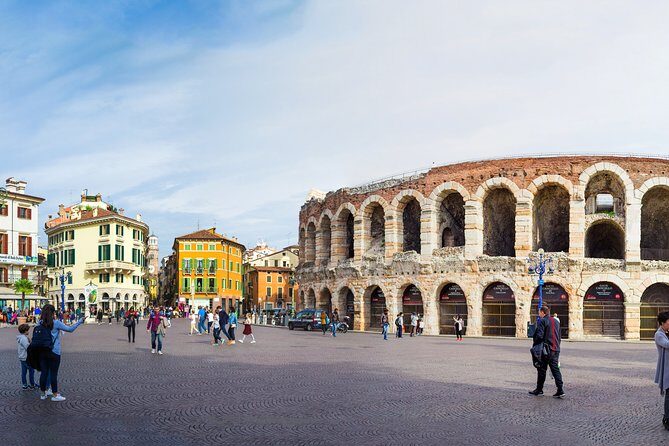
Your tour meets at Piazza Bra, the big square in front of the Arena di Verona. The timing matters because this walk is built for an afternoon rhythm: you’ll get moving fairly quickly and keep a steady pace without constant stops for explanations.
The Arena is the perfect opener. This is the ancient Roman structure that predates the Colosseum, and it’s still used for cultural events today. Starting here gives you a reality check: Verona wasn’t invented for Shakespeare. It had its own drama long before the plays existed.
The best part is how the guide uses the Arena as a reference point. You’re not just looking at an old building—you’re getting the sense of time layers. That makes the rest of the walk click faster.
You can also read our reviews of more tours and experiences in Verona.


The 1.5–2 Hour Stroll Through Verona’s Medieval Maze
Expect a 1.5-hour stroll through winding medieval streets, with the full guided time running about 1.5–2 hours depending on pacing and how the group moves. The tour is designed for moderate fitness. You’ll be walking on uneven pavement and turning corners often, so comfy shoes are not optional.
This is a storytelling-first walking tour. That sounds fluffy until you feel it: every landmark comes with a reason it matters. The guide talks about Verona’s ancient roots and history in a way that helps you connect the dots between squares, towers, and the architecture styles you’ll pass.
Also, the tour runs rain or shine. That’s great news for planning, but it does mean you should dress for wet stone and grab a light rain layer. If you’ve ever slipped on a slick Italian street, you already know why.
Juliet’s House Balcony Stop: Famous, but tickets are extra
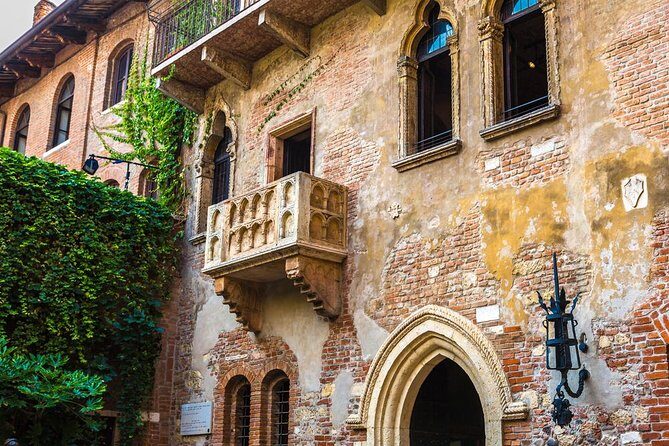
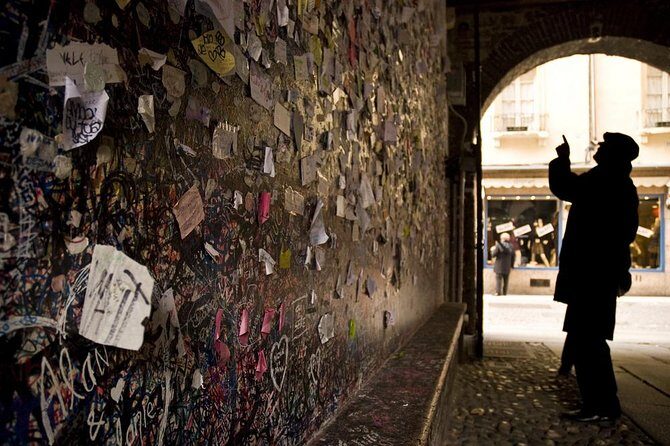
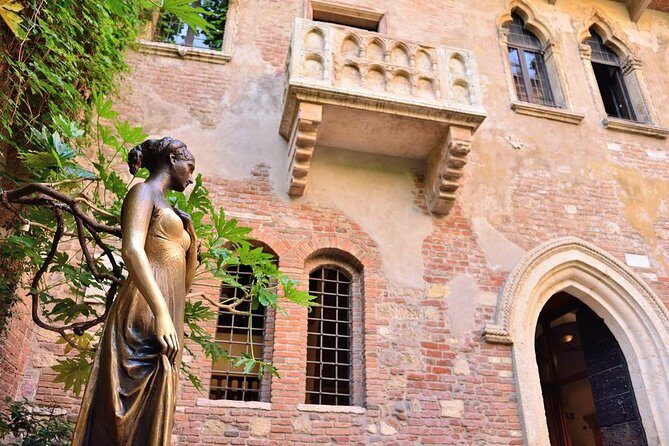
Yes, you’ll go to Juliet’s House (Casa di Giulietta) area and see the famous balcony and the Juliet statue. This is the moment people most often picture when they book a Verona Romeo-and-Juliet walk.
But here’s the practical truth: Giulietta Home tickets are not included. The tour ends at Casa di Giulietta, Via Cappello 23, but you should plan on buying entry separately if you want to go inside the site areas.
And the tour’s approach is refreshingly honest. The guide frames Shakespeare’s connection as fictional. The setting makes sense emotionally, but the famous family names you hear in the story are not presented as factual history. You’ll likely enjoy this more if you treat Juliet as a cultural magnet that drew people to Verona—not as a documentary anchor.
If you’re short on time in Verona, this stop is still worth it. But because entry tickets cost extra, budgeting matters.
Herbs Square and Domus Mercatorum: Where merchants ran the city

After the Juliet moment, you head toward Herbs Square (Piazza delle Erbe), one of the liveliest stops on the route. This is where the tour balances romance with real civic life—because cities are built by trade, not just poets.
In Herbs Square you’ll see things like the Lamberti Tower and the Madonna Verona fountain. The big plus here is context: the guide ties the square’s look to Verona’s layers of power and style, so you understand what you’re seeing instead of just collecting photos.
A key landmark in this area is the Domus Mercatorum, described as the one-time home of the city’s merchant guild. That matters because guild power shaped what got built and who had influence. When the guide points out Domus Mercatorum, you get a sense of how Verona’s economy shaped its public spaces.
This is one of the reasons I like this tour. It uses the Juliet story as a hook, then quickly teaches you the engine underneath: commerce, guild structures, and civic identity.
Signori Square: One stop where Verona’s eras collide
Next comes Signori Square, where you can literally see multiple architectural periods in one place. The tour highlights Roman through Romanesque, Gothic, Renaissance, and modern elements—so it feels like a timeline you can walk across.
This kind of stop is valuable because Verona is layered. Without context, you might think you’re just hopping between pretty buildings. With the guide’s framing, the styles become evidence: different eras brought different building priorities, from defense and civic identity to wealth and artistic influence.
The guide also uses these transitions to keep the story moving. That’s important because a walking tour can easily stall when you’re tired or when the group gets distracted. Here, the direction stays clear: see the architecture, connect it to the city’s past, then move to the next square.


Scala Family Tombs: Verona’s family drama, no fictional disguise

The walk ends with the Scala family tombs, tied to a ruling clan active in the 13th and 14th centuries. The tour connects their power struggles and scandals to the same messy emotional fuel that drives Romeo and Juliet.
Is it Shakespeare? No. But it’s exactly the point. Verona has always been a place where politics and family alliances mattered, and the Scala story gives that idea a physical location. It’s a strong finale because it turns the mood of the tour from romantic to dramatic in a satisfying way.
The route through quiet courtyards and backstreets helps, too. You go from squares and famous sights into calmer lanes, which makes the tomb stop feel more reflective. If you’re the type who likes a slower ending after lots of walking, this works well.
Price and Logistics: Is $83.45 worth it?

The price is $83.45 per person, and the tour runs about 1.5 hours (roughly 1.5–2 hours in practice). With a group size capped at 15, you’re paying for an experienced local guide plus a tight route hitting major highlights without you having to map everything.
Entrance fees aren’t included, and Juliet’s House tickets are extra. That affects value. If you’re already planning to visit Casa di Giulietta, the tour still makes sense because it gets you context and pacing. If you only want to see the balcony and statue area quickly, you might compare costs more carefully since entry is separate.
One more thing: meeting and punctuality matter. The guide can wait up to 10 minutes from departure, and the experience states that a 15-minute delay can be accepted. Either way, I’d treat this as a strict start. Arrive a few minutes early and you’ll avoid stress.
Also, the tour uses a mobile ticket. That’s convenient on the day, especially if you’re bouncing between sights by foot.
Who This Tour Fits Best (and who might skip it)
This tour is a great fit if you want:
- A guided intro to Verona in a short afternoon window
- A route that mixes Roman + medieval + Renaissance without feeling like a school lecture
- Strong storytelling that includes architecture details and city context
- A small group experience where you can ask questions
It’s also an especially good choice for people who like the Verona-and-play connection but don’t want the whole day to revolve around it. Some of the most praised guide styles—like Frank, Maria, Andrea, and Maria Pia—are described as energetic storytellers who bring sites to life and keep the group engaged.
Who might consider a different option: if your main goal is a long, Romeo-and-Juliet-focused itinerary, this one may feel like the title is a friendly hook rather than a full commitment. The Juliet stop happens, but the bulk of the walk is Verona’s architecture, squares, and family politics.
My Booking Recommendation: Book it if you want Verona to make sense fast
If you’re visiting Verona for a short time or you want a guided first pass that helps you understand what you’re seeing, I’d book this. The combination of the Arena as your starting anchor, the major squares (Herbs Square and Signori Square), and the Scala tombs finale is a smart way to learn the city without spending hours on planning.
Just go in with the right expectation: Juliet is a highlight, not the entire story. Plan your budget for Juliet’s House tickets separately, and wear shoes for real walking on old streets. Do that, and you’ll come away with a Verona that feels connected—not just photographed.
FAQ
How long is the Verona walking tour?
It runs about 1.5 hours (approximately) based on the tour summary, and the guided walk described works out to roughly a 2-hour guided experience.
Where do I meet the guide?
Meet at Piazza Bra (P.za Bra, Verona VR, Italy) at the start time 1:30 pm.
Is the tour in English?
Yes, it is offered in English.
Is the tour indoors, or do I walk outdoors?
It’s a walking tour with an afternoon stroll through Verona’s streets and squares, including courtyards and backstreets.
Does the tour include tickets for Juliet’s House?
No. Giulietta Home Tickets are not included, so if you want to go in, you’ll need to arrange entry separately.
What’s the group size?
The tour has a maximum of 15 travelers.
Can I cancel for a full refund?
Yes. You can cancel up to 24 hours in advance for a full refund. If you cancel less than 24 hours before the start time, the amount paid is not refunded.