REVIEW · MARANO DI VALPOLICELLA
Valpolicella in the round: tasting of typical Valpolicella wines
Book on GetYourGuide →Operated by Cantina Corte Archi · Bookable on GetYourGuide
This tasting turns wine education into a living walk-through of Valpolicella production. What makes it special is the path you follow: you start in an ancient cellar, then you move into the drying process zone, and you finish with a focused tasting of six representative wines. Guides (often named Fernando, Carlo, and Silvia in feedback) tend to explain things with real pride in the place, not a rehearsed script.
I love that you don’t just get pours. You also see the tools and spaces where the grapes change—especially the fruit-drying area used for styles like Amarone and Recioto—so the tasting has context. I also love the small group size, limited to 8 people, which keeps the questions coming and the pace comfortable.
One thing to consider: this is a tight 1.5-hour experience built around wine and the production sites. If you’re craving a long meal with lots of food (charcuterie and cheese cost extra), plan on eating elsewhere after.
In This Review
- Key takeaways before you go
- Cantina Corte Archi and Marano di Valpolicella: starting in the courtyard
- The ancient cellar and barrels: where your tasting starts making sense
- Processing area and fruit-drying logic: the fruttaio behind Amarone
- Four vineyard steps for reading terroir (without pretending it’s magic)
- Six wines in your glass: what you taste and what you should pay attention to
- My advice on tasting order and “how to learn fast”
- Price and value: is $29 fair for 6 wines plus a production walk
- Language, group size, and pace: who this fits best
- What the best feedback usually gets right
- Should you book Valpolicella in the round?
- FAQ
- Where does the tour start?
- How long is the experience?
- What’s included in the tasting?
- Which wines are included?
- Do I get charcuterie or cheese with the tour?
- How big is the group?
- What languages are the guides available in?
- What places will I visit during the tour?
- Can I cancel for a refund?
Key takeaways before you go
- Ancient cellar first: wooden barrels and refinement spaces set the tone before you taste.
- Behind-the-scenes processing: you’ll see the work area, not just a showroom.
- Fruttaio and grape drying explained: the drying zone that supports Amarone and Recioto.
- Vineyard steps, not a bus ride: you’ll take four steps through the vineyard to connect vines to what’s in your glass.
- A guided comparison of styles: six wines that run from fresh and elegant Valpolicella to Amarone.
- Small group, limited to 8: better conversation with the live English or Italian guide.
Cantina Corte Archi and Marano di Valpolicella: starting in the courtyard
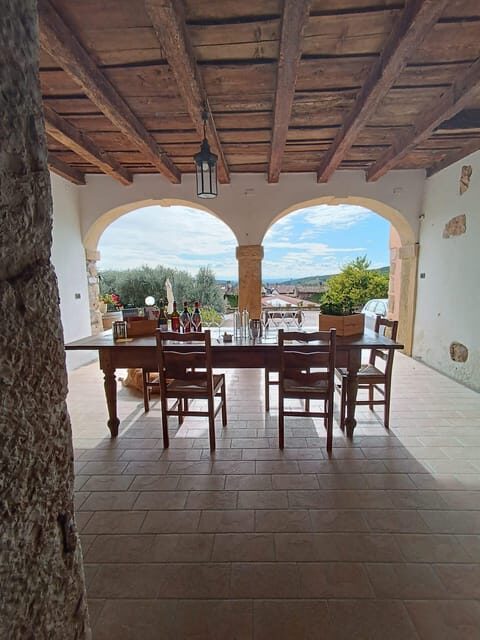
The experience is based in Marano di Valpolicella, Veneto, at Cantina Corte Archi, with the meeting point in the winery courtyard on Via Paverno, 21. That matters more than it sounds. A courtyard start usually means you’re not rushed into parking-lot check-ins—you begin the visit in the same setting where the grapes and wine work actually happen.
The tour lasts about 1.5 hours, and the pace is designed to keep your attention on the key production steps. It’s small group style, capped at 8 participants, with live guiding in English or Italian. If you’ve ever sat in a bigger group while a guide talks at you, you’ll appreciate the quieter format here.
You can also read our reviews of more food & drink experiences in Marano Di Valpolicella


The ancient cellar and barrels: where your tasting starts making sense
You begin in the ancient cellar, where you can observe the wooden barrels used for refining wines. This is the part I think helps most on a tasting like this, because it gives you a reference point for what you’re about to compare. Before you taste, you’re already seeing the materials that shape the wine over time.
You’ll spend around 30 minutes in this first segment, taking in the barrel room and the overall cellar workflow. It’s not just a photo stop. The structure of the experience pushes you to notice how wine is handled once the grapes have been turned into wine—what happens after the “fruit to juice” phase.
If you like production-focused visits—where you can connect what you learn to what you taste—this opening sequence is a strong setup. And because it’s “in the round,” it also prevents the tasting from feeling disconnected from the place.
Processing area and fruit-drying logic: the fruttaio behind Amarone
After the cellar visit, you shift to the processing area and then to the fruttaio, the space dedicated to natural drying of the grapes. This is where the tour earns its most “oh, that’s why” moment. You’re not guessing how heavier styles are made—you’re looking at the specific stage that supports them.
The drying area is tied to the grapes that later become Amarone and Recioto. Even if Amarone is the star you came for, this part gives you context for why the wines can feel so different from standard Valpolicella styles. Drying concentrates what the grape brings to the wine, and it changes the entire character of the final result.
The experience also promises that you’ll see the withering fruit orchard and vineyard. That combination matters: orchard and vineyard visuals help you understand that the grapes don’t arrive already “finished.” They come from living plants, and the drying stage is part of a longer chain that starts outdoors.
One practical tip: if you’re the kind of person who remembers better when you can picture the sequence, take a quick mental note here. In your glass, you’ll be comparing fresher Valpolicella expressions with the more dramatic range associated with Amarone.
Four vineyard steps for reading terroir (without pretending it’s magic)
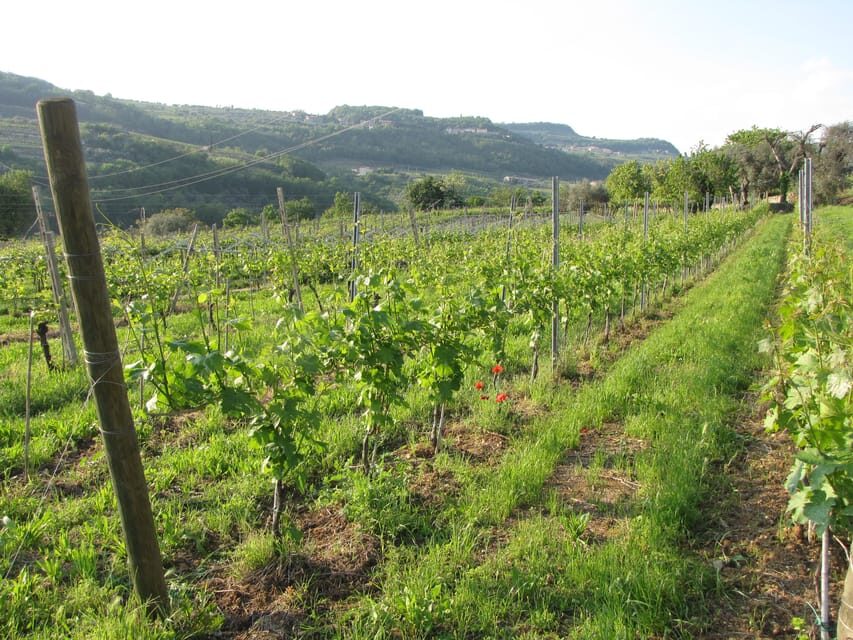
Next comes four steps through the vineyard. This isn’t a long hike and you’re not being sent off with a field guide. It’s more like a slow walk to get close to the vines and see the terroir the wine is rooted in.
Those four steps are the tour’s bridge between the “rooms” and the tasting table. In the rooms, you saw how the winery works. In the vineyard, you see where the raw material comes from—your grapes grow in a specific place, with specific conditions, and those conditions matter for the style of wine you’ll later be comparing.
For value, this part works because it makes the tasting feel less random. Instead of six wines as separate drinks, you’re experiencing them as stages and expressions of the same Valpolicella world.
If the weather is hot, do what you can to dress for outdoor time. Even short vineyard segments can feel longer under strong sun, especially if you’re taking in details while listening.
Six wines in your glass: what you taste and what you should pay attention to
The tasting portion brings you six representative wines from the winery’s production. You also get dry baked goods to keep things moving and make the flight easier on your palate.
Here are the six wines included:
- Valpolicella Classico doc Gli Archi
- Valpolicella Classico Superiore doc Gli Archi
- Valpolicella Classico Superiore Ripasso doc Gli Archi
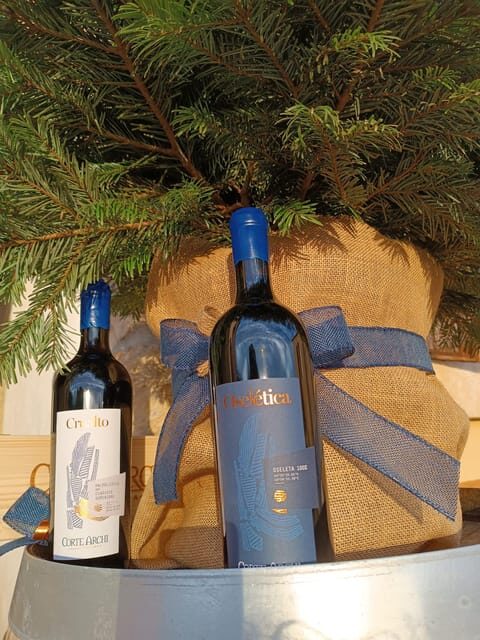
- Rosso Verona IGT Oseleta
- Amarone della Valpolicella Classico Docg Gli Archi
- Amarone della Valpolicella Classico IS
That line-up is the heart of the tour. It’s built to show you a progression—from fresh and elegant Valpolicella through richer, more intense Amarone styles. You’re tasting like an educator, not just like a thirsty person.
The tour also frames the varieties behind the wines. You’ll hear about typical Valpolicella grapes such as Corvina, Corvinone, Rondinella, and Oseleta. The point of naming them isn’t trivia. It gives you handles for remembering what you’re tasting later—especially when one wine feels lighter and another more powerful.
My advice on tasting order and “how to learn fast”
Because you only have 1.5 hours total, you’ll get the most by using a simple approach:
- Start by noticing how the wines change in weight and structure as you move from Valpolicella to Amarone.
- Keep an eye on how the guide explains production differences as you go. The key education here is the link between the cellar spaces and what ends up in the bottle.
Also, don’t overthink it. The tasting is structured so you can build understanding quickly, not so you need to become a wine lab technician before you walk out.
Price and value: is $29 fair for 6 wines plus a production walk
At about $29 per person for roughly 1.5 hours, this is priced like a serious tasting experience rather than a casual “sip and stroll.” You’re getting six wines from the winery’s production, plus a tour of the winery, the fruit-drying area, and the vineyard.
The hidden value is how the tour teaches you. Seeing an ancient cellar, moving into the processing spaces, and visiting the fruttaio gives you context. Context changes how you judge a wine—so the tasting becomes more memorable than a standalone flight.
The only “extra” cost you should plan for is food beyond the dry baked goods. Charcuterie and cheese plates aren’t included and must be ordered and paid extra. If you want a longer lunch-style experience, you’ll likely want to add it during or after, depending on what’s available that day.
Language, group size, and pace: who this fits best
This is live guiding in English or Italian, and the group is limited to 8 people. That combination is ideal if you like asking questions and if you want explanations that match the pace of your curiosity. It also tends to work well for couples, small groups of friends, and independent travelers who don’t want to lose half the tour to waiting.
You’ll especially enjoy this if you’re in the mood for “how it’s made” more than “where to take photos.” The experience is built around the spaces where wine becomes wine: barrels, processing areas, and the grape-drying fruttaio.
If you’re the kind of visitor who only wants a quick, minimal-effort pour, this may feel like too much explanation for the time you have. But if you like learning while you taste, the structure is a good fit.
What the best feedback usually gets right
The strongest feedback on this experience points to three things that matter for your decision. First, the guides bring genuine enthusiasm and clear storytelling about the winery and the grape path. Second, the visit feels personal for the size of the operation, which aligns with it being described as a small family-run vineyard. Third, the overall experience is seen as meaningful—not just fun, but informative.
You can use that as a filter: if you want a tour that tries to teach you why the wines differ, you’ll probably feel the same satisfaction people describe here.
Should you book Valpolicella in the round?
Book it if you want a compact, production-focused wine visit in Marano di Valpolicella. The six-wine flight works best when you already care about how Valpolicella can range from fresh styles toward Amarone, and the cellar-to-fruttaio-to-vineyard route gives you that “click” moment without turning the visit into a long day.
Skip it (or pair it with food plans) if you’re expecting a big meal included in the price. This experience gives you dry baked goods, not a cheese-and-charcuterie spread, and the schedule is intentionally tight.
If you’re staying in the broader Valpolicella area and want something authentic that doesn’t feel like a lecture, Cantina Corte Archi’s in-the-round tasting is a smart, well-paced choice.
FAQ
Where does the tour start?
The tour starts at Via Paverno, 21, in the courtyard of Cantina Corte Archi.
How long is the experience?
It lasts about 1.5 hours.
What’s included in the tasting?
You taste six wines from the winery’s production, accompanied by dry baked goods.
Which wines are included?
The tasting includes: Valpolicella Classico Gli Archi, Valpolicella Classico Superiore Gli Archi, Valpolicella Classico Superiore Ripasso Gli Archi, Rosso Verona IGT Oseleta, Amarone della Valpolicella Classico Docg Gli Archi, and Amarone della Valpolicella Classico IS.
Do I get charcuterie or cheese with the tour?
No. Charcuterie and cheese plates are not included and can be ordered and paid for extra.
How big is the group?
The group is limited to 8 participants.
What languages are the guides available in?
The guide offers live tours in English and Italian.
What places will I visit during the tour?
You’ll visit the ancient wine cellar, the processing area, the fruttaio (fruit drying area), and you’ll also walk through the vineyard.
Can I cancel for a refund?
Yes. Free cancellation is available up to 24 hours in advance for a full refund.